
Lamp vs light fitting: what is the difference?
A lamp is the light source; a light fitting holds it, powers it and directs its light. Knowing the difference saves mistakes when buying and repairing.
A familiar scene at an electrical shop: a customer asks for "a lamp", the assistant reaches for an E27 bulb, and the customer shakes their head, because what they wanted was a complete fitting to hang from the ceiling. In everyday speech the words blur together, but technically they describe different things, and keeping them apart saves time both when shopping and when a light stops working.
The lamp: the light itself
In lighting terms, a lamp is the source that turns electricity into light. In an incandescent bulb a heated filament does the work; in a halogen lamp the filament sits inside a capsule filled with halogen gas; in a fluorescent tube a gas discharge and a phosphor coating produce the light; in an LED lamp it comes from semiconductor diodes.
A lamp has its own set of specifications: its base (for example E27 or GU10), power, lumens, kelvin value, shape and size. It is fitted into a light fitting and taken out and replaced when needed. In other words, the lamp is the consumable part.
There is one subtlety. An ordinary LED bulb hides a small electronic circuit, the driver, inside its body. So an LED lamp is not a single diode but a small device with a cap, a circuit, a heat-sinking body and a diffuser. Its role, however, is still to be the light source.
The light fitting: holding the lamp and shaping the light
A light fitting, or luminaire, is the unit that holds the lamp, supplies it with current and distributes its light where it is needed. Chandeliers, wall lights, floor lamps, table lamps, ceiling shades, downlights and LED panels are all types of luminaire.
A typical fitting consists of:
- a body of metal, plastic or glass that holds everything together;
- a lampholder, the contact part the lamp goes into;
- internal wiring and terminals where it connects to the mains;
- optics such as a shade, diffuser, reflector or lens, which shape the light;
- mounting parts for fixing it to a ceiling, wall or pole;
- in some models, extra electronics: a driver, transformer or ballast.
The ingress protection (IP) rating, the electrical safety class and the maximum wattage allowed in the lampholder all belong to the fitting, not to the lamp.
One more point matters: a fitting does not pass all of the lamp's light into the room. The glass of a shade, a diffuser and a reflector absorb part of it or send it in another direction. The same lamp therefore lights a room one way in an open fitting with clear glass and quite differently behind a thick opal shade. When judging how bright a room will be, look at the type of fitting, not only at the figure on the lamp's box. For integrated LED fittings, manufacturers often state the light output of the fitting as a whole, which makes comparisons easier.
Integrated LED: where the line blurs
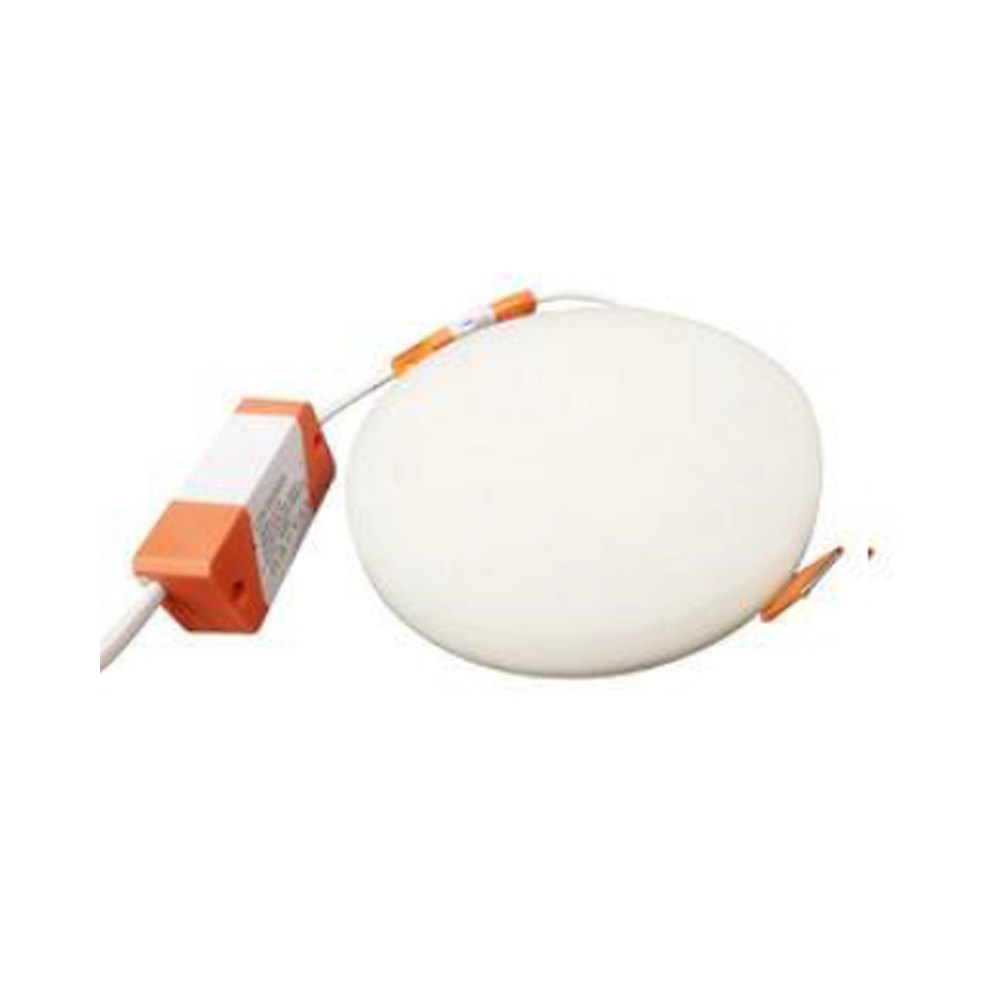
Many LED panels, slim ceiling lights and some downlights have no separate lamp at all. The diodes sit on a board fixed directly to the fitting's body and are powered by an internal or external driver. With these products there is no bulb to change: when the diodes fade, either the whole fitting is replaced or, if the manufacturer allows it, the LED module or driver.
This has advantages and drawbacks. An integrated fitting can be thinner, and its cooling is designed around its own body. A fitting with replaceable lamps, on the other hand, only needs its consumable part renewed while the body stays in place for years.
Why the distinction matters in practice
When a light goes out, the first question is whether the fault lies in the lamp or in the fitting. A simple sequence of checks:
- take the lamp out and try it in another fitting with the same cap that you know works;
- if it lights there, the problem is in the original fitting: lampholder, wiring, switch or driver;
- if it does not light there either, replacing the lamp is enough;
- if the lampholder is scorched, melted or smells burnt, disconnect the fitting and call an electrician.
The distinction matters when buying, too. When choosing a fitting, check what lamp it takes: the cap type, the largest lamp that will physically fit, and the lampholder's wattage limit. A bulky high-output bulb may not fit a narrow glass shade, and an enclosed shade traps heat. When buying a lamp, work the other way round and start from the fitting's requirements.
For bathrooms, balconies and gardens, protection against moisture is a property of the fitting as well. Putting any particular bulb into a decorative fitting with an open lampholder does not make it suitable for a damp location.
The language trap
In Azerbaijani, the word "lampa" is used in conversation both for the light source and for a complete item such as a desk lamp. English has the same problem: "lamp" can mean a bulb or a table lamp. Russian keeps the terms apart more clearly, with "лампа" for the source, "светильник" for the fitting and "люстра" for one type of fitting. Naming the cap type or the kind of fitting precisely at the shop removes the confusion.
At its plant in Ganja, Zaferoğlu Elektrik makes light sources rather than fittings: LED lamps under the Zəfər İşığı brand, with incandescent, halogen and fluorescent lamps also in the catalogue. If you know the lampholder type in your fitting, finding a matching lamp by cap is straightforward.
All news