
Why a bulb’s rated wattage and its measured draw can differ
When a plug-in power meter shows a different number from the one printed on a bulb, do not jump to conclusions. Here are the main reasons and how to measure properly.
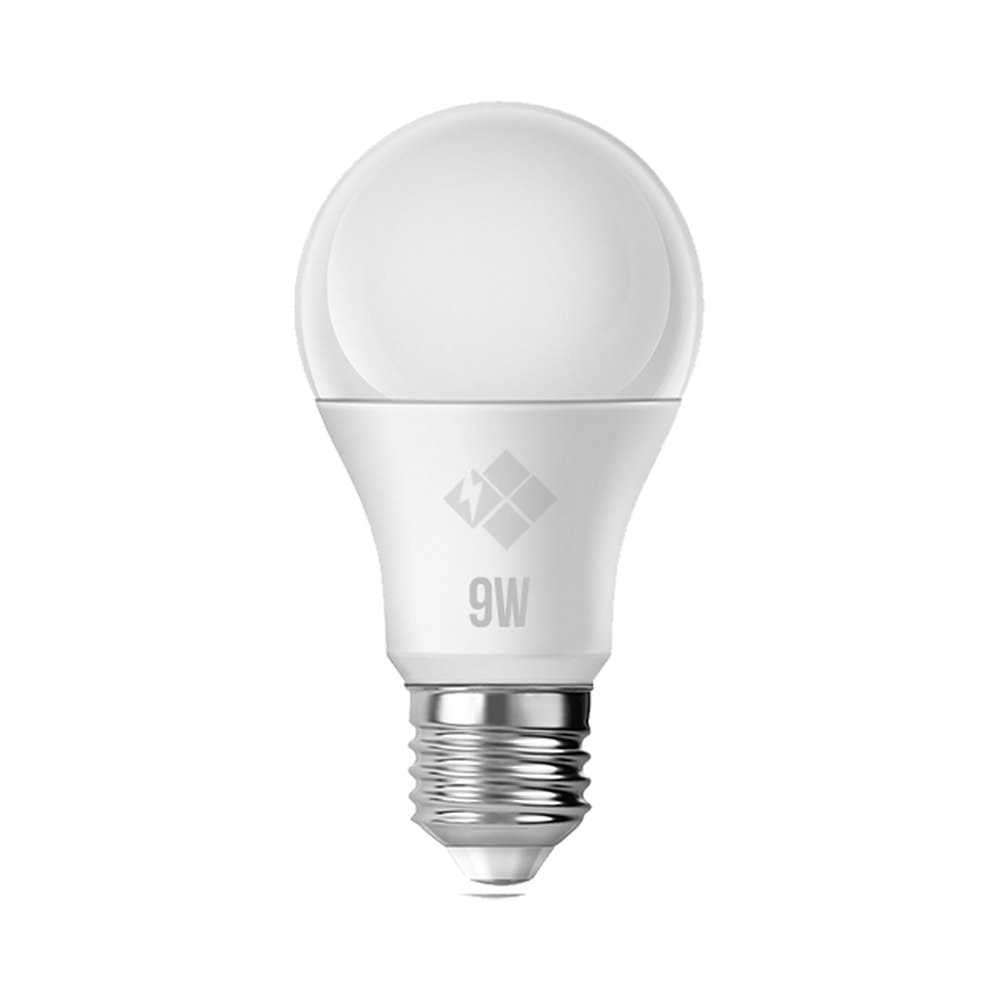
Buying a cheap plug-in power meter and checking the appliances around the house is an interesting exercise. The first surprise usually comes with the bulbs: an LED bulb marked 9 W reads 7.5 W, another one reads 11 W, and sometimes the display shows a number that makes no sense at all. That does not necessarily mean the bulb is lying. There are several technical reasons for the gap, and many of them have to do with the measurement itself.
What the rated wattage means
The wattage on a bulb is its rated power: the average consumption measured under defined conditions, at nominal voltage, at room temperature and after the lamp has reached a stable operating state. In production, small differences between bulbs of the same series are unavoidable, because driver components and diode parameters are never perfectly identical. International standards and regulations therefore allow a certain tolerance around the declared power.
The box may also say something like «60 W equivalent». That is not consumption. It is a comparison showing roughly which incandescent bulb the lamp’s light output corresponds to. The real consumption is always stated separately, usually as a smaller figure. Mixing up these two numbers is the most common mistake.
Watts, volt-amperes and power factor
The driver in an LED bulb draws a non-sinusoidal, pulsed current from the mains. As a result, the apparent power (VA) is higher than the real power (W), and the ratio between them is called the power factor (PF). Simple meters sometimes display apparent power, or just the product of current and voltage, as «watts». In that case the reading can be well above what the bulb actually consumes.
Your household meter records real energy in kilowatt-hours. So the figure that matters at home is W, not VA. Check whether your power meter shows W, VA and PF separately: if it does, it at least distinguishes between these quantities.
The meter’s own error
Plug-in power meters are generally designed for loads of hundreds of watts, such as heaters or fridges. With a load of only a few watts their relative error rises sharply. Some models barely register very small loads or round the values off. Measuring a pulsed current also requires the meter to sample quickly enough, which basic models do not always do.
The practical workaround is to increase the load. Plug several bulbs of the same model into one extension lead, measure the total and divide by the number of bulbs. That reduces the share of the meter’s error and also averages out differences between individual units. If you need a precise figure, for example when deciding on lighting for a site with several hundred lamps, it makes sense to have an electrician take the reading with a calibrated power analyser.
Voltage, temperature and operating mode
Mains voltage varies over the day. In an incandescent bulb, a rise in voltage noticeably increases the power. In most LED bulbs the driver regulates the current, so the effect is weak, but in models with a simple circuit a voltage change can still affect both consumption and brightness.
Temperature plays a part too. A cold bulb can draw slightly different power in the first minutes after switching on, and the operating point settles as the diodes warm up. It is better to take the reading after the bulb has been running for a while rather than immediately.
Dimmable or remote-controlled lamps add another factor: when brightness is turned down, power drops, and smart bulbs keep drawing a small amount of energy for their receiver even when switched off.
A short plan for a fair check
- Take the reading after the bulb has been on for at least a few minutes.
- Note W, VA and PF separately, and compare using W.
- Measure several low-power bulbs together and work out the average.
- Record the mains voltage at the same time; very low or high voltage can change the result.
- Do not confuse the «equivalent» figure with actual consumption.
- If the gap is very large and the bulb also runs hot, flickers or makes noise, it is no longer a measurement question: take the bulb out of service.
Small deviations are normal and make no practical difference to a monthly bill; real savings come mainly from choosing the right technology and not leaving lights on unnecessarily. Once you know a room's real consumption, Zəfər İşığı E27 bulbs from 7 to 22 watts make it easy to step down or up.
All news