
Controlling a light from two places: two-way switches
Long corridors, staircases and bedrooms often need a light that can be switched from two points. Here is how two-way switching works and where it usually goes wrong.
Switching on the light at one end of a long corridor and then walking back to switch it off, or getting out of bed to reach the switch by the door, is a small daily irritation. Solving it does not require special cable or a smart home system. There is a simple arrangement that has been used for decades: two-way switches. In Russian sources they are called «проходной выключатель»; in the United States the same thing is known as a «three-way switch».
How it differs from an ordinary switch
An ordinary one-way switch has two contacts: it either closes the circuit or opens it. A two-way switch has three terminals. One is the common terminal, often marked L or COM, and the other two are the outputs, marked L1 and L2 or 1 and 2. In each position, the rocker connects the common terminal to one of the two outputs. In other words, a two-way switch does not break the circuit; it simply moves the current from one path to the other.
From the front these switches may look exactly like ordinary ones. To tell them apart, check the terminals at the back, the diagram on the packaging, or the small double-headed arrow sometimes printed on the rocker.
How the circuit works
Two-place control needs two two-way switches. The live conductor goes to the common terminal of the first switch. The two outputs of the first switch are connected to the two outputs of the second switch by two separate wires, usually called strappers or travellers. From the common terminal of the second switch, a wire runs to the light. The neutral goes straight to the light and does not pass through the switches.
The logic is simple: when both switches select the same path, the circuit is closed and the light comes on; when either switch changes position, the paths no longer line up and the light goes off. That is why each switch reverses the state of the light regardless of where the other one is set.
For control from three or more places, one or more intermediate switches are fitted between the two two-way switches. An intermediate switch has four terminals and connects the two strappers either straight through or crossed over.
Where it is especially useful
- Long corridors and L-shaped passages: one switch at each end.
- Staircases: at the bottom and at the top.
- Bedrooms: by the door and at the bedside.
- Garages or storerooms: from inside the house and from the outside door.
- Living rooms with two entrances, or a kitchen-dining area.
In larger buildings, such as long corridors switched from many points, each extra intermediate switch adds more wiring. In those cases a circuit built around an impulse relay can be simpler: all push-buttons are wired in parallel and each press moves the relay to its next state.
Typical mistakes and their symptoms
Most problems with two-way switching come from wires being mixed up during installation:
- The common terminal has been swapped with one of the outputs: the light can only be controlled when one of the switches is in a particular position.
- One of the strappers is broken or a terminal has worked loose: the light sometimes comes on and sometimes does not, behaving «illogically».
- The neutral has been routed through the switches while the live goes straight to the light: the light still switches, but the lampholder stays live even when the light is off, which means a risk of electric shock when changing the bulb.
- Illuminated switches: in some cases the small current through the indicator makes a switched-off LED bulb glow faintly or flash from time to time.
If you plan to replace the switches or install a new circuit, it is better to hand the job to an electrician. Identifying the live conductor correctly, labelling the wires in the back box and isolating the circuit at the breaker all call for experience.
Compatibility with LED bulbs
A two-way switch does not care what kind of bulb is fitted: it simply opens and closes the circuit. It therefore works without any issue with standard LED, filament or other lamps. Two points still deserve attention. First, if one of the switches is a dimmer, the bulb must be dimmable. Second, if an LED bulb glows faintly with illuminated switches, fitting switches without indicators or having the live and neutral connections checked usually solves it.
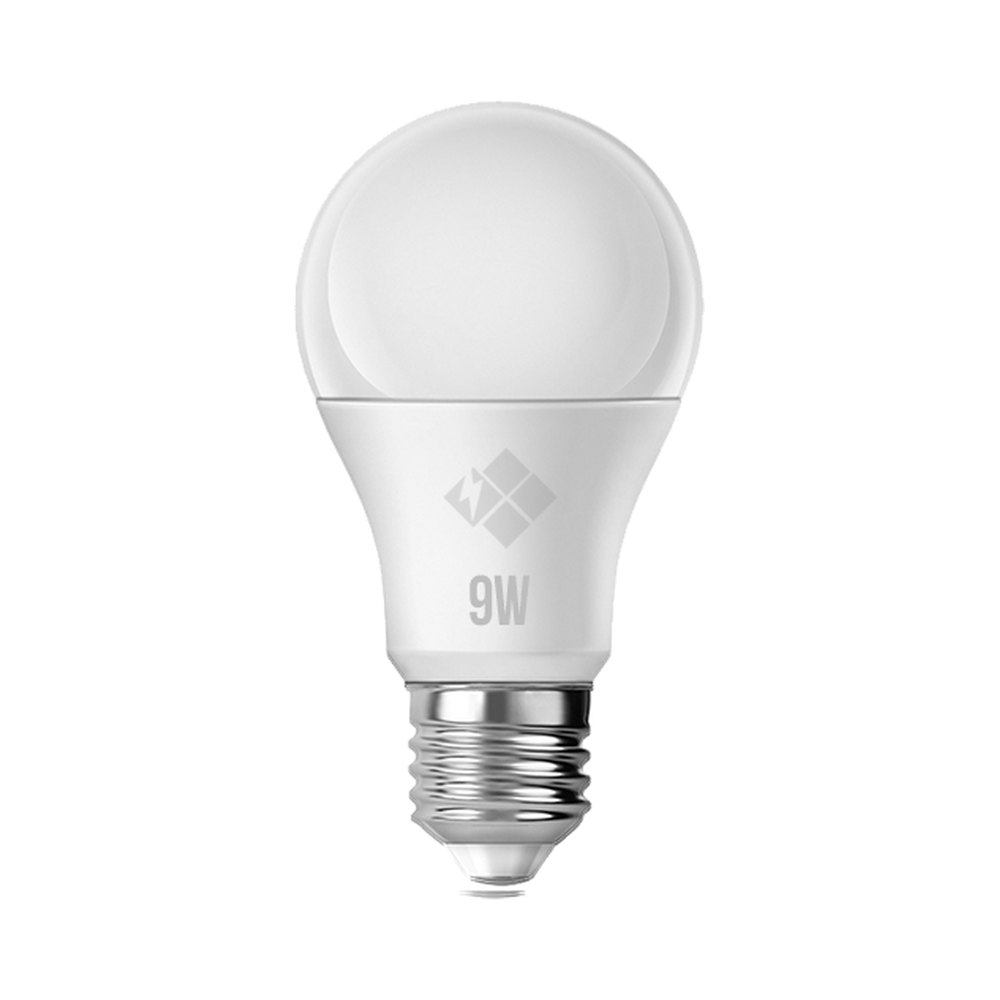
For corridor and staircase lighting controlled from two places, you can pick a suitable E27 or E14 Zəfər İşığı LED bulb from the Zaferoğlu Elektrik catalogue; the switches themselves do not need to change with the type of bulb.
All news