
A bulb goes off after a while and then comes back on: why?
A bulb that runs for half an hour, cuts out and comes back once it cools is usually telling you about heat. Thermal protection, other causes and simple checks at home.
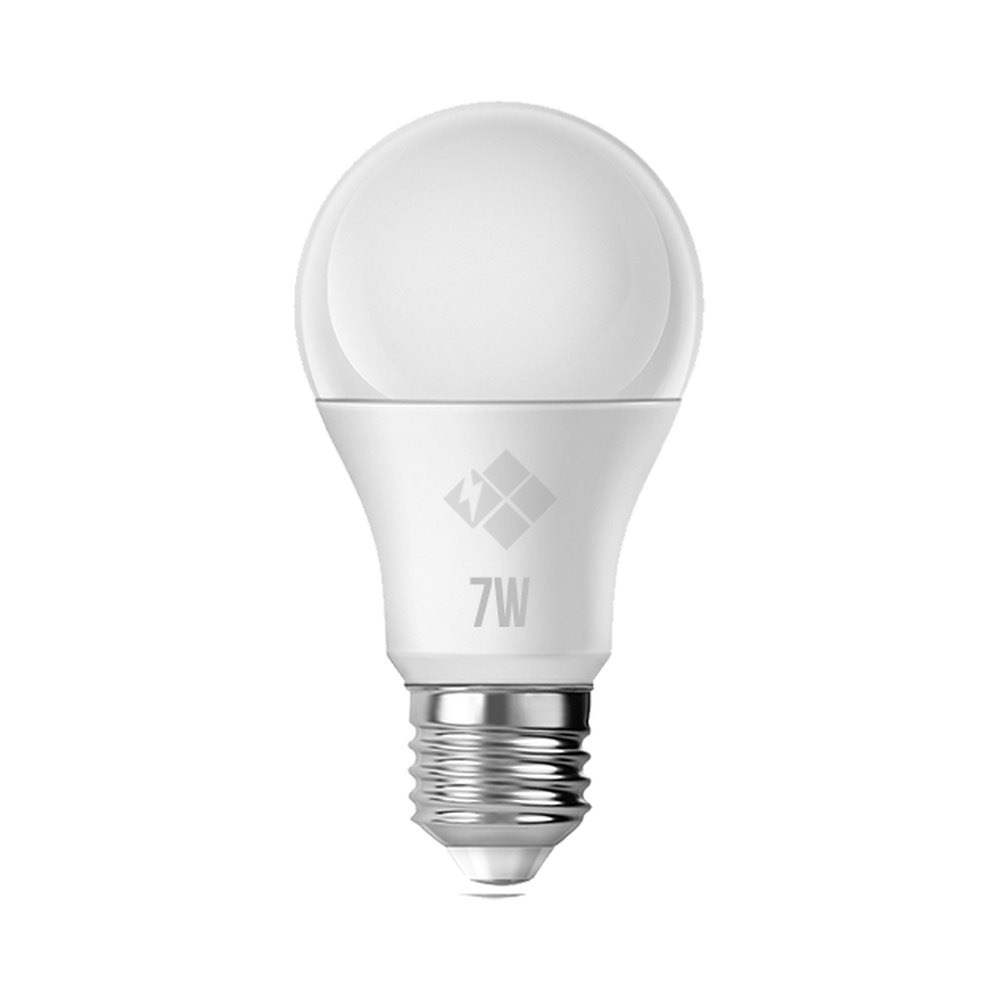
In the evening the table lamp works fine, then forty minutes later it suddenly goes out. Five or ten minutes pass, you have not touched anything, and it lights up again. The rhythm of this behaviour is the most useful clue: if the bulb goes off after a certain running time rather than at random moments, heat is the most likely cause.
How driver thermal protection works
Inside an LED bulb's body, near the cap, sits the driver, a small electronic board that turns mains voltage into a current suitable for the LEDs. Its components, electrolytic capacitors in particular, age quickly at high temperatures. That is why many drivers include a temperature sensor.
The protection can work in two ways. Some drivers gradually reduce current when the temperature limit is exceeded, so the bulb does not go out but gets a little dimmer, often without you noticing. Others switch the bulb off completely at a set temperature and restart once the driver has cooled. It is this second type that produces the off-and-on cycle.
When protection kicks in, it shows the protection works, but it also means the bulb is exposed to more heat than it is designed for. If that goes on for long, the bulb's life is shortened.
What is heating the bulb
Usually the culprit is not the bulb but where it is installed:
- An enclosed shade. Inside a glass or plastic cover with no airflow, hot air builds up and the temperature keeps rising.
- A holder facing upward. Heat rises, so in a bulb with its cap at the bottom the driver sits in the air warmed by its own LEDs. This is common in floor lamps with shades and in uplighter wall fittings.
- High wattage in a small fitting. A powerful bulb cannot cool properly inside a small, tight shade.
- A hot environment. Near a cooker hood, in a sunny window, in an attic, or in an unventilated storeroom during summer.
- Recessed fittings. In a ceiling covered with thermal insulation, the heat has nowhere to go.
A typical example: a powerful E27 bulb in a closed glass ceiling shade in a bedroom. There is no problem all winter, but in summer, with the room already warm, the bulb starts cutting out once every evening.
Causes other than heat
Not every off-and-on cycle is about heat. Consider these as well:
- A loose contact. The contact tab inside the holder is flattened, or a wire is not tightened properly under its screw. As the metal warms it expands, the contact opens, and it closes again as it cools. In this case the holder itself also gets hot, sometimes with visible scorch marks. That is a dangerous situation.
- An ageing capacitor. As the driver capacitor loses capacity, the bulb may first start to flicker and later cut out once it warms up. If a bulb that used to be fine develops this after long use, this is a likely explanation.
- Voltage fluctuations. If other lights in the house flicker or go out at the same moment, the problem is in the supply, not the bulb.
- A timer, sensor or dimmer. A motion sensor, a stairwell timer or an incompatible dimmer opens and closes the circuit by its own logic. Testing the bulb in an ordinary switched fitting helps tell this apart.
- The fitting's own protection. Some recessed fittings and transformers have their own thermal cut-out, which stops them regardless of the bulb.
How to check at home
- Note when it goes off. If it is roughly the same running time every time, heat is likely; if it is completely random, look at contacts or the supply.
- Move the bulb to an open fitting. If it works normally in an open table lamp with the cap at the top, the problem is the conditions in the original fitting.
- Try a lower-wattage bulb in the same place. If the problem disappears, the fitting cannot shed enough heat at that wattage.
- Inspect the holder with the power off. Blackened contacts, melted plastic or a bulb that sits loosely mean you should stop using the fitting and have an electrician look at it.
- Read the warnings on the box. If it says the bulb is not for enclosed luminaires, the bulb needs a different home.
What to do
For an enclosed shade, the simplest fix is a bulb whose size and wattage suit the fitting, or switching to a ventilated shade if you can. Carrying on with a bulb that trips on heat in the same conditions will soon lead to it failing altogether.
If you are considering large-bodied bulbs such as Zəfər İşığı T-shaped or corn lamps, check the fitting's size and ventilation first, since those are exactly the conditions that trigger thermal cut-out.
All news