Bulb orientation: cap up, cap down or sideways
The same LED bulb runs under different thermal conditions in a pendant, a table lamp and a wall light. Here is how mounting position affects the light and the bulb’s life.
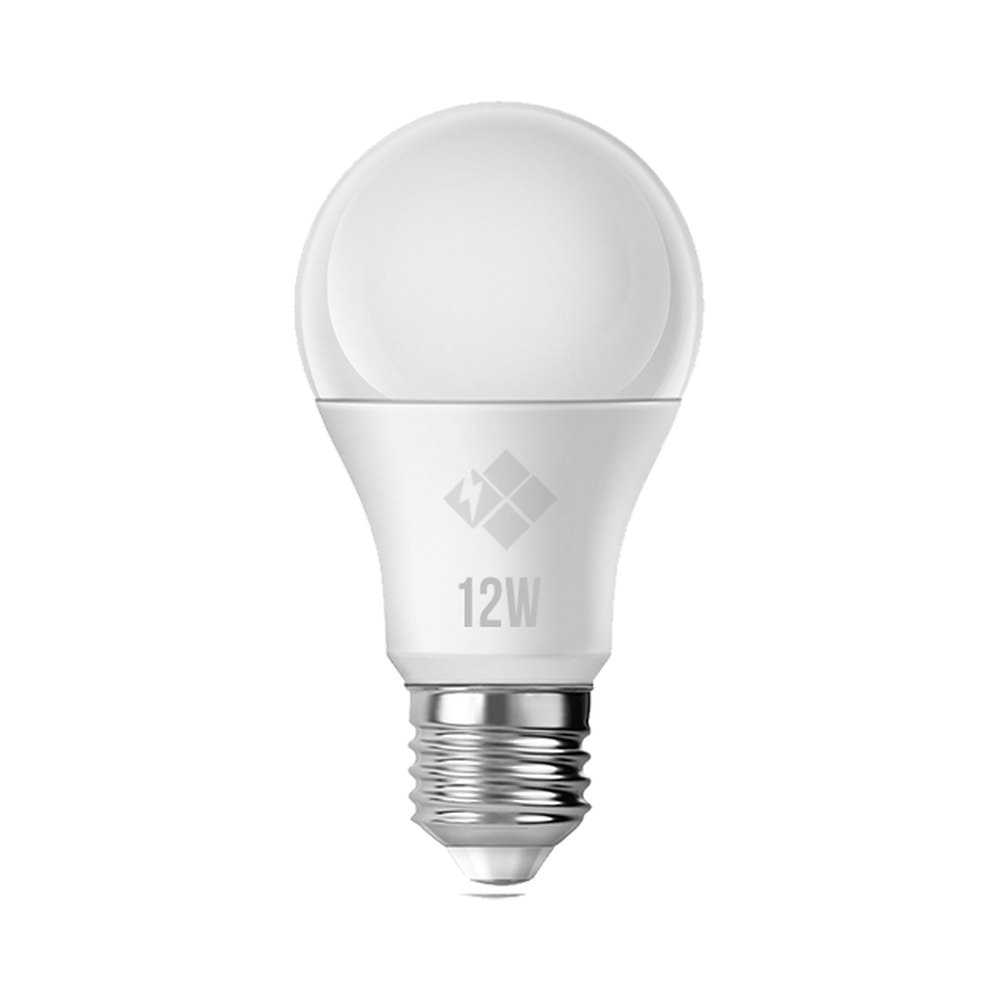
An old filament bulb did not care whether it hung cap-up, cap-down or sideways. An LED bulb, however, contains an electronic driver hidden in its base alongside the diodes that make the light, and that driver is sensitive to heat. So the way the bulb sits in its holder, with the cap up, down or to the side, affects both its thermal conditions and how the light is distributed.
Where the heat goes
In an LED bulb the diodes usually sit on a flat board under the frosted dome. The heat they produce passes from the board to the body and from there into the surrounding air. The driver sits inside the plastic or metal body between the board and the screw cap. Hot air always rises, and that simple fact is what makes orientation matter.
- Cap up, dome pointing down (pendants, chandelier arms, ceiling shades): hot air rising from the diodes travels along the body towards the driver and lampholder. The driver runs hottest in this position.
- Cap down, dome pointing up (table lamps, floor lamps, uplighter wall fittings): heat rises from the dome, away from the driver. Thermally, this is the easiest position.
- Sideways (wall lights and sconces): an intermediate case, with part of the heat escaping along the upper side of the body.
In an open fitting these differences are often not critical. The trouble starts in a small enclosed shade: a cap-up bulb inside a closed glass globe has nowhere for hot air to go, and the driver runs at a high temperature all the time.
Orientation and bulb life
The ageing of electronic components, especially electrolytic capacitors, depends strongly on temperature: the higher the operating temperature, the faster they age. In the LEDs themselves, high temperature also speeds up the gradual decline in light output. That is why the same bulb may last longer in a table lamp than in an enclosed pendant shade.
Good-quality bulbs have thermal protection: if they overheat, the driver reduces power or switches the bulb off temporarily. If a ceiling light runs for a while, goes out and comes back on after cooling, orientation and ventilation are among the first things to check.
The light distribution changes too
A classic incandescent bulb spread its light almost equally in every direction. In a standard LED bulb, the diodes sit on one face of the board, so most of the light goes towards the dome and relatively little falls back towards the cap. This has practical consequences:
- In a downward-facing pendant the light falls straight onto the table and floor, while the ceiling stays relatively dark.
- In an upward-facing floor lamp the light is thrown at the ceiling and the room is lit by softer, reflected light.
- In a sideways wall light one part of the wall can be bright and another part in shadow.
Where light is needed in every direction, as in open chandeliers, filament LED bulbs or models with a wide beam angle give a more natural result.
What to look for on the box
Manufacturers usually state any orientation restriction on the packaging or in the instructions. The two most common versions are «any position» (universal) and a list of positions that are not allowed. Look too for a note or pictogram about use in closed fittings. If that information is missing, ask the seller before using the bulb cap-up in a closed shade.
Older technologies can be stricter. Some halogen and high-pressure discharge lamps are only allowed to run in certain positions, so it is important to follow the instructions when replacing them.
A short checklist
- If a pendant or ceiling fitting has a closed shade, check that the bulb is suitable for enclosed use.
- In a small shade, choose a lower-wattage bulb where possible: less heat means an easier life.
- Keep the fitting’s ventilation openings clear of dust and insects.
- If a bulb keeps switching off and on or its dome gets very hot, try it in an open fitting: if the problem disappears, heat is the cause.
- If it matters where the light lands, check the bulb’s beam angle and shape.
Beyond classic E27 bulbs, Zəfər İşığı also makes E14 filament and candle lamps; for open chandeliers where light should spread in all directions, it is worth comparing these shapes.
All news