
Remote-controlled light fittings: how they work
In a remote-controlled ceiling light, the wall switch, a receiver module and the driver work together. Here are the signal types, how dimming and colour tuning work, and common faults.
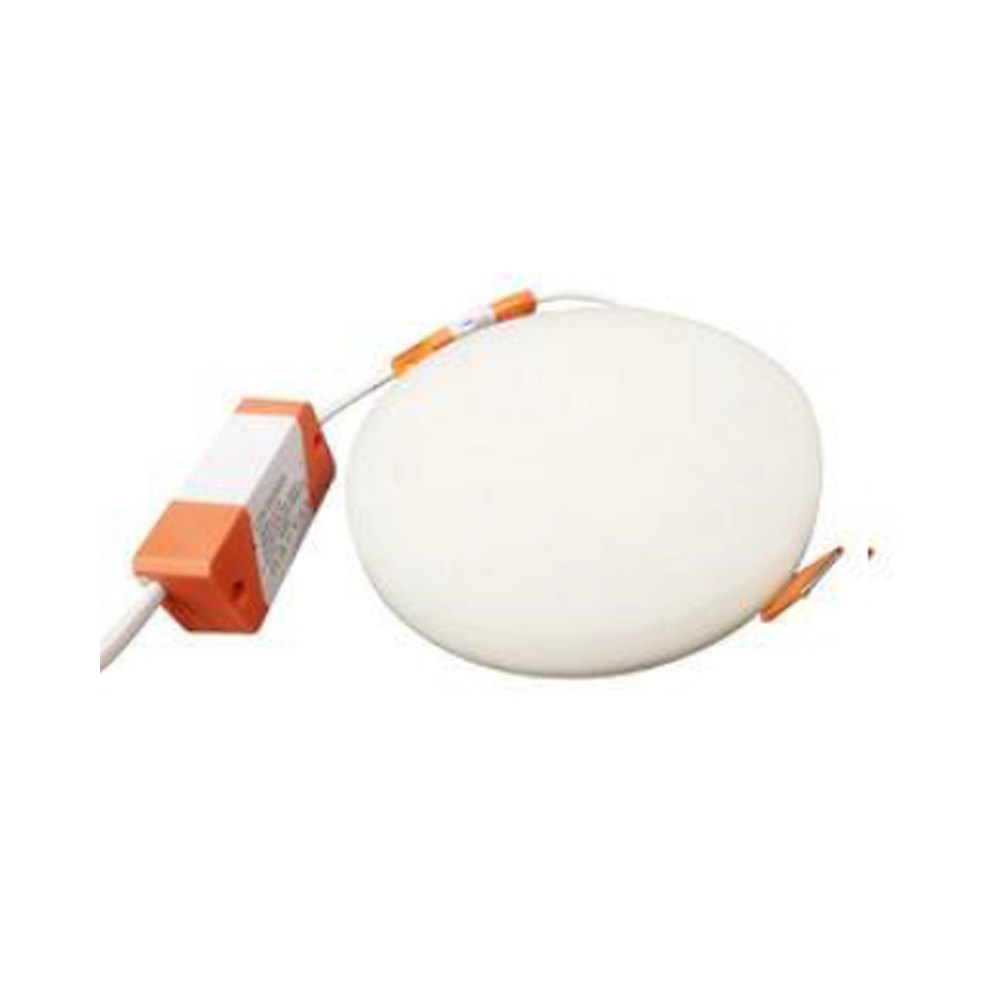
Remote-controlled ceiling lights are increasingly common in bedrooms, children’s rooms and living rooms. Dimming the light without getting up from the sofa, or switching to a warmer tone in the evening, is convenient. But when such a fitting fails, or starts «doing its own thing», it is hard to find the cause without knowing what sits where. Below we go through the parts of the system one by one.
What is inside the fitting
A remote-controlled LED fitting usually has three main parts:
- the LED board or modules, the diodes that actually produce the light;
- the driver, which turns mains voltage into the steady current the diodes need;
- the receiver (controller), a small circuit board that picks up commands from the remote and tells the driver how much light to give and in what colour.
In some models the driver and receiver share one housing; in others they are separate units connected by cable. The remote itself is simply a transmitter: when you press a button, it sends a coded signal.
Infrared and radio signals
Remotes work on one of two principles. An infrared (IR) remote is like a TV remote: the signal travels as an invisible beam of light. Its advantage is simplicity; its drawback is that it needs a direct line of sight. You have to point it at the fitting, and a lampshade, shelf or wall in between can block the command. Bright sunlight can also weaken IR reception.
Radio-frequency (RF) remotes use radio waves, and the signal can pass through thin partitions and the material of the shade. You can point the remote in any direction. In RF systems the remote and receiver are usually paired, which stops an identical fitting in the flat next door from responding to your remote. Pairing is often done by pressing a particular button within the first seconds after the fitting is powered up; the exact procedure is given in the instructions.
How brightness and colour temperature change
Dimming is usually done with pulse-width modulation (PWM) or by reducing the current. With PWM, the diodes switch on and off at a frequency too high for the eye to notice, and the light dims as the share of on-time falls. In poorly designed circuits with a low frequency, you may see bands through a phone camera or feel eye strain.
Fittings with adjustable colour temperature usually have two groups of diodes: warm white and cool white. The controller changes the brightness ratio between the two groups, and the intermediate tones come from that mix. So in «neutral» mode both groups are lit at once, while at the extremes one of them dominates.
How it relates to the wall switch
The receiver in a remote-controlled fitting has to be powered all the time to listen for commands. When the wall switch is off, the receiver is off too, and the remote does nothing. In everyday use the switch is therefore left on and control happens through the remote. In this mode the receiver draws very little power, but that consumption is not zero.
Many models also offer special functions through the switch: for example, turning it off and back on quickly changes the mode or starts pairing. After a power cut, some fittings remember their last state while others come back on in a default mode.
Common problems
- The remote does nothing but the switch works: first replace the remote’s battery; for an IR remote check the line of sight, for an RF remote pair it again.
- The fitting glows faintly when off: this can happen if the wall switch has an indicator light or the live and neutral connections are mixed up.
- Switching on or off by itself: another remote or device on the same frequency nearby, or a damaged receiver, may be the cause.
- Part of the light does not work or the colour is uneven: one of the LED modules or one of the driver’s channels may be faulty.
- The fitting gets hot and keeps shutting off: if the driver is poorly ventilated, its thermal protection may be kicking in.
Replacing a receiver or driver means working with mains voltage. Any checks beyond the battery and pairing are safest left to an electrician.
What to look for when buying
Before you buy, ask what type of remote it uses (IR or RF), whether colour temperature is adjustable, whether it remembers its state after a power cut, and whether a spare remote can be bought separately. If the room already has many remote-controlled devices, the pairing feature of an RF system is particularly useful.
Plain fittings without a remote can simply take Zəfər İşığı LED bulbs with the matching base; the cap and shape details in the catalogue are all you need to choose one.
All news