
How the colour of a light fitting’s body affects the light
White, black or metallic housings give the same lamp a different character. How reflector colour, glare and the look of the ceiling are connected.
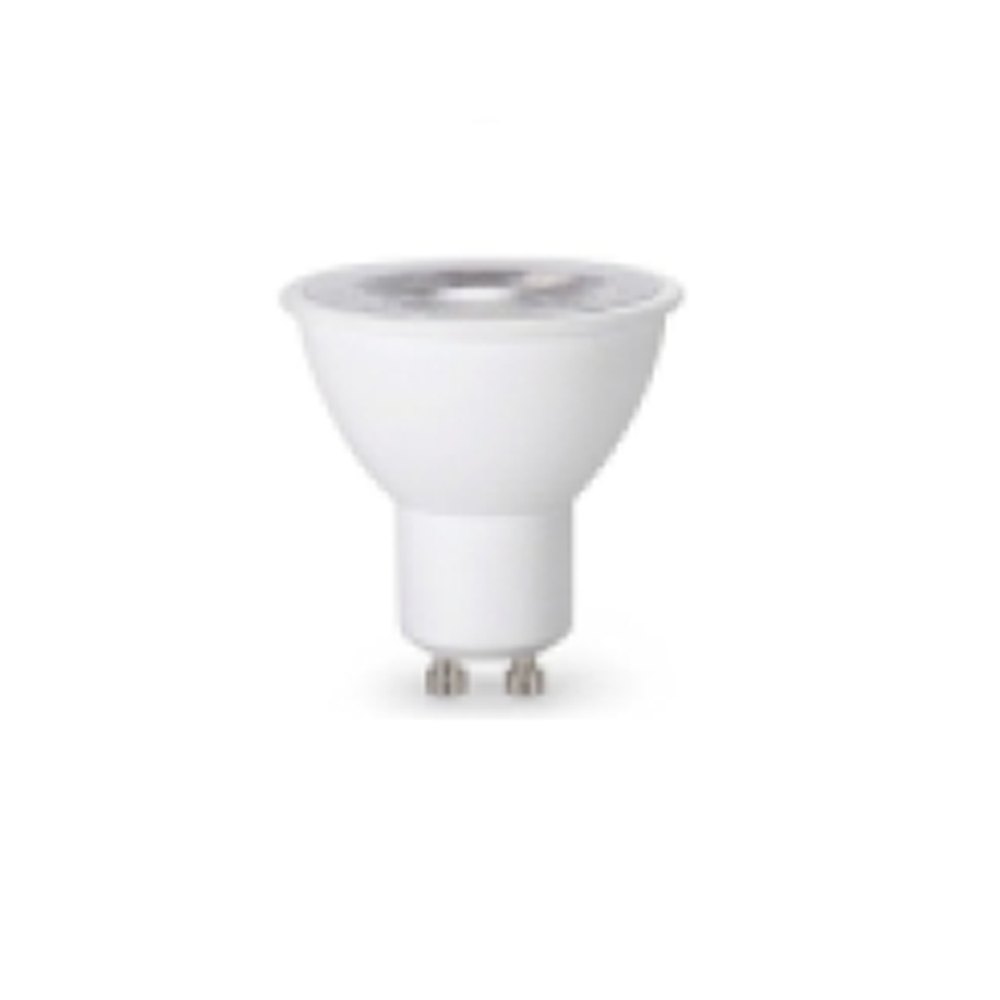
Put the same GU10 lamp into a white downlight and a black one and switch them on side by side, and the difference is obvious. The room is lit about the same, but looking up, one reads as a bright spot on the ceiling while the other almost hides where the light is coming from. The colour of a fitting is not just decoration: it affects how much light is absorbed, how much glare you get and how comfortable the light feels.
Outer body versus inner surface
Two things need separating here. The outer body is what you see in the room, and it has very little contact with the light itself. The inner surface, meaning the reflector, the cone or the inside of the shade, is what bounces part of the lamp's output back out. For the amount and character of light, the colour and finish of that inner surface is what counts.
Light-coloured surfaces, especially white and polished metal, return most of the light that falls on them. Dark, matt surfaces absorb a significant share and turn it into heat. That is why a fitting with a black interior gives somewhat less light with the same lamp; how much less depends on the design. If the lamp sends most of its light straight down, as a narrow-beam spot does, the inner surface plays a small role. With a wide-angle lamp that spreads light sideways, its role is much larger.
White fittings: soft and unobtrusive
A white fitting blends into a white ceiling and does not draw attention. A white interior diffuses light, so the opening appears as a larger, softly glowing area. In small rooms, under low ceilings and for general lighting, this makes the space feel more open.
There is a downside. When that bright ring falls within your field of view, for example when you lie on the sofa and look up, it can feel glaring. Some plastic housings also yellow over the years, which affects both their appearance and the tint of the reflected light.
When choosing a white fitting, pay attention to the shade of white as well. A cool, bluish white stands out clearly against warm, ivory-toned ceiling paint. The "invisible" effect only really works when the fitting matches the ceiling.
Black fittings: contrast and less glare
In downlights with a black interior the lamp seems recessed deeper and the opening does not glow. Seen from the side, the source is barely noticeable, while the pool of light on the surface below stands out more clearly. That works well for highlighting a bar counter, a picture on the wall, shelving or a dining table.
Points to bear in mind:
- black fittings appear as graphic dots on a white ceiling, which is a style choice that does not suit every interior;
- to make up for the light absorbed by a dark interior, a slightly stronger lamp or an extra fitting is sometimes needed;
- dust and fingerprints show up faster on black surfaces.
Pendants behave a little differently. A metal shade that is black inside and out sends all of its light downwards onto the table, leaving the ceiling and the upper walls in shadow. Over a dining table this creates a calm, intimate mood, but if it is the only light in the room, the space can feel dark and closed in. In that case, plan for some additional general lighting.
Metallic and gold finishes
Polished chrome and aluminium reflectors direct the light and tighten the beam, but they can create sparkle and glints when the lamp itself is in view. Gold, bronze or champagne interiors add a warm tint to the reflected light. Paired with a warm colour temperature lamp this gives a cosy mood; with cool white light it can produce an odd yellowish edge. The most reliable approach is to try the same lamp in a sample fitting before deciding.
What about heat?
Physics tells us dark surfaces radiate heat more effectively, but in a light fitting cooling is determined mainly by the type of metal, the shape of the heat sink and the airflow; colour is secondary. Outdoors in direct sun, the situation reverses: a dark body absorbs more sunlight and gets hotter during the day. That is worth considering for gardens and balconies.
A quick selection guide
- General lighting, low ceilings, a calm interior: white body and white interior.
- Accent lighting where low glare matters: a spot with a black or dark cone.
- Loft-style or high-contrast design: a black body, but check the colour of the interior separately.
- A warm, relaxed atmosphere: a gold reflector with a warm-white lamp.
- A reading corner or a child's room: a fitting with a matt interior where the lamp is not directly visible.
The body sets the colour, while the lamp together with the optics shapes the light. The GU10 and G5.3 spot lamps offered by Zaferoğlu Elektrik under the Zəfər İşığı brand can be used in white or black fittings alike; what matters is that the cap and dimensions match.
All news