
OLED vs LED: what is the difference in lighting?
The names are similar, but OLED and LED produce light in different ways: one is a point source, the other a glowing surface. What that means for lighting.
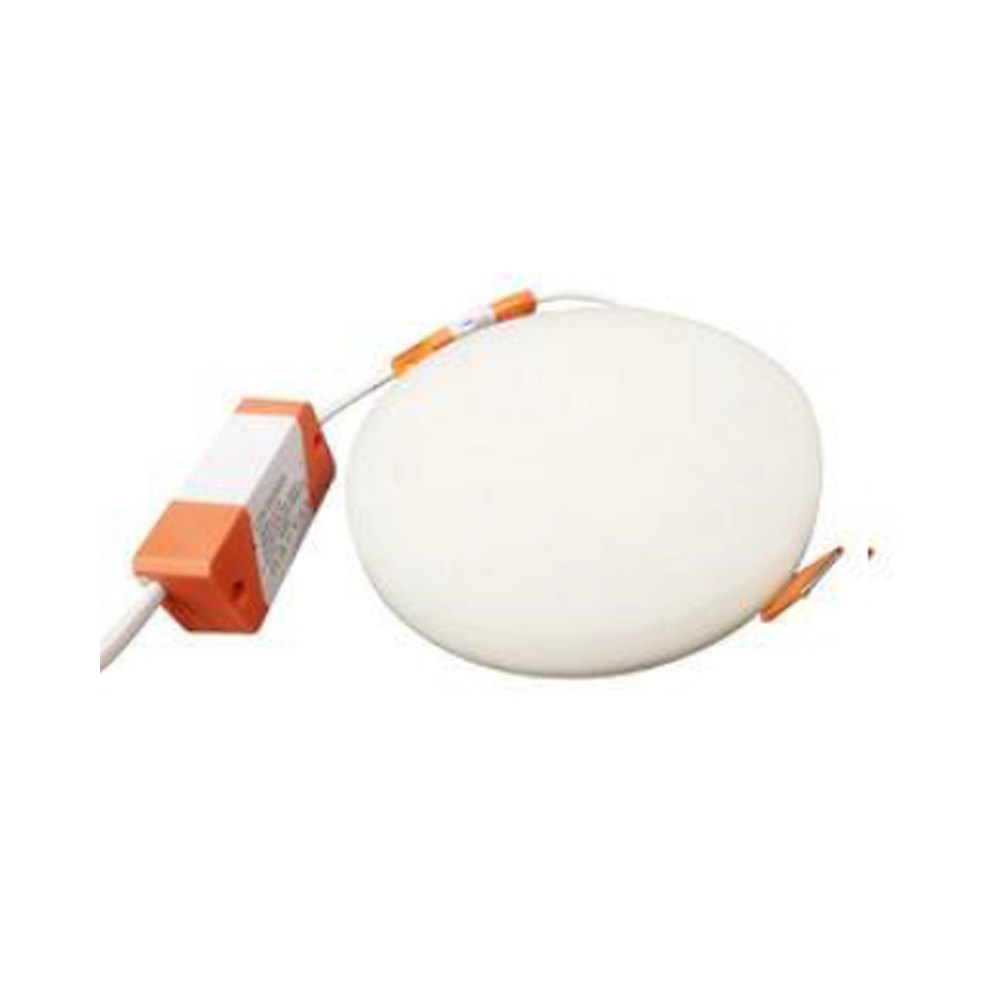
Most people know the word OLED from television and phone screens, so when they hear about OLED lighting they assume it is a newer and better version of LED. In fact, although the two technologies are related, they work differently, have different strengths and play quite different roles in lighting.
Structure: a crystal point and a thin film
An ordinary LED is an inorganic semiconductor crystal. Light is generated in a tiny area, a fraction of a millimetre across. That makes an LED a very bright point source: a small chip yields a lot of light, but looking at it directly is dazzling. LED bulbs use frosted glass, diffusers or lenses to hide those points.
OLED stands for organic light-emitting diode. Here the light is produced in very thin carbon-based organic layers. These layers are deposited as a broad surface on glass or a flexible substrate, so an OLED is not a point but a panel that glows evenly across its whole area. It can be just a few millimetres thick.
The character of the light
This difference directly affects how the light feels.
- LED light is strong and can be directed. A lens gives a narrow beam, a reflector a wide spread. That is why spotlights, floodlights and street lights are built with LEDs.
- OLED light is soft and diffuse. The surface brightness is low, so you can look at it up close, shadows are soft and there is almost no glare.
- An OLED panel stays cool enough to touch, while an LED chip produces heat in a small area and needs a heat sink.
In other words, LED suits taking light from one place and sending it where it is needed, while OLED suits turning a surface itself into the light source.
Colour is another difference. A white LED usually works with a blue diode and a yellow phosphor, so its spectrum has a strong blue peak. A white OLED is typically made by combining several organic layers that emit different colours, and its spectrum can be smoother. That does not automatically mean better colour rendering, though: modern high-CRI LED lamps also show colours very naturally. In both cases the decision should rest on the colour rendering index stated in the product documentation, not on the name of the technology.
Why homes do not have OLED bulbs
OLED lighting panels do exist and are used in design projects, museum displays and car rear lights. But they have not caught on as everyday household lighting, for practical reasons:
- OLED needs a much larger surface for the same amount of light. Lighting a room would mean covering a large part of the ceiling with panels.
- Manufacturing is complex and expensive, especially for large panels.
- Organic materials are sensitive to moisture and oxygen and need very good sealing; the layers age faster as brightness rises.
- In terms of efficiency, modern LED lamps are still ahead in most cases.
For these reasons OLED lighting remains a niche product, while everyday lighting is built on LED.
Products that look alike but are not
You will sometimes see fittings described as having an OLED effect or being as thin as OLED. Most of them are thin light-guide plates lit from the edge by LEDs. These panels also create the impression of an evenly glowing surface, but they contain ordinary LED chips. That is not a bad solution; the technology simply needs to be named correctly.
Screens add to the confusion. An LED television is actually a liquid crystal screen with an LED backlight, while in an OLED television every pixel emits its own light. That distinction matters when comparing screens, but it has no bearing on choosing home lighting.
When you choose
If you are choosing light for a living room, kitchen, hallway or office, the practical option is LED: the range is wide, the caps are standard, and any shape and output can be found. If you want soft, glare-free light, LED can deliver that too, through a panel with a frosted diffuser, an opal shade or indirect lighting.
OLED is interesting as a design element: a thin light panel on a wall, an unusually shaped decorative lamp, or a display case viewed from very close. For such projects, ask the manufacturer separately about brightness, service life and whether the panel can be replaced.
Zəfər İşığı lamps use conventional LED chips, not OLED. For homes, conventional LED remains the practical choice today, in screw-in, candle and spot versions.
All news