
Integrated LED fittings: when the light source cannot be replaced
Some fittings have no lampholder and no bulb: the LEDs are built into the body. The benefits, the risks and what to check before buying one.
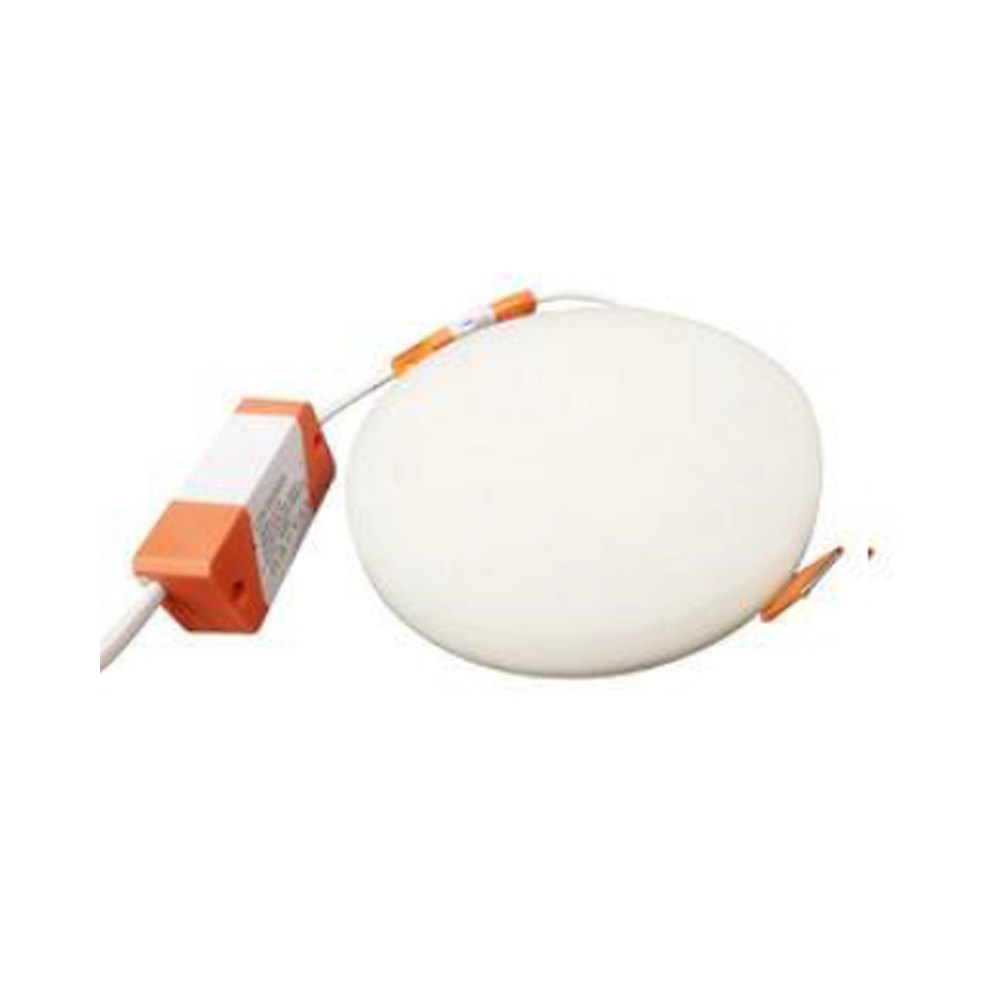
Plenty of people who buy and install a new ceiling light open it a few years later and are surprised: there is no lampholder and no bulb inside. All they see are small yellow squares on an aluminium board and a small electronic box. This is an integrated LED fitting, a design in which the light source is an inseparable part of the body. Such fittings have their own logic, but it is worth understanding it before you choose one.
What it is and how it is built
In a conventional fitting the light source is a separate product: a lamp that screws or plugs into a standard cap such as E27 or GU10. In an integrated fitting the LED chips are mounted directly on a board inside the fitting or on the body itself. The board is attached to an aluminium part that carries heat away, a diffuser or lens spreads the light, and a driver housed inside or in a separate box regulates the current.
Slim LED panels, narrow linear fittings, under-cabinet strips, many modern ceiling lights and street lights are all built this way.
The advantages
There are solid reasons for the integrated design:
- Freedom of form. Without a standard bulb, a fitting can be very thin, long or unusually shaped. A ceiling panel a few centimetres deep is only possible this way.
- Heat management. LED life depends heavily on temperature. When the manufacturer mounts chips directly on the body, heat can be removed better than through a bulb's small heat sink.
- Optics. Lenses and reflectors are designed around the exact positions of the chips, so light is distributed more precisely and glare is reduced.
- Protection against dust and moisture. With no lampholder and no opening cover, the body is easier to seal, which matters in bathrooms and outdoors.
The main risk: when one part fails
The weak point of an integrated fitting is replacement. With a conventional fitting, a bulb fails and you screw in a new one. With an integrated one, it depends on which part has failed.
In practice the driver often fails before the LED chips, because its capacitors are sensitive to heat. If the driver is a separate unit connected with standard connectors, it can be replaced with a new one of the same rating. If it is soldered to the board or the body is glued shut, the whole fitting has to be replaced.
The second problem is matching. A few years later it may be hard to find the same model, especially when a row of fittings creates a uniform look, say in a long corridor or an office hall. Replacing one panel with a similar model from another manufacturer often leaves a visible difference in light colour and brightness.
In the European Union, ecodesign rules in force since 2021 require manufacturers, apart from justified exceptions, to make the light source and driver replaceable by a professional using common tools. That shows the industry recognises the problem, but such requirements do not apply in every market or to every product.
What to check before buying
When choosing an integrated fitting, look at future servicing as well as appearance:
- Is the driver a separate part, and are its voltage and current ratings printed on it?
- Is the LED board held with screws, or glued?
- Does the manufacturer offer spare parts or give information about them?
- Are the expected service life and operating temperature range stated in the documentation?
- If the fitting will be installed in a closed recess or near insulation, is that permitted?
- If an interior will use many identical fittings, can you buy one or two spares?
Which to choose, and when
An integrated fitting makes sense where the ceiling void is shallow, where the design calls for a special shape, in damp or dusty places, and on hard-to-reach high ceilings where frequent lamp changes are impractical anyway.
A fitting with a replaceable lamp stays flexible for everyday home lighting: you can change the colour temperature and output later and replace a failed bulb in a minute. For most chandeliers, wall lights, table lamps and ceiling shades, that is the simplest route.
Zaferoğlu Elektrik's Zəfər İşığı catalogue offers replaceable lamps, including E27 and E14 screw-in models and GU10 and G5.3 spots. If your fitting has a standard cap, the right lamp can be found in the catalogue by cap type.
All news