
A short history of the LED: from indicator light to home lighting
The LED began as a laboratory curiosity over a century ago and spent decades as a status light on devices. The discoveries that turned it into home lighting.
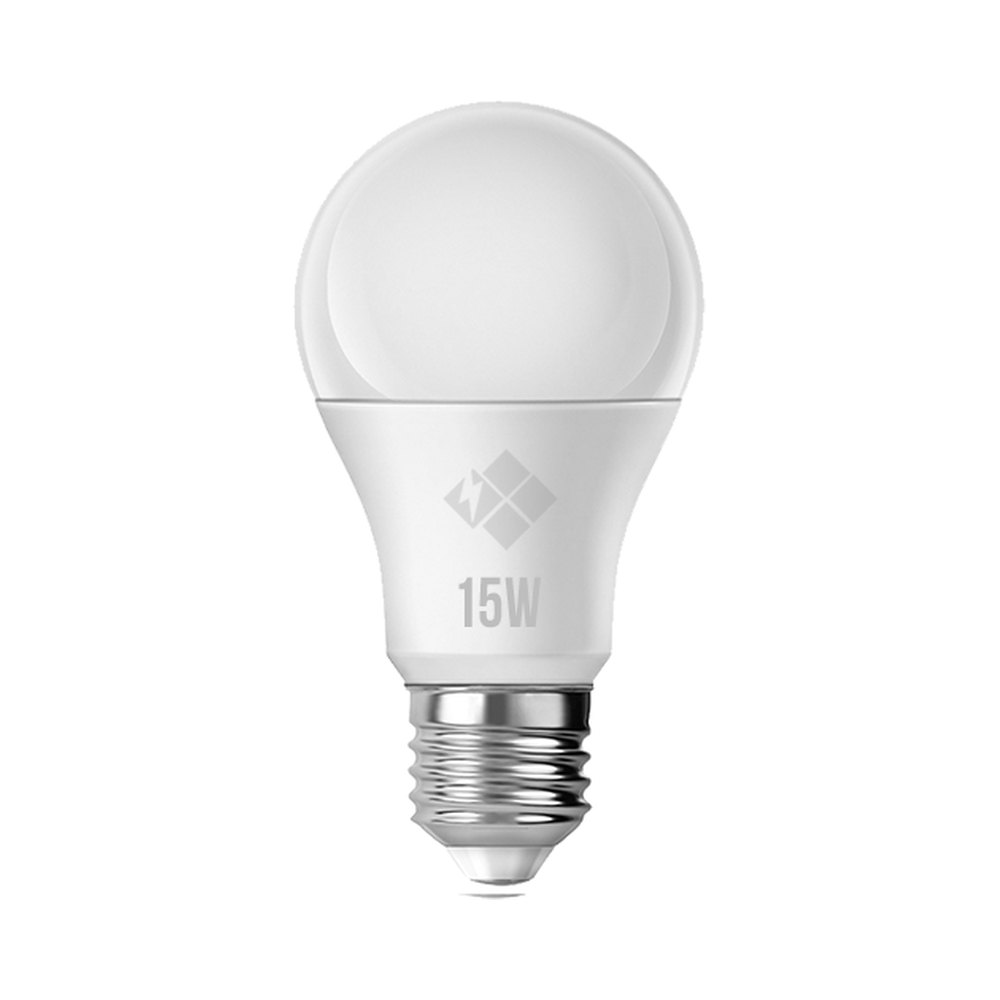
Today the LED bulb in the ceiling seems so ordinary that it is hard to picture it, a generation ago, only as the standby light on a television or the display of a calculator. The history of the LED is not the story of a single invention but of several steps that built on one another. Each solved a problem: first producing light at all, then colour, then brightness, and finally white light and affordability.
Early observations: light from a crystal
The fact that a semiconductor gives off light when current passes through it was recorded at the beginning of the twentieth century. In 1907 the British engineer Henry Round published a short note describing a faint yellowish glow from a silicon carbide crystal. In the 1920s the Soviet researcher Oleg Losev studied the effect in much more detail and showed that it was not light produced by heat but something of a different nature.
At the time, however, neither the theory nor the materials were ready. The glow was very weak, the crystals were of random quality, and for a long time the effect remained an interesting laboratory fact. Semiconductor physics only developed rapidly after the invention of the transistor, and that laid the groundwork for the LED as well.
The age of the red indicator
The first LED producing practical visible light was made in 1962 by Nick Holonyak at General Electric in the United States. It was a small diode giving red light. In the years that followed, other semiconductor compounds brought orange, yellow and green LEDs.
In the 1970s and 1980s LEDs became widespread, but not for lighting. They were the blinking indicators on equipment, the displays of digital watches and calculators, and the infrared transmitters in remote controls. Their advantages were clear: small size, low power, mechanical robustness and a far longer service life than incandescent lamps. The single, decisive drawback was how weak the light was, and the absence of blue.
The blue LED: the decisive step
To produce white light, a bright blue source was needed alongside red and green. For decades this proved impossible: growing good-quality crystals of the suitable material, gallium nitride, was extremely difficult.
In Japan, Isamu Akasaki and Hiroshi Amano achieved key results in the late 1980s on the quality of gallium nitride crystals and on controlling their electrical properties. In the early 1990s Shuji Nakamura, working at the company Nichia, succeeded in making bright blue LEDs by an industrial process. The work was considered so significant that in 2014 all three received the Nobel Prize in Physics for the invention of efficient blue LEDs, which made bright and energy-saving white light sources possible.
White light and the first LED lamps
Once blue LEDs existed, there were two routes to white light. One is to mix red, green and blue LEDs. The other, and by far the most common today, is to coat a blue diode with a phosphor that emits yellow light; the eye perceives the mix of blue and yellow as white. Changing the phosphor composition gives warm or cool white.
In the 2000s white LEDs first appeared in torches, phone screen backlights, traffic signals and vehicle lights, where efficiency and long life were valued most. Household lamps stayed expensive and weak for a while; early examples gave cold light with poor colour rendering.
Arrival in the home and the situation today
In the 2010s, as manufacturing improved, the efficiency of LED chips rose and prices fell sharply. At the same time many countries began phasing out incandescent bulbs. Together, these two trends made the LED bulb the standard choice for the home.
Design changed during this period too. Alongside the standard pear-shaped bulb came spots, candle bulbs, slim panels and clear filament bulbs with LED strips inside. The electronic circuit known as the driver moved into the body of the lamp, so LEDs could go straight into existing lampholders.
Development now focuses mainly on quality: higher colour rendering, less flicker, better heat management and adjustable light colour. A diode that once could only light a red dot is now the main light source everywhere from homes to streets and stadiums.
This history has a local chapter too: the Zaferoğlu Elektrik plant, which opened in Ganja on 18 December 2021, began producing LED lamps under the Zəfər İşığı name. Its catalogue covers types from standard E27 bulbs to filament and spot lamps.
All news