
Surface-mounted vs recessed LED panels: the difference
An LED panel is either set into the ceiling or fixed to its surface. The choice depends on the ceiling type, void depth, appearance and future servicing.
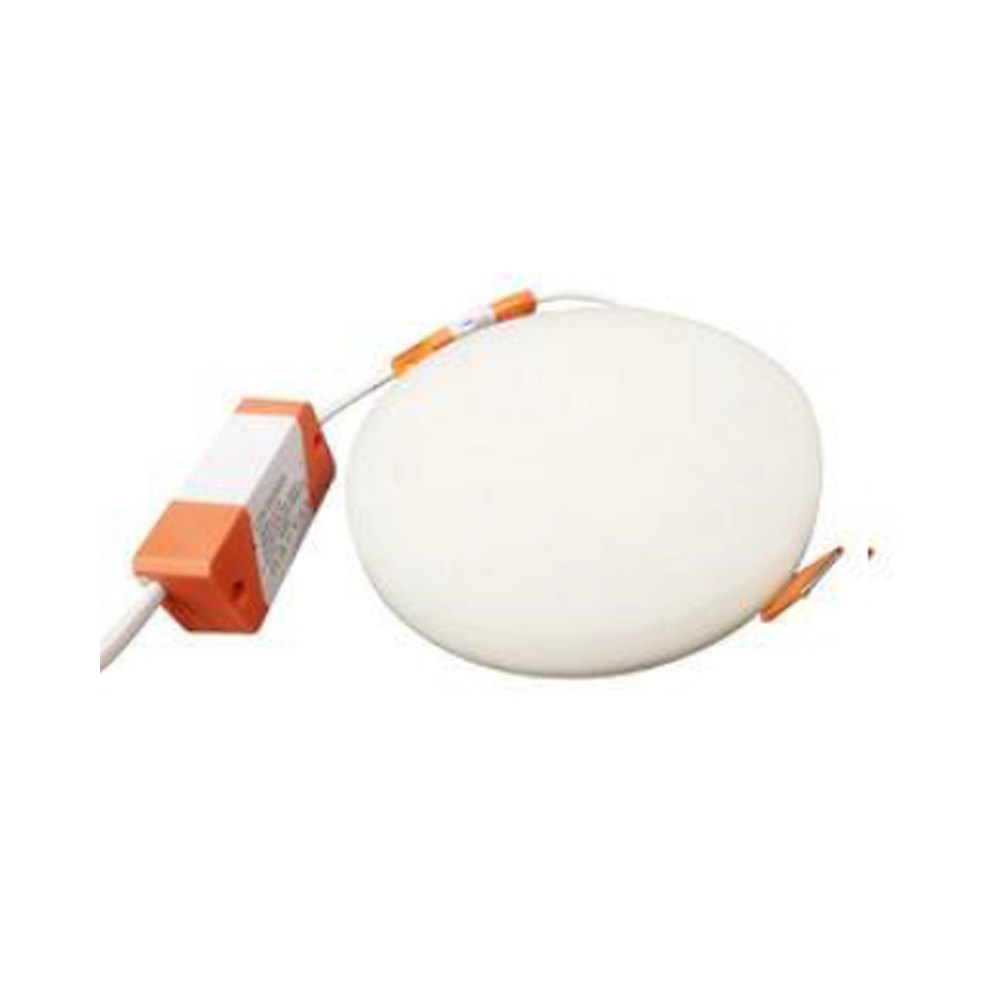
Anyone shopping for an LED panel will quickly be asked whether they want a recessed or a surface-mounted one. The two terms describe two different ways of installing it. A recessed panel sits inside the ceiling, flush with its surface. A surface-mounted panel is fixed onto the ceiling and hangs a few centimetres below it. The light from both is similar, but they cannot always go in the same place.
Ceiling type: the main criterion
The ceiling is what decides first.
- Armstrong-type grid ceiling. A recessed panel is the simplest option: a 600×600 mm panel simply sits on the grid profiles in place of a ceiling tile. No cutting or special fixing is needed.
- Plasterboard ceiling. For a recessed panel, an opening of an exact size is cut, and the panel is held by spring clips or a special frame. The cut-out must match the manufacturer's dimension, or the panel will either fall through or sit loosely.
- Concrete, plastered or timber ceiling. There is no room for a recessed panel, so a surface-mounted panel is used, or a special mounting frame that holds a recessed panel on the surface.
- Stretch ceiling. A recessed fitting needs a platform and ring installed before the ceiling membrane goes up, so this must be settled with the installer in advance.
Void depth and heat
Behind a recessed panel sit the driver and the panel body. If the void above the ceiling is shallower than the panel, it cannot be installed. Ventilation ducts, cable trays and ceiling supports often take up the space you need, too.
Heat has to be considered as well. An LED panel gives off heat into the air above the ceiling. If the panel is tightly covered with insulation or left in a very narrow closed space, the driver runs hot and its service life shortens. Surface-mounted panels release heat into the room, so this is less of an issue.
Appearance and ceiling height
A recessed panel is flush with the ceiling and almost disappears when switched off. In minimalist interiors, offices and anywhere a clean ceiling is wanted, that is an advantage.
A surface-mounted panel drops a few centimetres below the ceiling, and its frame is visible. In a room with a low ceiling this may be noticeable, but in an ordinary room it causes no problem. It also has an advantage: the edges of the panel throw a little light sideways, so the ceiling itself looks brighter.
Installation and servicing
Installing a surface-mounted panel is usually simpler: no hole is cut, the body is fixed with a few plugs and screws, and the cable is connected to a terminal inside. If a flat is already finished and you do not want to cut the ceiling, this is the convenient route.
A recessed panel has to be planned together with the ceiling. Once the openings are cut, replacing the panel with a model of a different size is difficult. Choosing standard sizes, such as 600×600 or the common diameters for round panels, makes future replacement easier.
For servicing, access to the driver matters in both cases. In an Armstrong ceiling it is easy to lift a tile and reach it. In plasterboard, the panel has to come out of its opening and the driver has to be pulled through the hole, so make sure the clips and cable length allow that.
Quick comparison
- Armstrong ceiling: recessed panel.
- Plasterboard with enough space behind: recessed panel.
- Concrete or plaster, and no wish to cut the ceiling: surface-mounted panel.
- Low ceiling and a minimalist look: recessed, or a slim surface panel if that is not possible.
- Insulation behind or a very tight void: surface-mounted panel, or a model the manufacturer approves for such conditions.
In either case, choose the panel's output and light colour according to the size and function of the room; the mounting type only determines how the panel fits into the ceiling.
Besides panels, ceiling lighting also uses screw-in and spot lamps. If you pick a fitting with replaceable lamps, Zəfər İşığı makes suitable ones for the four common bases: E27, E14, GU10 and G5.3.
All news