
Filament LED or standard LED: which to choose
A clear filament LED and a frosted standard LED are two takes on the same technology. The differences in look, light spread, glare and where each works best.
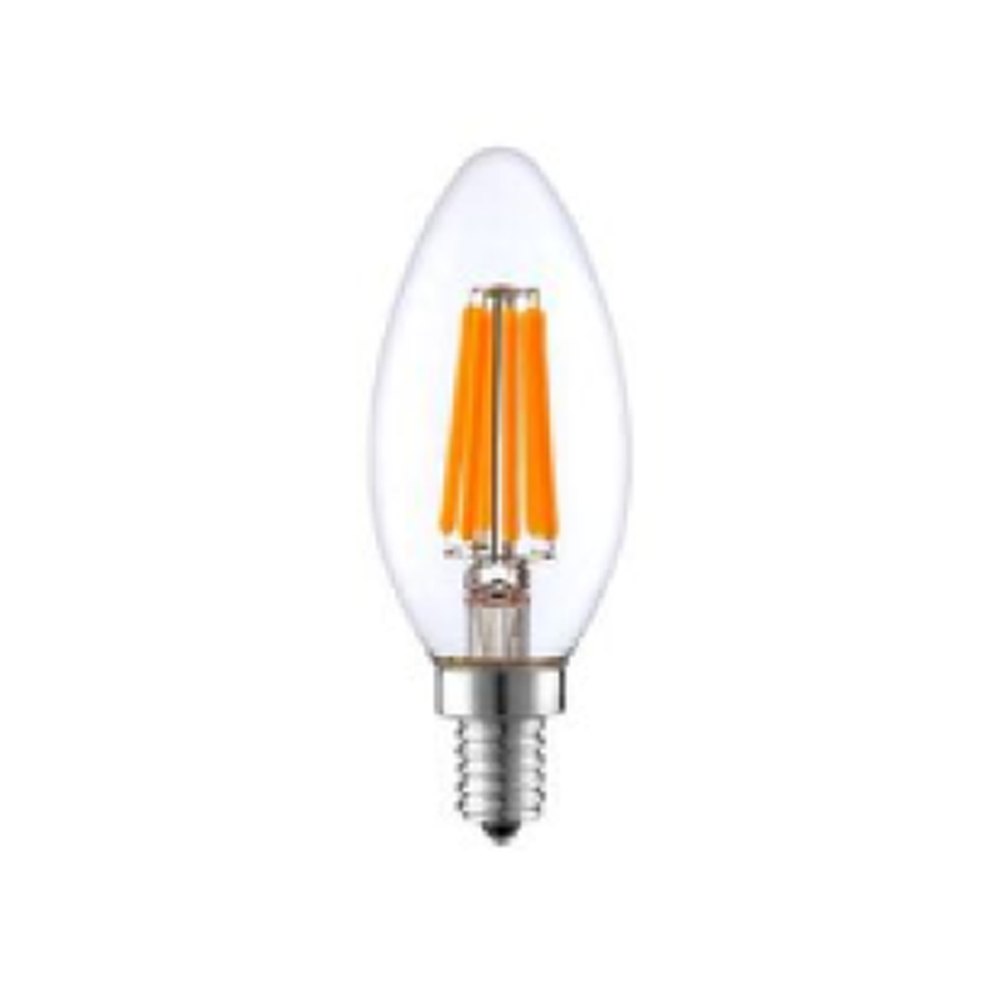
Look along any lighting aisle and you will find two very different-looking LED bulbs for the same socket. One is a filament bulb with a clear glass envelope and thin glowing strands inside, much like an old incandescent lamp. The other is a standard LED bulb with a white frosted plastic cover. Both are LED and both fit the same cap. Yet their light feels different in a room, and a bulb that works beautifully in one place can be irritating in another.
How they are built
In a standard LED bulb, small LED chips sit on a flat aluminium board. The chips sit on a board low in the bulb, just above the base, and shine mostly up into the frosted dome. The frosted plastic hides the points of light and spreads it. Under the plastic body are the driver and a heat sink.
In a filament bulb, LEDs are packed tightly onto thin transparent or metal strips and coated with a yellow phosphor. The strips stand upright or curve inside the glass, imitating the tungsten filament of an old lamp. There is no metal heat sink; warmth escapes through the filling gas and out through the glass envelope.
Light distribution and appearance
This difference in construction changes how light spreads through a room.
- A filament bulb sends light almost evenly in every direction, including sideways and downwards. That looks attractive in bare pendants, clear shades and chandeliers.
- A standard LED bulb sends more light upwards and to the upper sides, with less reaching behind the cap. In a ceiling-facing shade this is no problem, but under some lampshades it can create shadows.
- A filament bulb is a decorative object even when it is off: the clear glass, the shape of the strands and sometimes an amber tint become part of the interior.
- A standard LED bulb is more practical where it is hidden, such as in an enclosed ceiling light, inside a lampshade or in a flush fitting.
Glare and light output
The weakness of a clear filament bulb is glare. When glowing filaments are at eye level, for example in a pendant hung low over a dining table, they are uncomfortable to look at. Frosted or milky filament bulbs soften this, but absorb some of the light.
Light output differs too. Filament bulbs are often made at lower wattages for decorative use, especially E14 candle and teardrop models, and may not be enough as the only main light in a room. Standard LED bulbs come in a wide range of outputs, making it easier to choose one for main lighting. Either way, compare two bulbs by the lumens on the box rather than by wattage.
Colour and atmosphere
Most filament bulbs give warm light, and some are even warmer than incandescent, with an amber tone. That creates a pleasant atmosphere for restaurants, cafés, loft-style flats and relaxing evenings. Neutral and cool filament bulbs exist, but cool light through clear glass often looks harsh.
Standard LED bulbs are equally common in warm, neutral and cool versions. For kitchen worktops, reading spots and workshops, where precise light is needed, a frosted bulb with neutral light is more comfortable.
Durability and use
A glass bulb can break if knocked, while a standard LED bulb with a plastic cover usually survives a fall. That can matter in a child's room, a garage, a storeroom or a table lamp that gets bumped often.
Because a filament bulb sheds heat through gas and glass, pay particular attention to the manufacturer's advice when it goes into a closed, unventilated shade or is mounted cap-down pointing up. If you plan to use a dimmer, check the dimmable marking on the box for either type.
Quick selection guide
- Bare pendant, clear shade, loft or retro interior: filament.
- Enclosed ceiling light, lampshade floor lamp, flush fitting: standard LED.
- The main and only light in a room: standard LED, or a filament bulb with enough output.
- A lamp hanging at eye level: frosted filament or standard LED.
- Somewhere with a risk of breakage: standard LED with a plastic cover.
Both types appear in the Zəfər İşığı catalogue: ordinary LEDs as A-shaped E27 bulbs, and filament LEDs as straight or teardrop lamps with E14 bases. Sorting the product list by bulb shape and base shows quickly which one fits your lamp.
All news