
Museum and exhibition lighting that protects the exhibits
Light reveals an exhibit but also slowly damages it. How light levels, ultraviolet, heat and exposure time are managed for sensitive materials.
Light has two conflicting jobs in a museum: to show an object clearly to the visitor, and to keep that object intact for as long as possible. A watercolour that has faded after years beside a window, or an old textile that has lost its colour, are familiar examples of how irreversible the effect of light can be. Good exhibition lighting is a carefully considered compromise between the two.
How light damages objects
The main mechanism is photochemical: light energy breaks down the molecules of pigments, fibres and paper. Ultraviolet is the most harmful part, but visible light — particularly the short-wavelength blue end — does the same thing, only more slowly. Infrared radiation heats surfaces, shifts humidity and can cause cracking in wood, leather and varnish.
The key point is that damage is cumulative. Strong light for a short time and weak light for a long time produce roughly the same result. That is why conservators look not only at illuminance but also at the lux-hours an object accumulates over a year.
A simple calculation makes this clear. In a gallery open 8 hours a day, 300 days a year, an object at 50 lux receives about 120,000 lux-hours. Put the same object under 200 lux and that figure quadruples. So when the light level cannot be reduced, cutting exposure time can have a similar effect: opening a display for a limited period, switching lights off when no visitors are present. The approach also gives a museum flexibility: if a special event needs brighter light, a stricter regime can be applied to the same object for the rest of the year.
Light levels by material
International museum practice groups materials by sensitivity, and there are widely cited guideline values:
- Highly sensitive objects — works on paper, watercolours, prints, photographs, textiles, costume, items with natural dyes: typically around 50 lux.
- Moderately sensitive objects — oil paintings, painted wood, leather, bone: typically around 150–200 lux.
- Low-sensitivity objects — stone, metal, ceramics, glass: light levels can be chosen more freely, and the main limits are heat and visitor comfort.
Fifty lux sounds very dim at first, but the eye adapts within a few minutes. To make this work, the route into a gallery of sensitive items should darken gradually; a visitor walking straight from a bright foyer into a dim room will find the exhibits "too dark".
Why LED has won over museums
Ordinary white LEDs emit practically no ultraviolet or infrared in their beam. Heat is generated mainly at the back of the luminaire, in the heat sink, and is not carried to the object by the light. Compared with halogen lamps, this helps keep temperature and humidity inside display cases more stable.
Even so, LED is not automatically "safe". Cool light with a strong blue peak affects sensitive materials more, so warm or neutral light is preferred for paper and textiles. A high colour rendering index (CRI 90 or above) is recommended to show colours faithfully. Dimmable, flicker-free drivers matter too, because the light level is set precisely for each exhibit.
Practical rules for a display
These basics apply to a small town museum as much as to a temporary exhibition hall:
- Control daylight from windows with curtains, UV-filtering film or partitions; direct sun should never fall on an exhibit.
- Measure with a lux meter next to every sensitive object and keep a record.
- Switch lights off or dim them when there are no visitors; cases lit by motion sensors cut exposure time considerably.
- Rotate highly sensitive items: a period on display, then a period in dark storage.
- Aim spotlights so that light is not reflected off the glass into visitors' eyes; an angle of around 30° is a good starting point.
- In closed display cases, place the luminaire's driver outside the case.
Aesthetics still count
Conservation does not have to make an exhibition dull. At low light levels contrast does much of the work: a background darker than the object makes it stand out even under dim light. Narrow-beam spots pick out small items, while wide-beam ones light large paintings evenly. Separate, slightly brighter lighting for labels and text panels — kept off the exhibits — improves legibility.
It is also important to keep the colour temperature consistent throughout a gallery. If one case is warm and the next is cool, the eye keeps readjusting and the colours of the objects stop looking true.
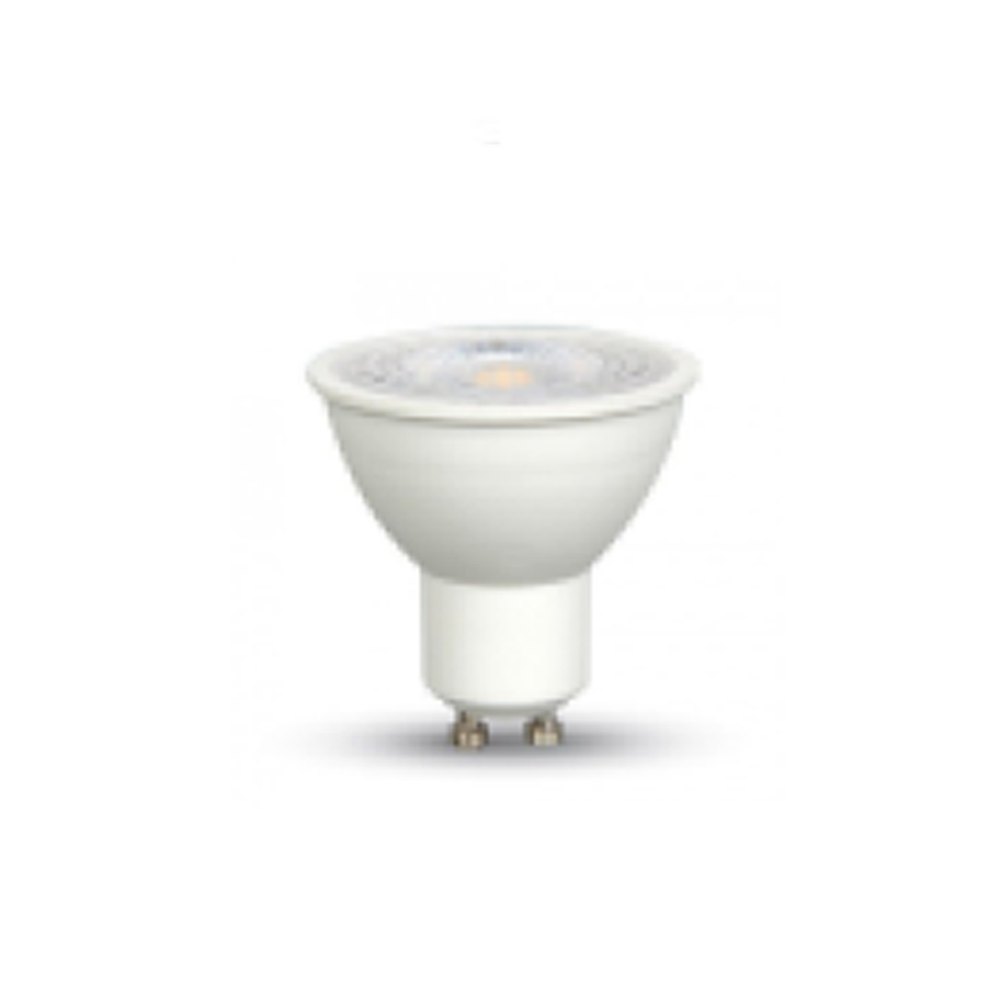
To highlight exhibits, Zaferoğlu Elektrik offers GU10 and G5.3 spots and an angle-adjustable 3D spot. Suitability for a given project still needs to be checked exhibit by exhibit.
All news