
LED lifetime: what “L70” and the hour figures mean
The hour figure on the box is not the moment the bulb suddenly dies. What markings like L70 and B50 mean, and how to turn those hours into years.
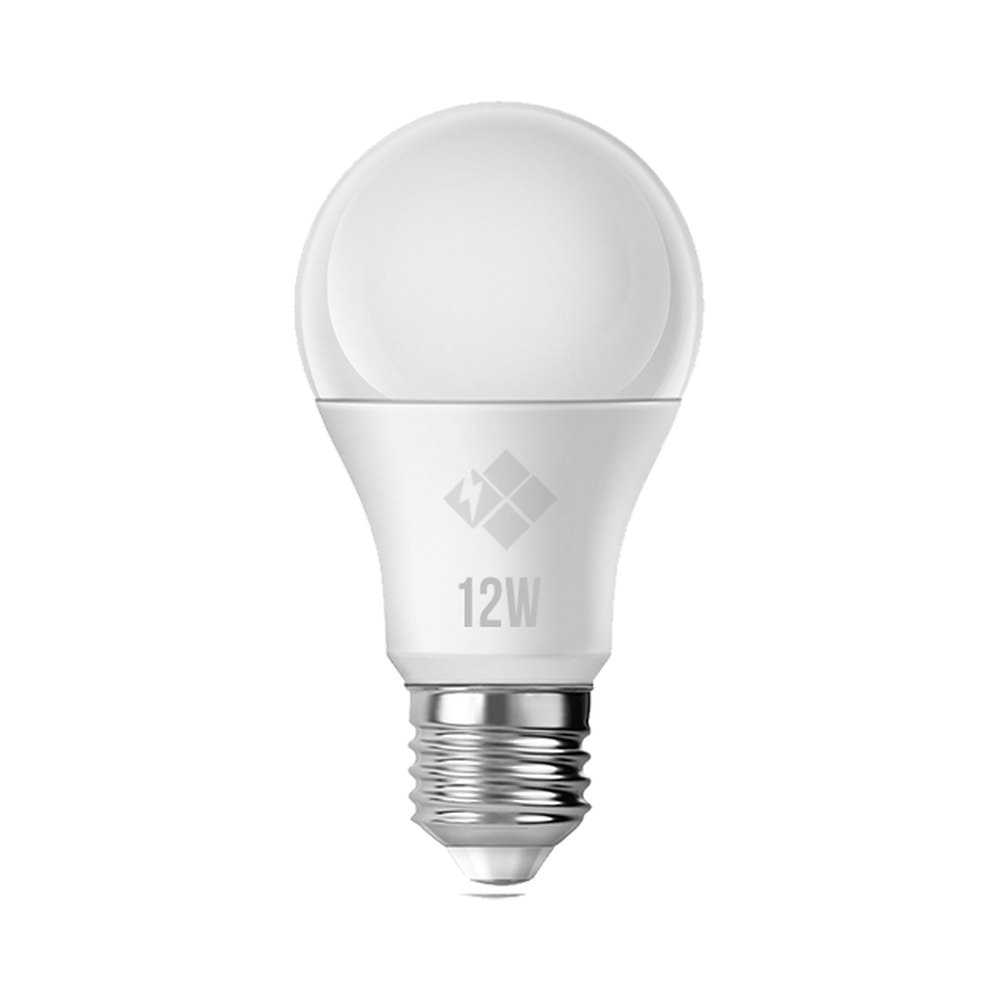
The large hour figure on an LED bulb's packaging is often read as "the bulb will run this long and then go out". That is not really what it means. LED lifetime is measured not by a filament breaking, as with incandescent bulbs, but by light output gradually fading, and understanding that difference helps both when comparing products and when setting expectations.
Incandescent bulbs went out; LEDs fade
The lifetime of an incandescent bulb was simple: the filament slowly evaporated and thinned, one day it snapped, and the bulb went dark. Until that moment the light hardly changed.
An LED chip usually does not fail all at once. Over the years the chip and its phosphor coating age and produce less light at the same current. The process is so gradual that the eye does not notice it from day to day. So for an LED, the useful question is not "when will it go out" but "when will the light have dropped noticeably".
What L70 means
L70 is the time it takes for light output to fall to 70 per cent of its initial level. A statement such as "L70: 15,000 hours" means that, based on testing and calculation, after roughly 15,000 hours the bulb will give 70 per cent of its original light. It does not switch off at that point; it keeps working, just less brightly.
The 70 per cent threshold was not picked at random. Research suggests that a reduction of this size in an ordinary room goes unnoticed by many people or is only faintly noticeable. In applications where light levels are critical, stricter L80 or L90 figures are used.
B50, B10 and the "average" bulb
Next to the L figure you will often see a B, as in L70B50. The B indicates what share of bulbs may cross that threshold earlier. B50 means that at the stated time half of the bulbs will have reached L70 and half will still be above it. B10 is stricter: only 10 per cent may cross the threshold.
In other words, the hour figure is not a promise about your particular bulb; it is a statistical average. Two bulbs from the same batch can age at different rates.
Where the figures come from
Nobody burns a bulb for ten years to check its lifetime. Instead, LED components are run for a long period at set temperatures and currents, the decline in light output is measured, and a mathematical model extends the trend into the future. Internationally, LM-80 is widely used for the measurements and TM-21 for the projection; TM-21 does not allow a forecast to stretch too far beyond the actual test duration.
There is an important catch: those tests mainly concern the LED chips. The bulb also contains a driver, and its capacitors can age faster than the chips, especially at high temperatures. That is why, in practice, bulbs often stop working because the driver fails rather than because the light has faded.
Turning hours into years
The calculation is straightforward: divide the hour figure by daily hours of use and by the days in a year. A bulb used 3 hours a day runs about 1,100 hours a year, so 15,000 hours means more than 13 years. For a hallway or shop light burning 12 hours a day, the same figure amounts to only a few years.
Factors that affect real lifetime:
- temperature: enclosed shades and hot ceiling voids shorten it;
- supply quality: surges hit the driver hard;
- an unsuitable dimmer: it puts extra stress on the driver;
- moisture: it gets inside bulbs not designed for bathrooms or outdoor use.
Switching is another common question. Incandescent bulbs often failed right at switch-on, when a large current hit the cold filament, and fluorescent lamps also suffered from being turned on and off frequently. For the LED chip itself this is hardly an issue. The driver, however, takes a brief current surge each time it starts, so manufacturers sometimes list the number of switching cycles a bulb can withstand.
For a bathroom or hallway light switched on a few dozen times a day, this is rarely a real limitation. For stairway lights on a motion sensor that switch on and off many times a day, that figure is definitely worth checking.
Reading the packaging
- Check which criterion (L70, L80, B50) accompanies the hour figure; figures given under different criteria cannot be compared directly.
- If the number of switching cycles is listed, take it into account for places where the light is turned on and off often.
- Look for the symbol permitting use in enclosed fittings, since the stated hours may not apply in those conditions.
Zəfər İşığı is the lamp brand of the Ganja manufacturer Zaferoğlu Elektrik. For technical information on a particular model, use the catalogue on the website or send an offer request.
All news