
Flickering LED light: causes and how to spot it
Flicker can be obvious to the eye or felt only as tiredness. The main causes, and simple ways to check for it at home without special equipment.
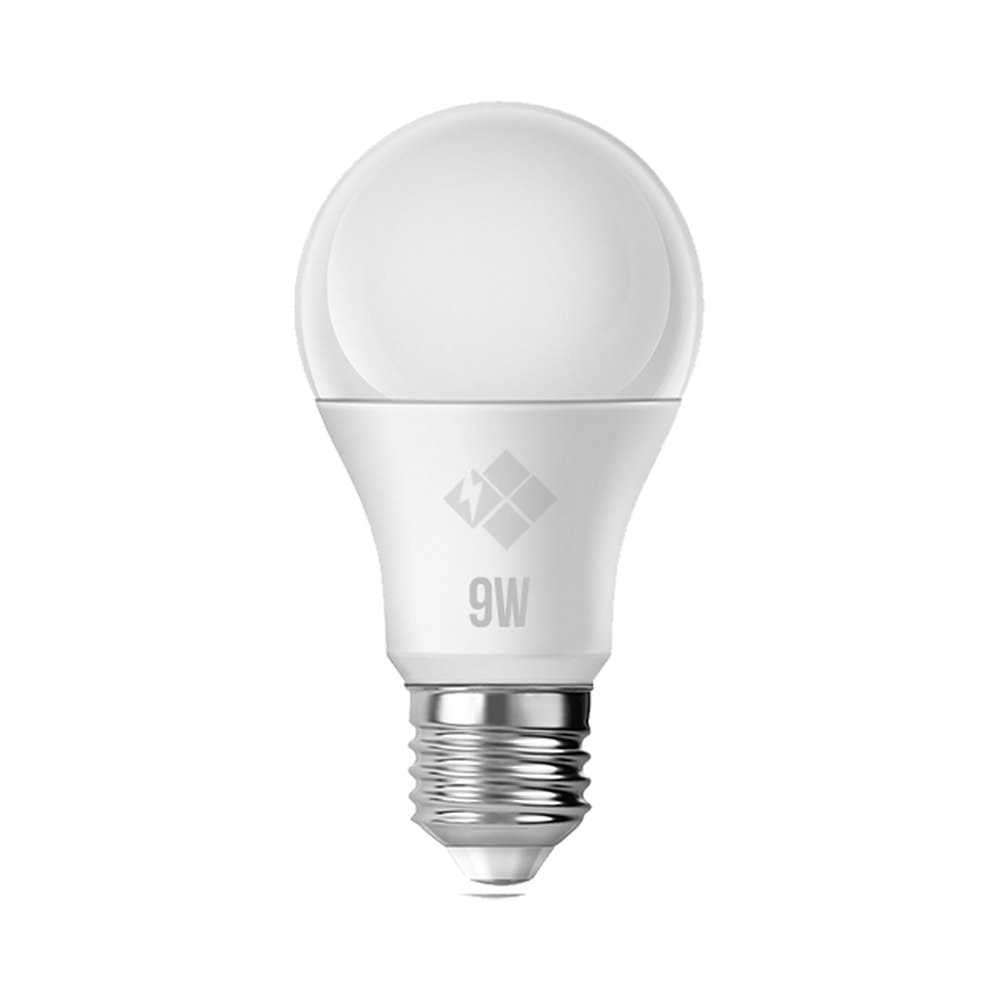
You are sitting in a room with the light on and something feels off: your eyes tire quickly, and at the edge of your vision the light seems to shimmer. Other times the flicker is obvious, with the bulb blinking every few seconds. Both situations get the same name, yet the causes can be quite different, and telling them apart is the first step towards the right fix.
Visible and invisible flicker
Mains voltage reverses direction 50 times a second. The hot filament of an incandescent bulb smoothed those changes out. An LED responds to current almost instantly, so if the driver does not smooth the current well, the light rises and falls 100 times a second.
At that frequency the eye does not see the flicker directly, but the brain can still register it. The result can be headaches, eye strain and the stroboscopic effect, where a spinning fan or a quickly moving hand looks like a series of separate frames. In the European Union, flicker and stroboscopic-effect metrics are now part of the requirements for light sources, so this is a quality that is measured and regulated.
Visible flicker, meaning blinking, pulsing or brief drop-outs, usually has other causes, often something in the circuit.
The main causes
These are the ones met most often in practice:
- A basic driver. The cheapest circuits have a smoothing capacitor that is too small, or none at all. Such a bulb produces invisible flicker even when brand new.
- An ageing capacitor. The electrolytic capacitor in the driver slowly dries out with heat. The bulb works perfectly for a long time and then starts to flicker, often the first sign it is about to fail.
- An incompatible dimmer. A dimmer designed for incandescent bulbs cannot always drive an LED steadily, and the result is flicker, especially at low brightness.
- A poor contact. A bulb sitting loosely in the holder, an oxidised contact or a loose screw terminal in the switch makes the light stutter.
- An illuminated switch. A switch with a built-in indicator lets a tiny current through the circuit when it is off. The driver can charge up on that current and give short flashes.
- Voltage dips. When a heavy appliance on the same circuit starts up, such as an air conditioner, a fridge compressor or an electric oven, the voltage sags briefly and the light dips for a moment.
How to check at home
You can get a fair idea of flicker without any special instruments:
- Phone camera. Point the camera at the bulb or at a white surface it lights. If dark horizontal bands roll across the screen, the light is pulsing. Slow-motion mode shows the effect even more clearly. Results depend on the camera settings, so treat this as a rough check rather than a measurement.
- Pencil test. Wave a pencil quickly between your fingers under the light. In steady light it looks like a smooth blur; in flickering light you see several separate pencil images.
- Swap test. Put the suspect bulb into another fitting, and a different bulb into the suspect fitting. If the problem moves with the bulb, the bulb is the cause; if it stays put, look at the circuit.
Fixing it according to the cause
If only one bulb flickers and it does the same in other fittings, replacing it is enough. Flicker that appears after several years of use also usually means the driver is wearing out.
If every bulb in a room flickers, check the dimmer, the switch and the wiring. With a dimmer, either replace it with a model stated to be LED-compatible or use bulbs designed for dimming. Disconnecting the indicator in an illuminated switch, or swapping it for a plain switch, stops flashes while the light is off.
If the flicker appears exactly when the air conditioner or another heavy appliance kicks in, the issue lies in the supply. Have an electrician check how heavily the circuit is loaded and inspect the connections in the distribution board, because sharp voltage drops affect other appliances as well as the lights.
Who is bothered most
Sensitivity to flicker varies from person to person. Under the same bulb one person notices nothing, while another starts rubbing their eyes after half an hour. People who spend long hours at a screen or over a book, those prone to headaches, and children may feel the effect more.
How much flicker matters also depends on the activity. In a workshop, rotating machine parts can appear to turn slowly or even stand still because of the stroboscopic effect. At that point it is no longer a comfort issue but a safety one. Near moving machinery, pay particular attention to the quality of the light source and, where possible, light the same area with fittings connected to different circuits.
What to look for when buying
Invisible flicker is hard to spot in a shop, but a few steps lower the risk. If possible, switch the bulb on and look at it through your phone camera. The packaging should clearly state the manufacturer's name, address and technical data. Take particular care over this for studies, children's rooms and anywhere people read for long periods.
The full Zəfər İşığı range is shown in the online catalogue of Zaferoğlu Elektrik. For any model of interest, you can send an offer request straight from the catalogue.
All news