
How an LED bulb works: from diode to light
Inside an ordinary-looking LED bulb, a semiconductor chip, phosphor, driver and heat sink work together. What each part does and why it matters in practice.
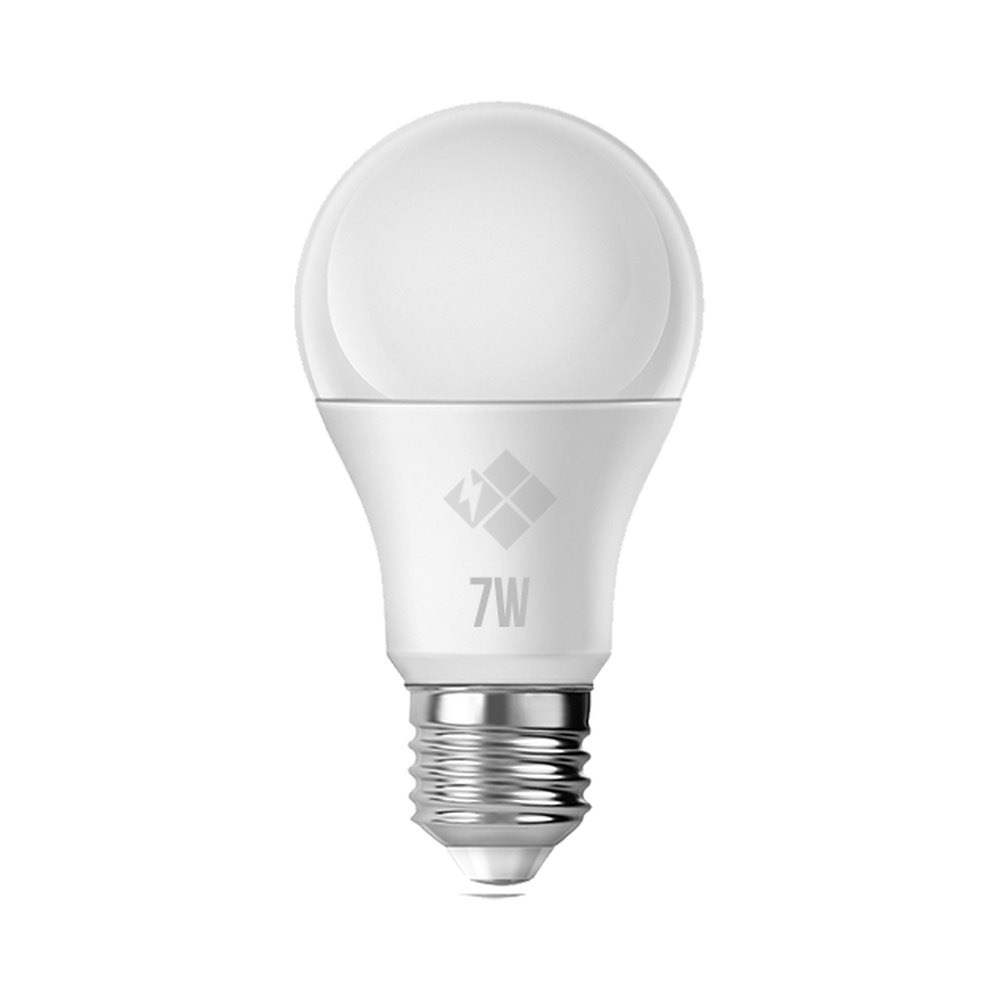
From the outside, an LED bulb looks like the old incandescent one: the same pear shape, the same screw cap. Inside, a completely different process is at work. An incandescent bulb glowed because a metal filament was heated, and most of the energy was lost as heat. In an LED, light is produced inside a semiconductor material by the movement of electrons. Understanding that difference also helps you choose and use bulbs sensibly.
The semiconductor junction: where light begins
LED stands for light-emitting diode. A diode is a semiconductor component that lets current flow in one direction. It contains two layers: one with an excess of free electrons, the other with places where electrons are missing, known as "holes".
When voltage is applied to the diode in the right direction, electrons and holes move towards the boundary between the two layers and recombine there. Each time this happens, the electron releases part of its energy as a tiny packet of light, a photon. The photon's energy, and therefore the colour of the light, depends on the semiconductor material — on the chemical composition that sets its band gap. That is why LEDs made from different materials emit red, green or blue light.
An important consequence follows: unlike an incandescent bulb, an LED does not have to get hot to produce light. This is the main reason for its efficiency.
Where white light comes from
A single LED chip emits light in a narrow colour band, while white light is a mixture of many colours. The most common way to get white light in household bulbs is to coat a blue-emitting chip with a special layer called phosphor. Part of the blue light is converted by the phosphor into yellow and reddish light, which mixes with the remaining blue to appear white to the eye.
The composition and thickness of the phosphor determine the shade of the light. A phosphor with more red content gives warm white; one that converts less gives cool white. Colour rendering quality also depends largely on the phosphor mix: the fewer gaps in the spectrum, the more natural colours look.
If you look closely at an LED bulb, you can sometimes see small yellow squares on top of the chips — that is the phosphor layer. In filament LED bulbs, the chips are arranged in a row on thin strips and coated with phosphor, creating a look similar to an old incandescent filament.
The parts inside a bulb
Open up a typical E27 LED bulb and you will find a few main parts:
- the diffuser — softens the point-like brightness of the chips and spreads the light evenly;
- the LED board — carries the chips, usually on an aluminium-based board that conducts heat well;
- the heat sink or housing — passes heat from the chips into the surrounding air;
- the driver — a small electronic circuit that converts mains alternating current into the steady current the LEDs need;
- the cap — the screw part that holds the bulb in the lampholder and makes electrical contact.
Each LED chip runs on a low direct voltage, whereas the mains supply is alternating and much higher. That is why an LED cannot be connected straight to a socket without a driver. The driver also limits the current, because if current through an LED rises uncontrolled, the chip fails quickly.
Heat: the hidden issue with LEDs
An LED sends light forwards and heat backwards, into the board and housing. The light itself carries almost no heat radiation, but part of the energy inside the chip still turns into heat. If that heat is not carried away, the chip temperature rises. High temperature makes light output fall faster, ages the phosphor and shortens the life of driver components.
LED lifetime is usually measured not by the moment it goes out but by when light output falls to a certain level. The L70 figure, for example, is the time until output drops to 70 percent of the initial value. So rather than failing suddenly one day, an LED bulb often dims gradually over years.
How this helps in practice
Knowing how a bulb works makes everyday choices easier:
- fully enclosed, unventilated shades do not release heat well, so choose bulbs whose datasheet allows use in such fittings;
- if a standard bulb flickers or buzzes on a dimmer, the driver is usually the cause: dimmable models are designed for dimmer use;
- if a bulb glows faintly after switching off, the cause is usually the wiring or an illuminated switch, not the bulb;
- because the difference between warm and cool light lies mostly in the phosphor rather than the chip, bulbs of the same wattage can be made in different shades.
The Zəfər İşığı range, produced in Ganja since 2021, spans everyday A-shaped E27 bulbs, filament lamps and spots.
All news