
Dimmers and LEDs: which bulbs dim and which do not
Not every LED bulb dims, and not every dimmer suits LEDs. The conditions for compatibility, the typical problems and some alternatives to a dimmer.
In the incandescent era, fitting a dimmer was simple: turn the knob and the light fades. After switching to LED, the same dimmer often starts behaving oddly. The light flickers, cuts out at the lowest setting, or the dimmer itself begins to hum. The reason lies in how the two technologies work, and most of the trouble can be avoided with the right choices.
What a dimmer actually does
Most household dimmers do not simply lower the voltage; they chop out part of the waveform. In every half-cycle the current is held back for a moment, so the average energy reaching the lamp falls. For a filament that is ideal: it just runs cooler and glows less brightly.
There are two main types of chopping:
- Leading-edge dimming (often called TRIAC dimming) cuts the start of each half-wave. It was designed for incandescent bulbs and magnetic transformers.
- Trailing-edge dimming cuts the end of each half-wave. It works more smoothly with electronic transformers and most LED drivers, and tends to be quieter.
In an LED bulb, though, light output is controlled by the driver, not by the temperature of a filament. The driver has to read the chopped waveform and reduce the current accordingly. That takes dedicated circuitry, and not every bulb has it.
Dimmable and non-dimmable bulbs
A bulb designed for dimmers says so clearly on the packaging, usually with the word "dimmable" or a dimmer symbol. If there is no such marking, assume the bulb cannot be dimmed.
Connecting a non-dimmable bulb to a dimmer can lead to:
- flicker or pulsing at every setting;
- dimming that barely works, with the light either fully on or off;
- buzzing or crackling from the bulb or the dimmer;
- an overstressed driver and a bulb that fails early.
Even with the dimmer turned fully up, its electronics stay in the circuit. So running a non-dimmable bulb on the basis that "I'll just keep it at maximum" is not a good idea either.
Why problems happen even with the right bulb
If you bought dimmable bulbs and the light still flickers, the dimmer itself is often to blame. Older dimmers were built for incandescent bulbs and need a certain minimum load to work properly. A few LED bulbs together may draw less than that, and the dimmer's electronics then behave erratically.
Other typical symptoms:
- drop-out at the bottom end: the light suddenly cuts out past a certain point and does not come back on straight away when you turn the knob back up;
- a narrow dimming range: over much of the knob's travel nothing changes;
- mixed bulbs: when bulbs from different makers share one dimmer, each reacts in its own way.
Many modern dimmers have a small adjustment screw or a setting for the minimum brightness level. The dimmer's instructions state the minimum and maximum load permitted for LED bulbs separately.
Compatibility checklist
- The bulb packaging carries a dimmable marking.
- The dimmer's documentation says it works with LED bulbs and gives a load range for LEDs.
- Where possible, choose a trailing-edge dimmer.
- Connect the same model of bulb to one dimmer.
- Check that the total LED load is not below the dimmer's minimum.
- Replacing a dimmer means working on mains wiring; leave it to a qualified electrician.
What dimming actually gives you
When an LED bulb is dimmed, the driver reduces the current, so energy use falls as well. The relationship is not always strictly proportional, though, because the electronics in the dimmer and the driver consume some energy themselves. With LEDs, saving energy is not the main point of a dimmer, since the bulb already uses little. The real benefit is comfort: softer light in the evening is easier on the eyes, and you can avoid bright light before going to bed.
One more thing is worth knowing. As an incandescent bulb dimmed, its light shifted towards a reddish, warmer tone. An ordinary LED bulb hardly changes colour when dimmed; it simply gets less bright. For those who want to recreate the incandescent effect, there are special bulbs whose colour warms as they dim.
Alternatives to a dimmer
Not every room needs smooth dimming. Sometimes two or three brightness levels are enough. For that there are bulbs that run on an ordinary switch and step through brightness levels each time the switch is flicked. Another approach is to split the lighting into groups: the ceiling light on one switch, a wall light or table lamp on another. Switching on only soft, directed light in the evening often gives much the same effect as a dimmer.
Decorative filament bulbs are often chosen for a soft, warm atmosphere, which is exactly why the dimmer question comes up with them most. When choosing one, checking the packaging for the dimmable marking is still the basic rule.
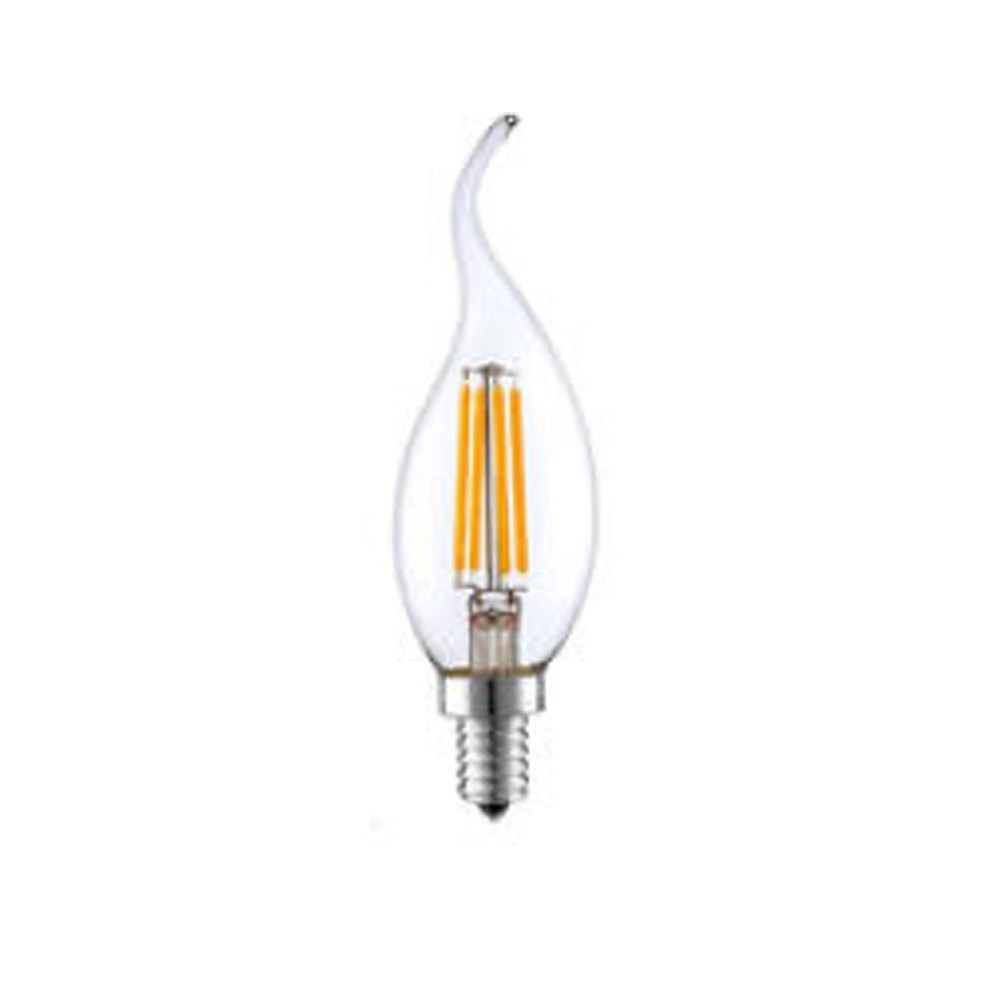
Among Zəfər İşığı products you will also find E14 filament lamps: straight, candle-shaped and with a flame tip. Each model's catalogue page lets you confirm whether it fits your fitting and the way you control the light.
All news