
Why LED bulbs fail before their time
LED bulbs are meant to last, yet some die within months. The main reasons for early failure, and how to track down the cause at home.
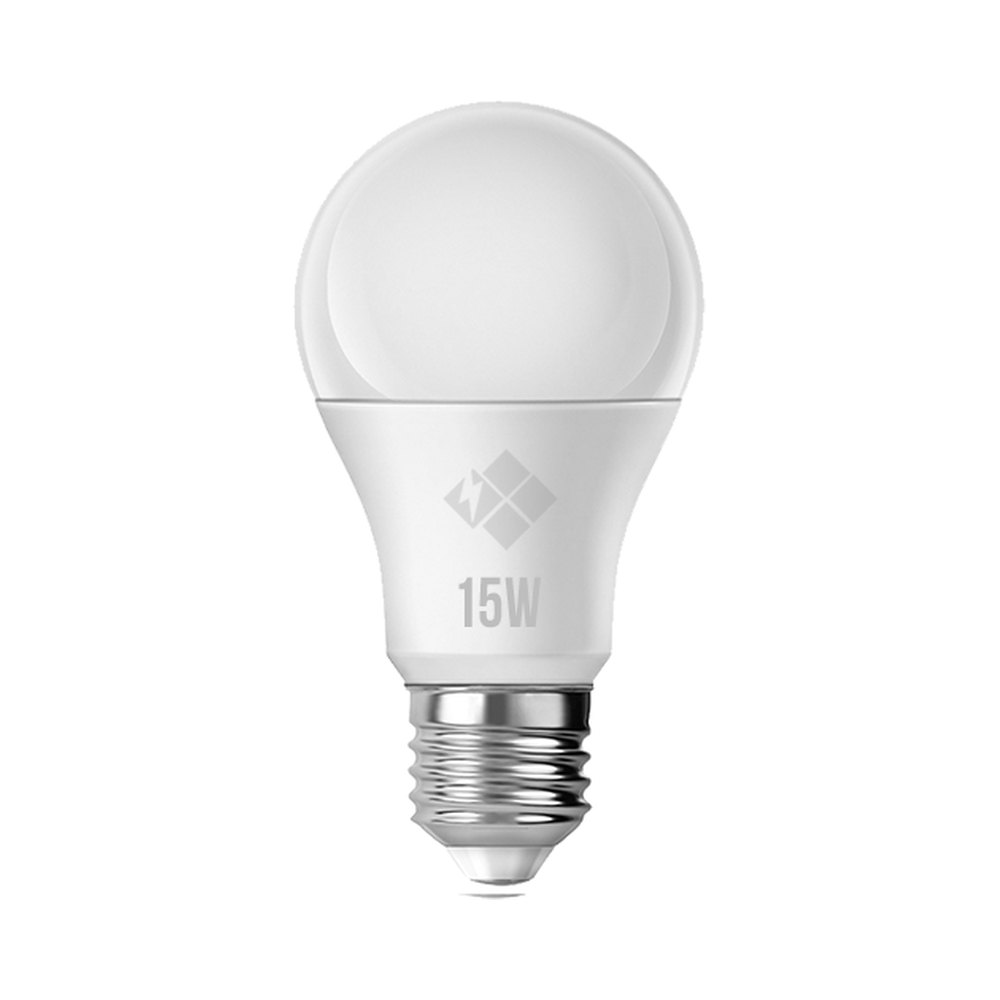
Many people switch to LED expecting to fit a bulb once and forget about it for years. Then the bulbs in one chandelier start dying one after another, and faith in the technology takes a knock. Yet early failure usually has a specific cause that can be found, and that cause is not always in the bulb itself.
What actually fails in an LED bulb
An LED bulb is made of several parts: the chips that produce light, the board they sit on, the body that carries heat away, and the driver that turns mains voltage into a current the LEDs can use. In practice, the chips themselves rarely fail suddenly. The weakest link is usually the driver: its electrolytic capacitors, small transistors and solder joints are sensitive to heat, voltage spikes and moisture.
There is no need to take a dead bulb apart, but the way it failed gives a clue to the cause:
- if the bulb went out suddenly with no warning, a component in the driver has usually burned out;
- if it flickered first and then died, a capacitor has worn out;
- if part of the light has gone and a dark spot is visible on the board, a single chip has failed;
- if it goes out when hot and comes back once cool, thermal protection or a weak solder joint is at work.
Cause one: heat
Heat is an LED's worst enemy. A small closed shade, a recessed fitting buried under insulation, a narrow lampshade: in all of these the bulb cannot shed its heat. The driver's components run hotter and age faster.
If bulbs keep failing in the same fitting while the same model lasts for a long time elsewhere, the problem is almost always heat. In that spot, choose a lower-wattage bulb, look for a model approved for enclosed fittings, or replace the fitting itself.
Summer makes things worse. In a room without air conditioning the air near the ceiling is already warm, and on top floors or in attic rooms the ceiling void is heated by the sun. If a bulb works fine in winter but starts failing in summer, its thermal margin is right at the limit.
Another typical case is bulbs sitting too close together. When the bulbs in a multi-arm chandelier are tightly packed, each one also heats its neighbours. In such a fitting you can usually get the same total light from slightly lower-wattage bulbs, which gives all of them easier working conditions.
Cause two: the supply
Short but powerful voltage spikes are a blow to the driver. They can occur during thunderstorms, when heavy appliances switch on and off, or when power returns after a cut. A single spike may not kill a bulb straight away, but repeated hits gradually weaken the components.
The tell-tale sign is bulbs failing at the same time in different rooms, sometimes along with faults in other electronic devices. In that case the fix lies in the distribution board, not in the bulbs.
Cause three: holders, switches and dimmers
When a bulb sits with a poor contact, tiny sparks and heat form at the contact point. This damages both the cap and the driver. It is common in old lampholders that have darkened or whose plastic has warped.
Lifespan also suffers when a standard bulb sits behind a dimmer, or when a switch with a glow indicator trickles current through the driver while the lamp is off. The bulb still works, but the driver is operating in a mode it was not designed for.
Cause four: moisture and the wrong location
An ordinary bulb used in a bathroom, on a balcony, in a garage or outdoors lets moisture in. Condensation oxidises the contacts and corrodes the board. In such places the fitting itself must provide protection, and the bulb should suit the conditions.
Places with vibration, for example near a fan, a door that slams or a machine, affect solder joints too. Constant shaking creates microscopic cracks, and one day the bulb goes out.
Home diagnosis checklist
Before buying the next bulb, answer these questions:
- Do the failed bulbs share one fitting? If yes, check the fitting's heat and its holder.
- Do bulbs fail at the same time in different rooms? If yes, have an electrician check the supply.
- Is there a dimmer or an illuminated switch on the circuit? If yes, check compatibility.
- Is the bulb in a damp place or subject to vibration? If yes, check that the fitting suits the conditions.
- Is the holder darkened or is its plastic melted? If yes, replace the holder.
- Does the packaging show the manufacturer's name and address? If not, it is better to avoid that product.
Replacing the bulb without removing the cause simply repeats the same result. Renewing a holder once, or improving the ventilation of a fitting, often solves the problem for good.
Zaferoğlu Elektrik produces Zəfər İşığı lamps at a plant in Ganja set up on the site of a former sewing factory. Before blaming the next bulb, check the fitting's ventilation, the voltage and any dimmer on the circuit.
All news