
What an LED driver is and why you need one
An LED cannot be connected straight to the mains — it needs a driver. What drivers do, constant current versus constant voltage, how to choose and signs of failure.
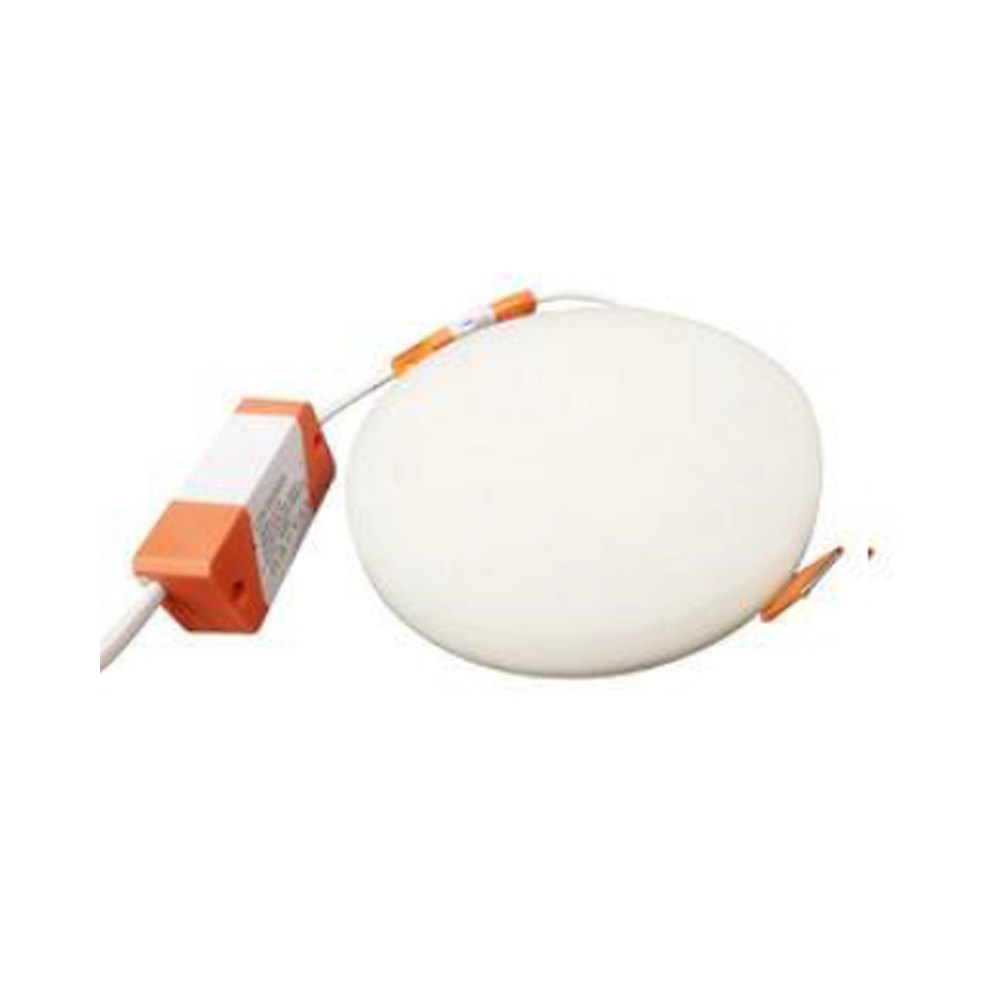
When an LED panel goes dark, the electrician often replaces not the panel but the small box beside it. That box is the driver. In a screw-in LED bulb you cannot see it because it is hidden inside the housing, but its job is the same: turning mains electricity into a form LEDs can use. Knowing what a driver does helps you make the right decisions both when choosing fittings and when something goes wrong.
Why an LED cannot go straight onto the mains
Household mains is alternating current at a high voltage. An LED chip, on the other hand, is a semiconductor that runs on low-voltage direct current. Its most sensitive point is how it reacts to current: a small rise in voltage makes the current through the LED jump sharply, the chip heats up, current rises further as it heats, and eventually it fails.
The driver solves this. Its main tasks are:
- converting alternating current to direct current;
- bringing the voltage to the level the LED string needs;
- keeping the current through the LEDs steady and limited;
- reducing the effect of small mains voltage fluctuations on the light.
Constant current or constant voltage
Drivers fall into two main types, and mixing them up is one of the most common mistakes.
A constant current driver holds a set output current, such as 300 mA or 700 mA, while the voltage varies within a range depending on the load. These drivers are used in LED panels, spotlights and floodlights, where LEDs connect directly to the driver.
A constant voltage driver typically supplies a fixed 12 V or 24 V. It is meant for products that have their own current limiting built in, the classic example being LED strip. Strip can be cut at the marked points because the current in each segment is limited by components on the strip itself.
Connecting a panel that needs constant current to a constant voltage supply, or the other way round, can destroy both the fitting and the driver. So pay attention to the "CC" (constant current) and "CV" (constant voltage) markings on the driver label.
Built-in and external drivers
In mains-voltage lamps such as E27, E14 and GU10, the driver sits inside the lamp. The user never sees it and cannot replace it separately: if the driver fails, the whole lamp is replaced. Since space in the housing is limited, driver quality and good heat dissipation matter especially here.
Many low-voltage spot lamps, such as models with a G5.3 base, run from a separate 12 V transformer or driver. Here the lamp and the power supply must be compatible, or flicker or failure to light can result.
In LED panels, ceiling fittings and floodlights the driver is often external. The advantage is that when it fails, only the driver needs replacing, not the whole fitting. Because drivers are the most heat-sensitive part of the electronics, they often determine the overall life of the fitting.
What sets a good driver apart
Two drivers that look alike can differ greatly in performance. Key points to watch:
- flicker — basic drivers let current ripple through to the output; the eye may not notice it, but bands can appear on a phone camera and it can cause fatigue during long work;
- power factor — in buildings with many fittings, a low power factor puts extra load on the supply;
- inrush current — when many drivers on one circuit switch on at once, a brief current surge can trip the circuit breaker, so this is considered when selecting the breaker;
- temperature range and IP rating — these must suit the place where the driver will be installed;
- dimming — to work with a dimmer or a control system such as DALI, the driver must support it.
Replacing a driver
When an external driver needs replacing, note down the details on the old driver's label. The new driver must have the same output current, and its output voltage range must cover the operating voltage of the LED module. Its power rating should not be lower than that of the fitting. A driver chosen by wattage alone may either dim the light or overload the LEDs with excess current.
Follow electrical safety rules: switch the circuit off at the breaker, confirm there is no voltage, and make connections secure and insulated. If you are unsure, it is better to leave the job to a qualified electrician.
Signs of a failing driver
Driver problems usually show up as:
- a delay of a few seconds before the light comes on;
- intermittent flicker or blinking;
- the light switching itself off after running for a while and coming back once it cools;
- a buzzing or crackling sound from the driver.
Sometimes these symptoms are caused not by the driver but by a loose connection or an incompatible dimmer. It is worth checking connections and controls before replacing the driver.
Among the Zəfər İşığı lamps made in Ganja are screw-cap models with built-in drivers as well as GU10 and G5.3 spot lamps; which supply each model needs can be checked in the product information in Zaferoğlu Elektrik's catalogue.
All news