
Why LED bulbs get warm: heat sinks and where the heat goes
LEDs give cool light, yet their base still gets warm. Where that heat comes from, what the heat sink does and when warmth is a sign of trouble.
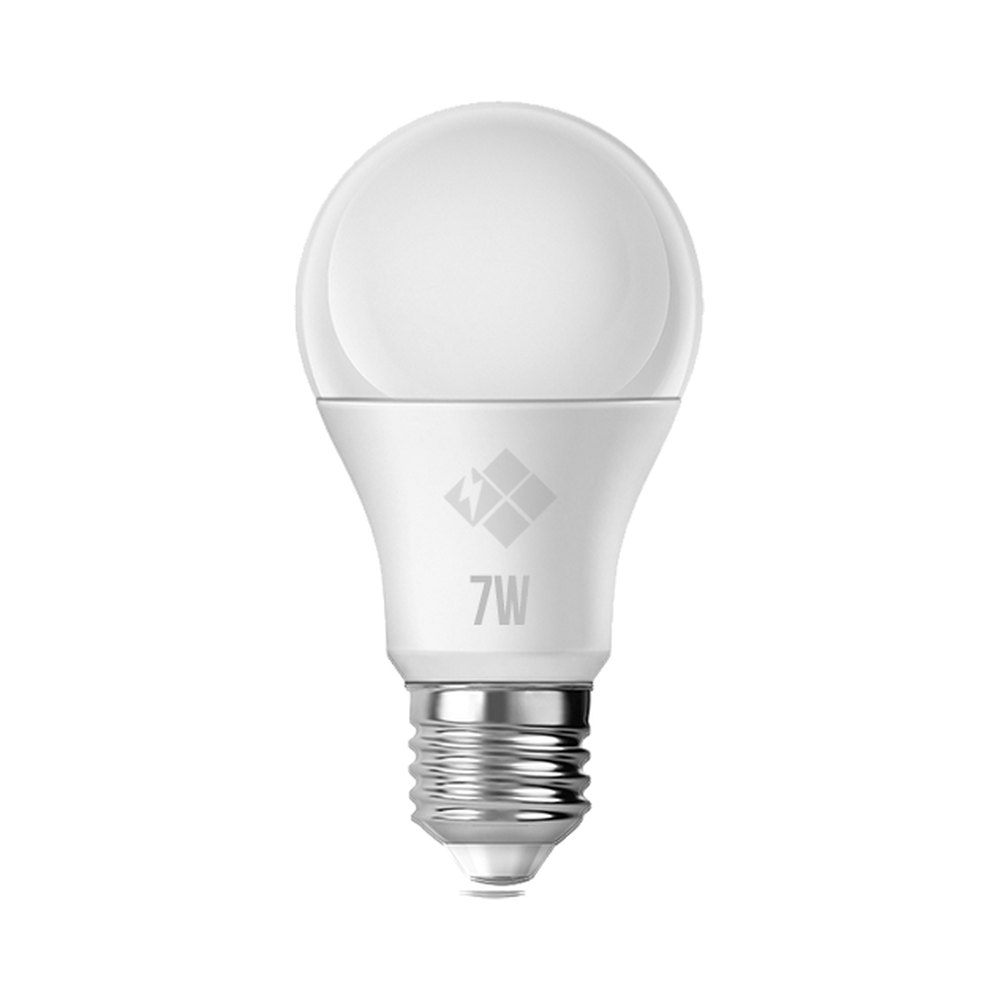
Anyone who has touched an incandescent bulb just after switching it off remembers pulling their hand back fast. When people move to LED, many expect the heat to disappear altogether, and are then surprised to find the base of the new bulb warm. That is not a defect. An LED also turns part of its electrical energy into heat; the heat simply builds up in a different place and leaves by a different route.
Where the heat comes from
No light source turns electricity entirely into light. In an incandescent bulb only a very small share becomes visible light, and most of the rest leaves as infrared radiation travelling forward along with the light. That is why you feel warmth on your face when sitting under one.
An LED works differently. The semiconductor chip produces far more light for the same power, but a large share of the energy still ends up as heat. That heat does not travel out with the beam; it is generated in the chip itself, in a tiny area. On top of that, every LED bulb contains a driver, the electronic circuit that converts the alternating mains supply into the steady current the LED needs, and the driver warms up as it works too.
So the glass or plastic dome of an LED bulb stays relatively cool, while the body near the cap gets warm. That is actually a sign the heat is being taken away along the intended path.
What the heat sink does
Chip temperature is critical for an LED. The hotter the chip, the lower its light output, the faster the phosphor coating ages and the sooner the capacitors in the driver dry out. Manufacturers therefore try to move heat away from the chip as quickly as possible.
The path usually looks like this:
- the chips are soldered onto an aluminium-backed board, which conducts heat far better than an ordinary circuit board;
- the board is pressed against an aluminium part inside the body, the heat sink, sometimes with thermal paste or a pad in between;
- the heat sink spreads the heat out to the surface of the body;
- from the surface the heat passes into the surrounding air and rises by convection.
In many bulbs the aluminium heat sink is covered with a plastic shell. Plastic is safer and more comfortable to touch, but it conducts heat less well than bare aluminium. So of two bulbs with the same wattage, one may feel hotter and the other cooler; that difference often reflects the design rather than being a direct verdict on quality.
Normal warmth versus a real problem
After a few hours of use, the body of an LED bulb can be distinctly warm to the touch. That is normal. The signs worth worrying about are different:
- yellowing, darkening or melting of the body or the lampholder;
- a smell of hot plastic or electronics;
- the bulb starts flickering or switching itself off and on after running for a while;
- the light noticeably dims and then recovers once the bulb has cooled;
- the lampholder is hotter than the bulb itself, which usually points to a poor contact.
In any of these cases, switch the light off and check the fitting. A loose or oxidised contact becomes a heat source in its own right, and then the problem lies in the holder rather than the bulb.
How the fitting affects heat
A heat sink only works well when air can move around it. Put a bulb inside a small shade that is closed on all sides and the hot air stays trapped, the temperature around the heat sink rises, and the heat has nowhere to go. The same applies to narrow lampshades, wall lights that sit tight against the wall, and recessed ceiling fittings buried under insulation.
Orientation plays a part as well. Hot air rises, so in a pendant with the cap at the top and the dome pointing down, heat from the heat sink flows upward toward the holder and the cable. In a table lamp with the cap at the bottom, the warm air escapes past the dome instead. Both positions are fine; the real question is whether the heat has an exit in an enclosed space.
What changes with high-power bulbs
As wattage goes up, so does the amount of heat, but the body does not grow in the same proportion. That is why high-power bulbs used in warehouses, garages and workshops have larger heat sinks, sometimes finned or perforated so that air can pass through them. Putting such a bulb into a closed shade or a narrow lampshade is a particularly bad idea: it produces far more heat than an ordinary bulb, and the inside of the shade heats up quickly.
The weight of large bulbs matters too. A bulb with a heavy heat sink can bend an old, worn lampholder and loosen the contact, and a poor contact, as noted above, is a heat source of its own. When fitting a high-power bulb, it is worth checking that the holder is firmly mounted and that the cable has heat-resistant insulation.
Practical tips
Most heat-related trouble can be avoided with a few simple habits:
- check the packaging for whether the bulb may be used in enclosed fittings;
- do not put a stronger bulb than necessary into a small closed shade; two lower-output sources often give the same light with less heat in one spot;
- never wrap fabric, paper or decorations around a bulb;
- replace an old lampholder whose contacts have turned dark;
- switch off before changing a bulb and give the body a few minutes to cool.
Zaferoğlu Elektrik makes LED lamps in Ganja, and its Zəfər İşığı catalogue spans body sizes from standard A-shape bulbs to high-power T-shape models. Filtering the catalogue by shape and cap makes it easier to find a bulb that suits the fitting you have.
All news