
An LED bulb takes a moment to come on: why?
You flip the switch and the light arrives a beat later. How to tell a normal, driver-related delay from one that signals trouble.
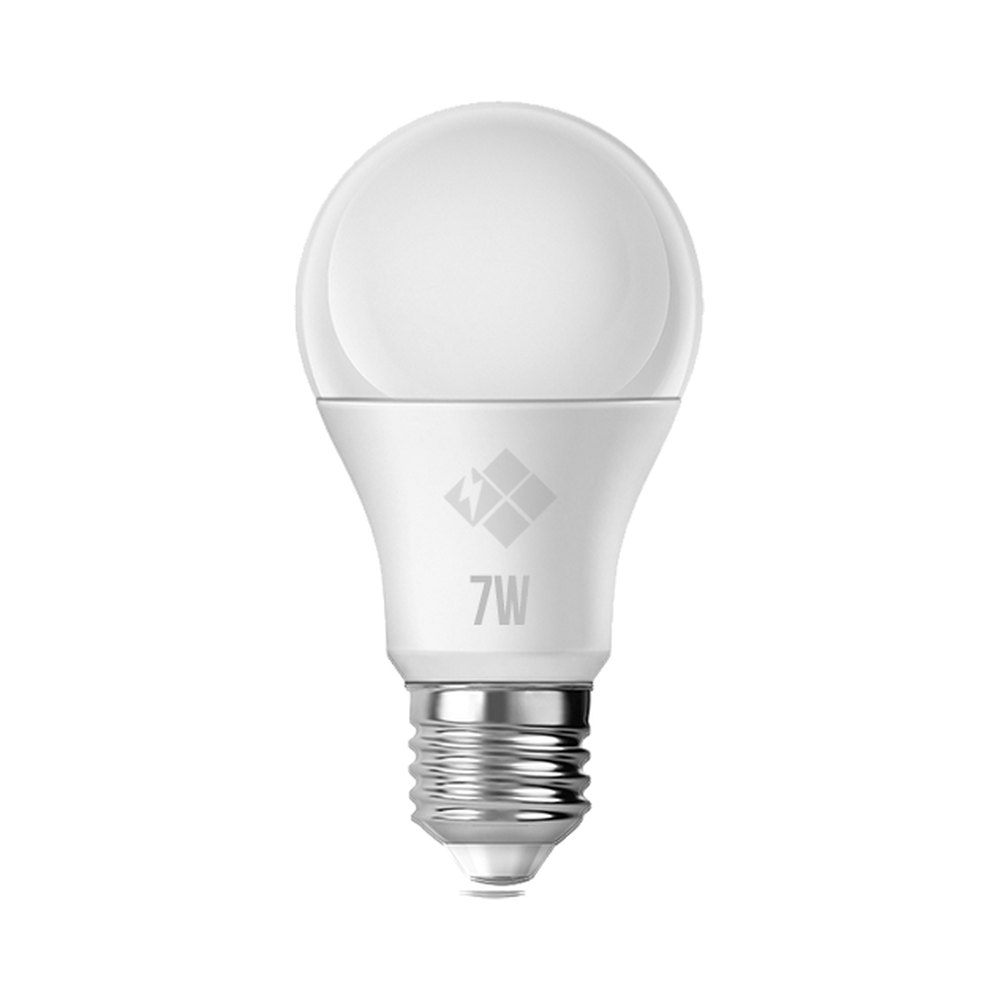
Anyone who grew up with incandescent bulbs expects light the instant the switch is pressed. After moving to LED, some people notice an odd pause: the switch clicks, nothing happens for a moment, then the light comes on. Sometimes the pause is so short you only see it if you watch closely; sometimes it grows longer over time. Both cases have an explanation.
Why an incandescent bulb lights instantly
An incandescent bulb has no electronics. As soon as current flows through the tungsten filament, it heats up and glows, and to the eye that is practically instantaneous. Halogen lamps work the same way.
In an LED bulb, a driver sits between the mains and the light-emitting chips. When you switch on, the driver first has to charge its internal capacitors, start its control chip and only then deliver current to the LEDs. That sequence usually takes a small fraction of a second, but in some designs it lasts long enough to see.
Normal reasons for a delay
In a number of cases a brief pause is a design feature, not a fault:
- Soft start. Some drivers ramp the current up gradually rather than all at once, to protect the LEDs and themselves. The light fades in smoothly instead of snapping on.
- A large smoothing capacitor. A driver built to keep the light steady and flicker-free may use a large capacitor, and charging it takes a moment.
- Smart bulbs. A bulb controlled over Wi-Fi or Bluetooth contains a tiny computer. When power arrives, it boots its firmware first and only then turns on the light.
- Dimmers. If a dimmer is set to its minimum, the driver may not get enough energy to start, so the bulb comes on late or weakly.
In all of these cases the delay is roughly the same every time and does not change over the months.
The same capacitors explain the opposite effect. Some LED bulbs do not go dark instantly when switched off but fade out over a split second. That is energy stored in the driver being used up by the LEDs, and it is not a fault. If a bulb keeps glowing faintly long after being switched off, or flashes now and then in the dark, that is a different matter, usually linked to an illuminated switch or induced voltage in the wiring.
Warning signs
A different pattern deserves attention. If a bulb used to light instantly, now makes you wait a second or two, and the wait keeps growing week by week, the electrolytic capacitors in its driver are most likely ageing. These capacitors lose capacity over time, especially when hot. Such a bulb tends to start flickering, cutting in and out, and eventually fails completely.
Plan to replace the bulb if the delay comes with any of these:
- the light flickers for the first few seconds after it comes on;
- sometimes it does not light at all and you have to flip the switch several times;
- other bulbs in the same fitting come on immediately and only one lags;
- the area around the cap feels warmer than it used to.
Cold, voltage and enclosed fittings
Temperature affects start-up too. In winter, in an unheated garage, storeroom or balcony, a bulb may be slower to light than indoors, because electrolytic capacitors perform worse in the cold. If the delay shrinks as the space warms up, that is the reason.
When the mains voltage sags, a driver may also need longer to start. This is most noticeable in the evening, in houses at the far end of a supply line or in country homes. If the delay appears only at certain times of day, having the voltage measured is worthwhile.
A bulb running constantly hot inside an enclosed shade ages its capacitors faster than one in an open fitting. As a result, the same model may show delay and flicker earlier in an enclosed fitting.
Motion sensors and stairway lighting
In hallways and stairwells with motion sensors, a delay is more than a curiosity: someone is already on the stairs and the light has not arrived. Two delays add up here, the sensor detecting movement and the bulb starting. For such places:
- aim the sensor's detection zone at the door or the bottom of the stairs;
- check in the sensor's instructions that it is suitable for LED loads;
- avoid mixing different bulb models on the same circuit, because they will light at different moments.
A quick check
- Was the delay there when the bulb was new, or has it developed over time?
- Does another bulb light instantly in the same holder?
- Is there a dimmer or sensor in the circuit?
- Does the delay get worse in the cold or in the evening?
The answers usually show whether the problem lies with the bulb, the fitting or the supply.
Zaferoğlu Elektrik has been producing Zəfər İşığı LED bulbs in Ganja since 2021. Its catalogue is a practical place to start when working out which bulb types suit the fittings in your home.
All news