
“220–240 V” and “110–240 V” on a bulb: what they mean
The voltage range printed on a bulb shows the supply it is built to work on. The difference between 220–240 V and 110–240 V, and what it means in practice.
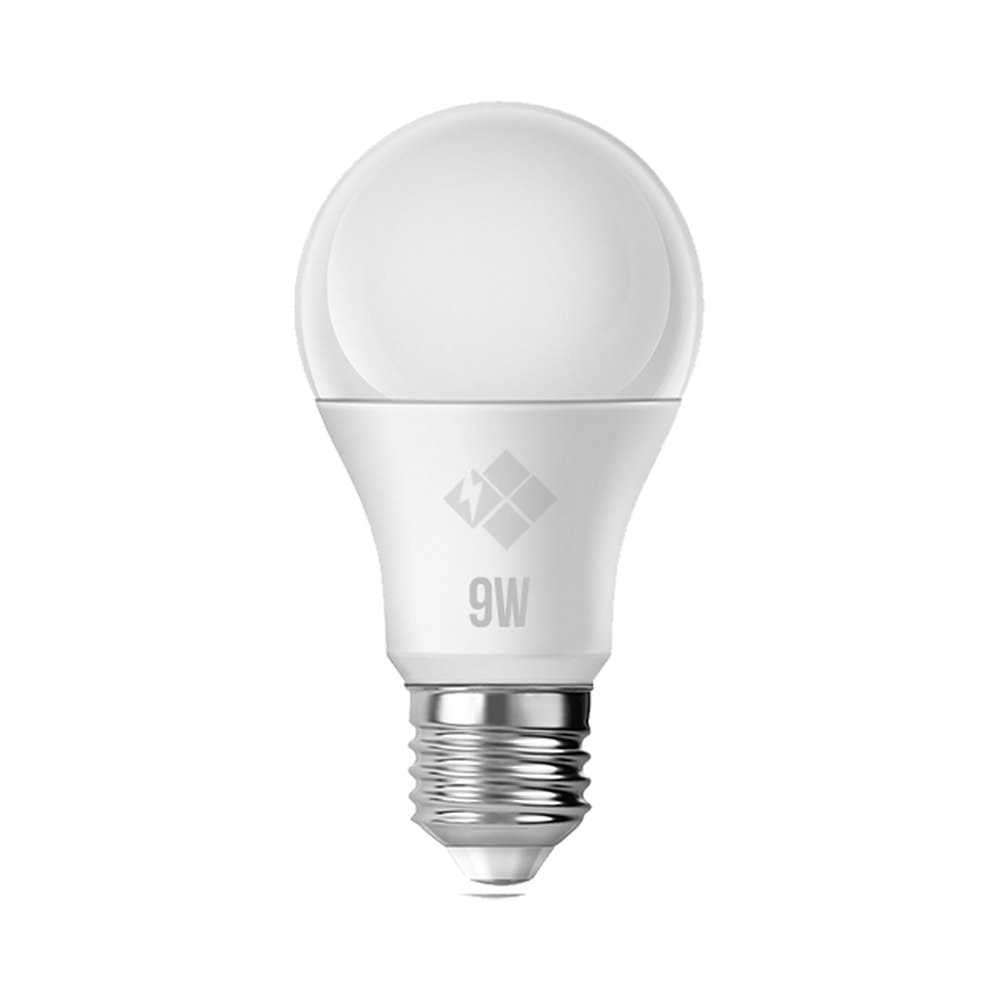
Besides the wattage and cap code, a bulb's base or box carries one more marking: "220–240 V~ 50/60 Hz" or "AC 110–240 V". Most people ignore it, since every bulb in the house plugs into the same supply anyway. Yet that range tells you how the bulb will react to voltage fluctuations and where it can be used.
A quick word on mains voltage
Homes in Azerbaijan, across Europe and in many other countries receive electricity rated at 220–230 volts and 50 hertz. The United States, Canada and some other countries use roughly 120 volts at 60 hertz, and Japan runs at an even lower 100 volts.
The "50/60 Hz" marking shows the bulb can run on supplies of either frequency. For modern LED drivers the difference usually does not matter, but if a product states only "50 Hz" and you plan to use it on a different network, it is wiser to check with the manufacturer.
Nominal voltage is an ideal value. On a real network it varies over the day: it dips a little when the evening load rises and can climb at night. The swings are larger in houses far from the transformer, in villages and in country homes.
What "220–240 V" means
This marking shows the bulb is designed for 220, 230 and 240-volt supplies, which makes it entirely suitable for the network in Azerbaijan. The range does not mean the bulb switches off at 219 V: manufacturers allow for ordinary fluctuation. But when the voltage falls well below or rises well above the range, the bulb leaves its normal operating conditions.
Connected to a 120-volt supply, a bulb like this will glow very dimly, flicker or not start at all. Remember that with bulbs brought back from a trip or ordered from abroad. The reverse, putting a 120-volt bulb on a 230-volt supply, can destroy it quickly and cause dangerous overheating.
"110–240 V": a wide-range driver
This marking indicates a driver that can cope with a broad input voltage range. It tries to keep the current to the LEDs constant even as the input changes, so the bulb shines equally brightly on American and European style networks.
At home, the practical benefit of a wide range appears where voltage often sags. In a country house where the voltage drops noticeably in the evening, a simple narrow-range bulb may dim and flicker, while a wide-range one is better able to keep the light steady.
Still, "110–240 V" does not automatically mean a better bulb. It describes only the driver's input range; flicker, light quality and durability depend on other factors.
When voltage goes out of range
Low voltage. Bulbs with simple drivers dim, sometimes start flickering and take longer to come on. With constant-current drivers, brightness holds steady down to a point, after which the bulb suddenly starts cutting in and out.
High voltage. Driver components, capacitors in particular, work under extra stress and heat up. A brief rise usually passes without trace, but if the voltage stays high for long periods, bulbs can fail one after another.
Surges. Short, high spikes from lightning, large motors switching on and off, or a fault on the network can damage a driver. Many bulbs include a simple protective component, but its capability is limited.
If bulbs in a home often fail, and several at once, look for the cause in the supply rather than the bulbs. Having an electrician measure the voltage at different times of day and, if needed, considering a stabiliser or voltage relay makes sense.
Do not confuse them with low-voltage lamps
Some spot lamps, G5.3 models for example, are made both for 12 volts and for mains voltage, and they look almost identical. A lamp marked "12 V" connected straight to the mains will burn out instantly, while a mains lamp connected to a 12-volt transformer will not light. When replacing a spot, always check the voltage printed on the old lamp.
Checks before you buy
- Does the range on the bulb match the supply in your country?
- If voltage in your home often sags, would a wide-range driver help?
- For spot lamps, have you checked whether the old lamp is 12 V or mains voltage?
- Is the frequency (50/60 Hz) stated?
Zəfər İşığı bulbs are made for the Azerbaijani supply at Zaferoğlu Elektrik's plant in Ganja. Questions about the technical markings of a particular model can be sent to the company via its enquiry form.
All news