
Does the colour of LED light change over time?
After a few years an LED bulb may look yellowish, greenish or bluish next to a new one. Why that happens and how to keep the difference to a minimum.
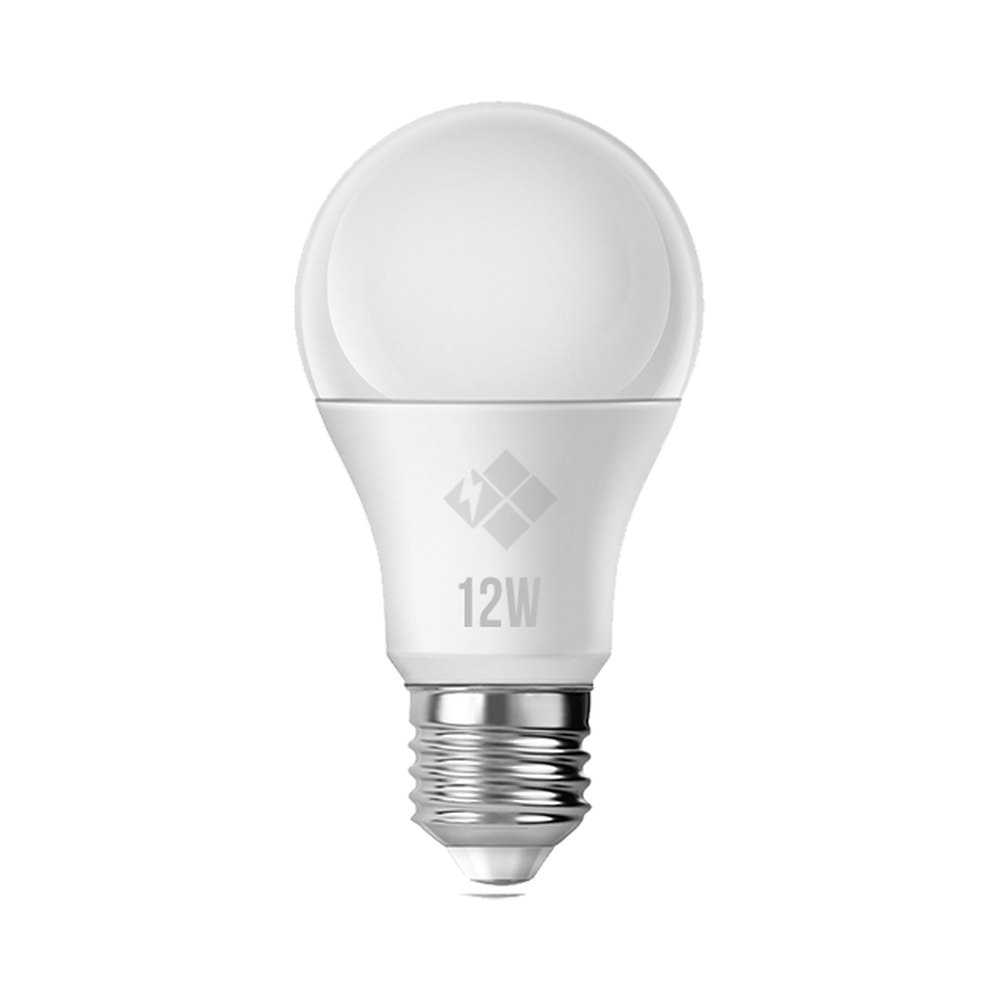
One of the five bulbs in a chandelier has burnt out, and you replace it with a new bulb of the same wattage. That evening the difference jumps out: the new one looks whiter, the old ones slightly yellow. The first thought is "I bought the wrong bulb". Often, though, the cause is not the new bulb but the way the old ones have changed over the years.
How white LED light is produced
Most white LEDs combine a chip that emits blue light with a layer of phosphor on top. The phosphor absorbs part of the blue light and re-emits it in the yellow and red range. To the eye, the mix of blue and yellow looks white, and whether the light is warm or cool depends on the balance of that mix.
For the colour to stay constant, then, the chip's blue emission, the phosphor layer and every transparent material the light passes through would have to keep the same properties for years. In practice each of them changes gradually.
Why the colour drifts
The main reasons are:
- Phosphor ageing. Under high temperature and intense radiation, the phosphor's ability to convert light slowly declines. When less blue light is turned into yellow, the light drifts towards a cooler, bluish tone.
- Yellowing encapsulant and lenses. The silicone or epoxy covering the chip, and the plastic diffuser dome, yellow under heat and short-wavelength light. That pushes the light towards a warmer, yellowish tone.
- Changes in the chip itself. A chip that runs hot for long periods can shift its emission slightly, upsetting the balance with the phosphor.
- Moisture and dirt. In a fitting that is not sealed, damp and dust leave deposits on optical surfaces and alter both the tint and brightness of the light.
Colour shift usually goes hand in hand with a drop in light output. In the industry, how LED output declines over time is measured under the LM-80 method and projected with TM-21; an L70 rating, for example, marks the point at which a lamp gives only 70 per cent of the light it had when new. Colour shift is a separate measure, though, and can become visible while brightness is still fine.
Which effect dominates depends on the materials and operating conditions. That is why some bulbs turn yellowish over time, some greenish and others bluish.
Heat is the main accelerator
What all these processes share is temperature. The hotter the chip and phosphor run, the faster the changes happen. If two bulbs of the same model work for several years, one in an open wall light and the other in a small, airless ceiling shade, their light may look different at the end of it.
So the most effective way to protect colour stability is to give the bulb suitable conditions: do not put a bulb that is not rated for enclosed fittings into one, keep air moving around the fitting and choose a wattage that suits what the fitting can handle.
Ageing or a batch difference?
Not every colour difference comes from age. New bulbs can differ slightly too, because in production chips are sorted into groups by colour characteristics, and some spread remains between groups. Internationally this is expressed in MacAdam ellipses: the fewer the steps, the closer bulbs with the same nominal colour look to one another. EU rules for light sources also set a limit on this measure.
A simple way to tell the difference:
- switch on two new bulbs side by side; if they differ, it is a batch or model difference;
- compare an old bulb with one of the same age in another fitting; if those two match, the difference comes from ageing;
- check the colour temperature markings in kelvin; sometimes the bulbs simply have different nominal tones.
Keeping colours consistent in a room
- Buy bulbs for one room or one fitting from the same model and, ideally, at the same time.
- Pick up one or two spares in the same purchase; a bulb bought later may come from a different batch.
- If one bulb in a chandelier fails and the mismatch really bothers you, consider replacing them all together.
- Protect bulbs from overheating: do not use bulbs in enclosed shades unless they are rated for it.
- When choosing colour temperature, go by the kelvin value on the packaging rather than vague terms such as "white" or "daylight".
Keep in mind that gradual colour drift is usually very slow and in everyday life only shows when old and new bulbs sit side by side. With a single bulb, the eye adapts to the change.
Zəfər İşığı bulbs from Ganja come in several shapes and bases. When choosing several bulbs for one room, the catalogue makes it easy to compare model names.
All news