
Why an LED bulb or driver buzzes
A faint buzz from an LED bulb or panel driver usually traces back to a dimmer, an old transformer or components inside the driver. Here are the causes and fixes.
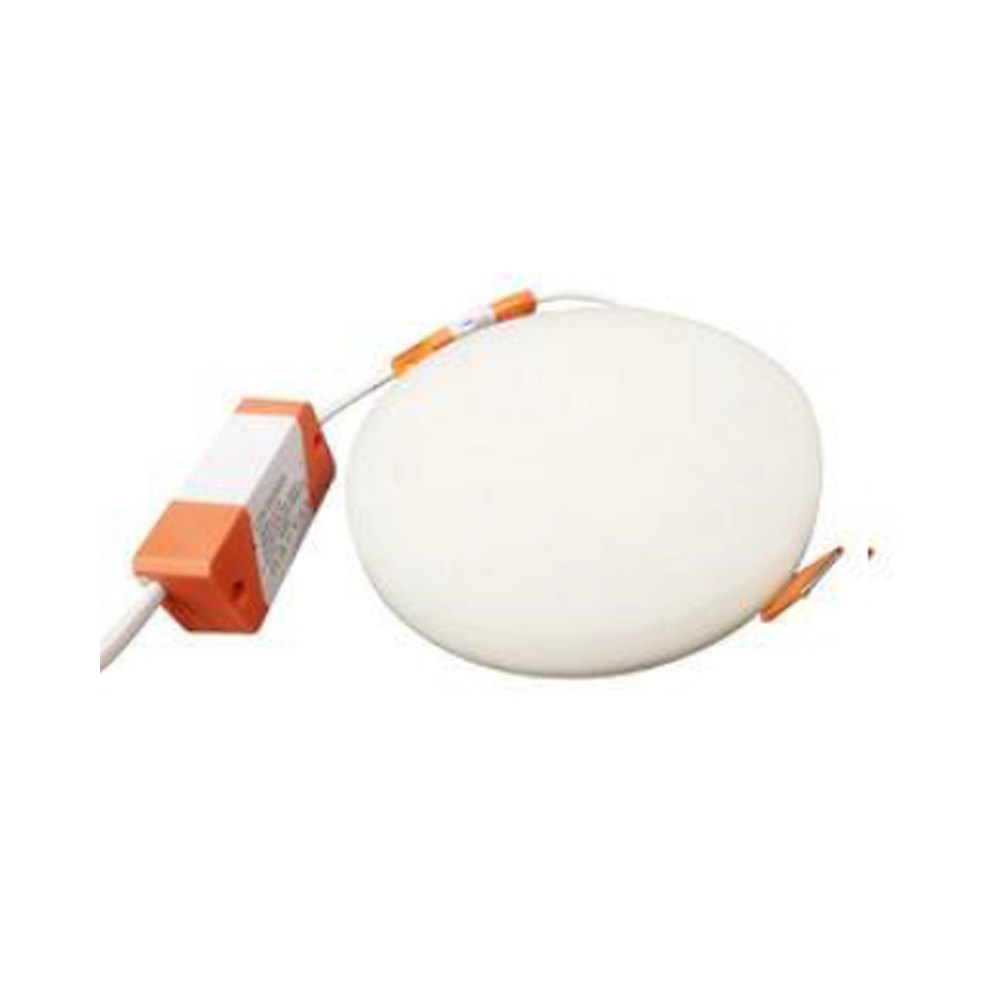
Nobody notices it during the day, but at night you switch on the bedroom light and hear a thin, steady buzz from the ceiling. Sometimes it only appears at a certain dimmer setting; sometimes it comes from a panel mounted in plasterboard. The cause is worth understanding, because while most buzzing is just a nuisance, some of it signals a dangerous fault.
How electronics make a sound
Some components in a driver can turn electrical oscillation into mechanical vibration. There are two main sources.
The first is wound components, the choke and transformer. Alternating current through them creates a magnetic field that squeezes and releases the core and windings by tiny amounts. When that vibration falls within the audible range, you hear a hum.
The second is small ceramic capacitors. Their material changes shape very slightly as the voltage changes and can make the circuit board vibrate like a speaker membrane. Engineers sometimes call this "singing capacitors".
In both cases the sound is quiet, but when the fitting is mounted on a surface that resonates, such as a plasterboard ceiling, a metal housing or a thin cabinet panel, it seems amplified.
The pitch is a clue as well. Old magnetic transformers and chokes on a 50 Hz supply usually give a low, even hum: the core is squeezed once every half-cycle, so the vibration repeats 100 times a second. Switch-mode drivers tend to produce a thinner, whining or whistling sound, because they operate at much higher frequencies and what you hear is usually lower tones that arise as the load changes.
The most common causes
An incompatible dimmer. Older dimmers designed for incandescent bulbs chop the voltage abruptly every half-cycle. That sharp-edged waveform makes components in the driver vibrate harder. If the bulb is not designed for dimming, flicker and heating can accompany the buzz.
An old 12 V transformer. Low-voltage spots such as G5.3 often cause trouble when fed from a transformer originally installed for halogen lamps. Many electronic halogen transformers only run stably above a certain minimum load; an LED lamp draws very little power, so the transformer slips into unstable operation, buzzes and may make the light flicker.
The driver itself. Sometimes the driver is simply acoustically poorly designed. In that case every sample of the same model buzzes.
A loose contact. A bulb that has worked loose, an oxidised contact or a wire not properly clamped in a terminal can arc. That is not an even hum but more of a crackle or sizzle.
When to switch off immediately
Turn the lamp off and call an electrician to look at the fitting when:
- the sound is crackling, popping or sparking;
- there is a burning smell;
- the lampholder, switch or driver housing is too hot to touch;
- the light flickers on and off along with the noise.
These are signs of a poor contact or overheating and carry a fire risk. Waiting to see what happens is the wrong approach.
Steps to get rid of the buzz
If the sound is steady and faint, a methodical check usually finds the answer:
- temporarily replace the dimmer with a plain switch; if the buzz disappears, choose a dimmable bulb or a dimmer designed for LED loads;
- try a bulb from a different manufacturer in the same fitting; if the sound goes, the issue is that bulb's driver;
- for 12 V spots, discuss replacing the old halogen transformer with a driver suited to LED loads with your electrician;
- separate panels or remote drivers from plasterboard and thin boards where possible, with a soft spacer in between;
- check that the bulb is seated firmly in the holder, without overtightening it.
In quiet rooms like bedrooms and studies, even a faint noise is irritating. Testing a bulb in quiet conditions before committing to a whole room saves swapping them later.
With LED panels, the driver often sits as a separate box above the ceiling. Rather than dropping it loosely behind the panel, place it on a firm surface that does not transmit vibration, leave room for air around it and avoid leaving cables under tension; this reduces both noise and heat. If the sound only starts after several minutes of operation, suspect that the driver is warming up without enough ventilation.
If a replacement is needed, Zəfər İşığı bulbs are made with E27, E14, G5.3 and GU10 bases. If you are unsure which cap or model suits your fitting, the company's Baku office can help.
All news