
Power factor (PF): what it is and who should care
Power factor shows how efficiently a bulb uses the current it draws from the mains. What it changes at home, and why it matters in offices and workshops.
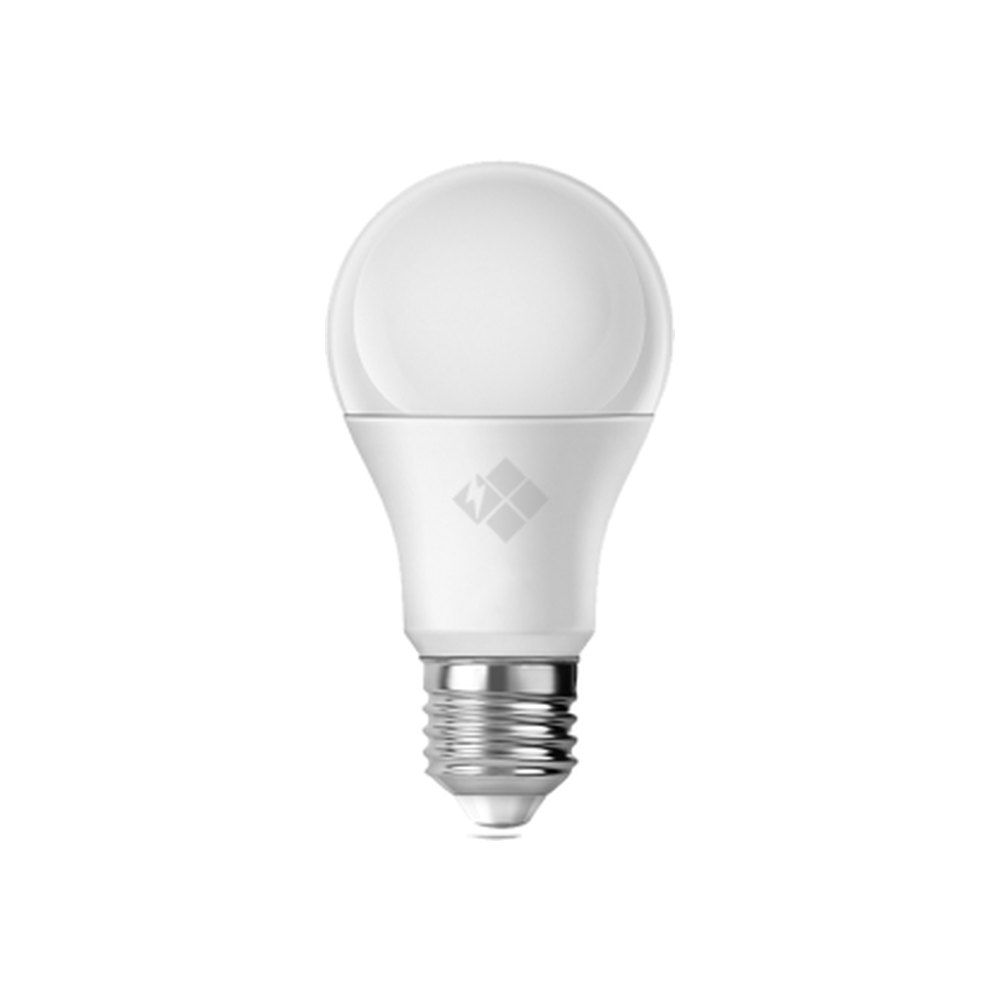
LED specifications sometimes include a line such as "PF > 0.9" or "PF ≥ 0.5". The figure is far less familiar than watts or lumens, so it is easy to skip. Yet a number that means little for a handful of bulbs can make a real difference in a building with hundreds of them.
Real power, apparent power and the ratio between them
On an AC supply, the power a device actually converts into useful work is called real power, measured in watts. That is the wattage printed on the bulb. But multiply the current drawn from the mains by the voltage and you get apparent power, measured in volt-amperes (VA), and for some devices it is considerably higher than the real power.
Power factor is the ratio of the two: PF = W / VA, a value between 0 and 1. An incandescent bulb behaves like a simple resistor, so its PF is practically 1. With an LED bulb, everything depends on the driver.
A simple example: take two 10-watt LED bulbs. The one with a PF close to 1 draws roughly 0.044 A from a 230 V supply. The one with a PF of 0.5 consumes the same 10 W, yet draws about twice the current, around 0.087 A. The light is identical; the current in the wiring is not.
Where a low PF comes from
Many cheap, compact drivers simply rectify the mains and charge a capacitor. A circuit like that does not draw current evenly through the cycle but in short pulses near the voltage peaks. The current waveform moves far away from a sine wave, harmonics appear and the power factor drops.
Better drivers include a power factor correction stage, PFC, which keeps the current shape close to the voltage shape. It makes the circuit a little more complex but reduces the burden on the supply. The EU ecodesign rules for light sources also require a higher minimum PF as wattage rises.
What it changes at home
For an ordinary household the short answer is this: the meter records real energy in kilowatt-hours, so a low-PF bulb does not noticeably raise the bill. With ten or fifteen bulbs in a flat, the extra current in the wiring is negligible as well.
Even so, PF can be an indirect clue at home. A driver with a PFC stage usually comes in a more carefully engineered product, and such bulbs tend to have fewer problems with flicker and overheating. A high PF is not a quality guarantee by itself, but it can hint that the maker did not cut corners on the driver.
Why offices, shops and factories should care
Things change when hundreds of bulbs share the same installation:
- Cables and breakers. The total current of low-PF lamps is much higher than that of high-PF lamps with the same wattage. Sizing a circuit by adding up watts alone can lead to breakers tripping unexpectedly or cables running warm.
- The neutral conductor. On a three-phase supply, the third harmonic produced by drivers adds up in the neutral and loads it. This deserves attention in older buildings especially.
- Transformers and generators. Standby generators and transformers are rated in VA, so a poor PF eats into their usable capacity.
- Tariff terms. Some tariff systems account for reactive energy separately for large consumers. Whether that applies to you is a question for your electricity supplier.
Numbers make it concrete. Say a warehouse installs 200 lamps of 10 W each, 2000 W in total. With lamps close to PF 1, the total current on a 230 V circuit is about 8.7 A. With lamps at PF 0.5, the same light takes about 17.4 A. A designer who looks only at watts and sizes the circuit for the first figure will load the breaker and cable twice as heavily as expected.
Concepts that often get mixed up
Power factor is not efficiency. How much light a bulb gives per watt is measured in lumens per watt and has nothing to do with PF: a low-PF bulb can be very efficient at producing light, and a high-PF bulb only average. PF simply describes the shape of the current drawn from the supply.
The same bulb may also show slightly different PF readings on different meters, because the result depends on the mains waveform and the measurement method. The figure on the manufacturer's datasheet is a more reliable reference.
A quick check when choosing
- Is PF stated on the packaging or datasheet?
- If many lamps are going in, has the circuit been sized by current or VA rather than watts alone?
- For a large site, have you asked the supplier whether the driver includes PFC?
Power factor alone does not tell you whether a bulb is good or bad, but it does show how a lighting scheme will load the electrical system. Technical questions about specific Zəfər İşığı bulbs made by Zaferoğlu Elektrik in Ganja can be sent through the company's enquiry form.
All news