
Does warm light use less energy than cool light?
Whether a bulb of a given wattage gives warm or cool light does not change its consumption. Where the myth comes from and what really matters when choosing.
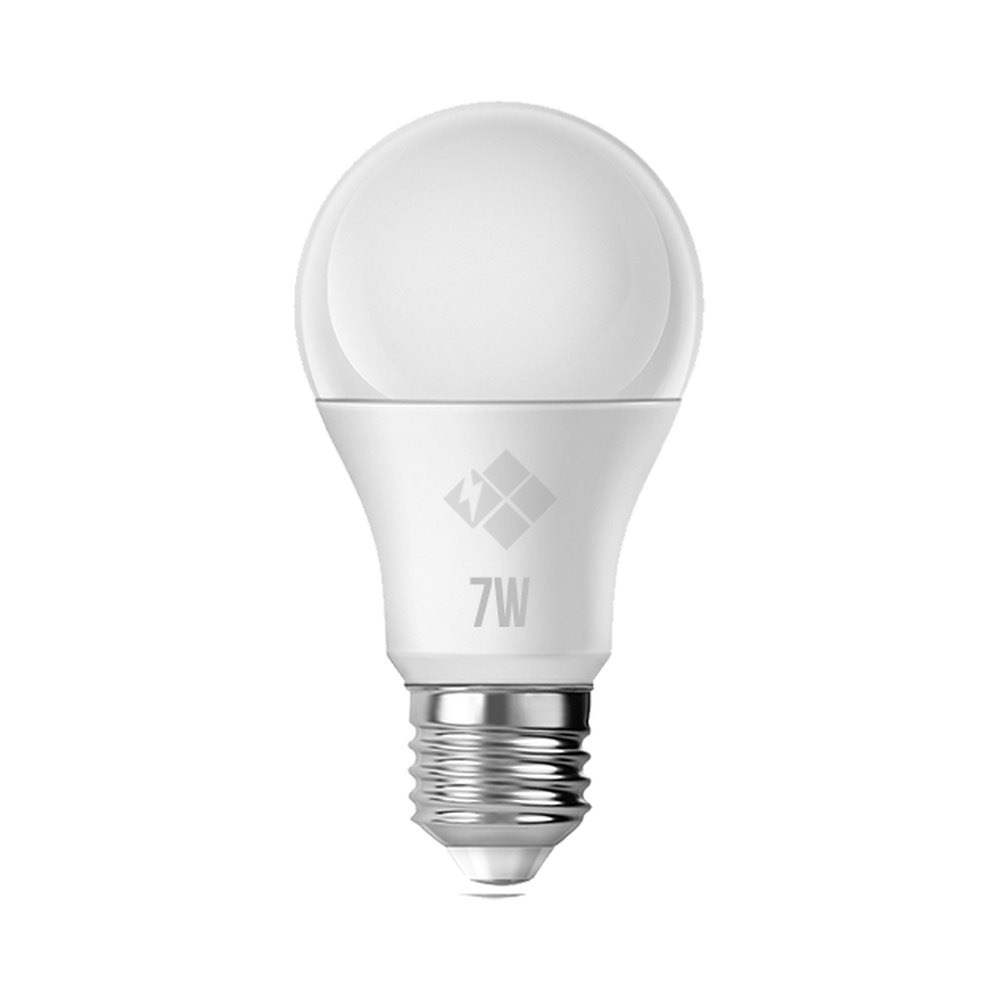
A shopper compares two LED boxes: same wattage, but one reads 3000 K and the other 6500 K. One shopper says, “Cool light is brighter, so it must use more energy.” Another thinks the opposite: “White light is the economical one.” Both views are common, and both rest on the same mistake: confusing colour temperature with power.
What determines energy use
How much energy a bulb draws from the mains is shown by its power in watts. A ten-watt bulb uses ten watt-hours in an hour, whatever the colour of its light. The meter does not see colour; it measures current and voltage.
Colour temperature, measured in kelvin, describes the tint of the light. Low values such as 2700–3000 K are yellowish, similar to an incandescent bulb. Around 4000 K is neutral white. 6000 K and above is bluish, cool white resembling daylight. This figure tells you how light looks, not how much of it there is.
You can check this with a simple experiment. Put two bulbs of the same wattage but different colour temperatures into the same holder in turn and read a plug-in energy monitor: the readings will be practically identical. If a small difference appears, it comes not from the colour but from manufacturing differences in the drivers and components of the two bulbs. Two samples of the same model can differ that slightly too.
Where the myth comes from
There are several reasons.
First, cool light looks brighter and sharper. The brain links bluish white light with daytime and may perceive the same amount of light as stronger, which feeds the idea that “brighter means hungrier”.
Second, old experience. With incandescent bulbs, a higher-wattage bulb was both brighter and slightly whiter, while a low-wattage one looked more yellow. People learned to associate yellow with low power.
Third, a feature of LED technology. White LED light is produced by a blue diode with a phosphor layer on top. Warm tones need more of the blue emission shifted to longer wavelengths, and every such shift costs a little efficiency. As a result, a warm-white LED can give slightly less light than a cool-white LED of the same wattage. So the difference is not in consumption but in how much light you get for the same consumption, and it varies from model to model.
The right question when choosing
If your goal is saving energy, the question is not “which colour uses less?” but “how much light do I get for this wattage, and does the room need that much?” For that, check three figures on the packaging:
- power (watts): consumption;
- luminous flux (lumens): the amount of light;
- colour temperature (kelvin): the tint.
Lumens divided by watts gives the lamp's efficacy. When comparing bulbs from different makers at the same colour temperature, this ratio is a useful reference point.
Choose colour for the space, not the bill
Since colour temperature is not decisive for energy, it makes more sense to choose it according to what the room is used for:
- warm light creates a sense of comfort in bedrooms, living rooms and for evening relaxation;
- neutral white shows detail more clearly in kitchens, at desks and at bathroom mirrors;
- cool white supports alertness and visual sharpness in storerooms, workshops and plant rooms.
If you choose warm light and the room feels a little dim, the answer is not to switch to cool light but perhaps to go one step up in output or add another light point. Consumption then rises, but because of power, not colour.
Quick checklist
- For consumption, look only at watts.
- For brightness, look at lumens, not colour.
- Choose colour by what the room is for.
- Keep one colour temperature within a room.
- Compare lamps that share the same kelvin value.
The colour-temperature simulator on the website shows how the same room looks at different kelvin values. On Zəfər İşığı product pages, kelvin and wattage are listed as separate lines, which makes the point of this article easy to see.
All news