
Do smart bulbs use power when they are switched off?
A smart bulb switched off in the app is not truly off: its wireless module keeps listening. How to estimate that standby consumption.
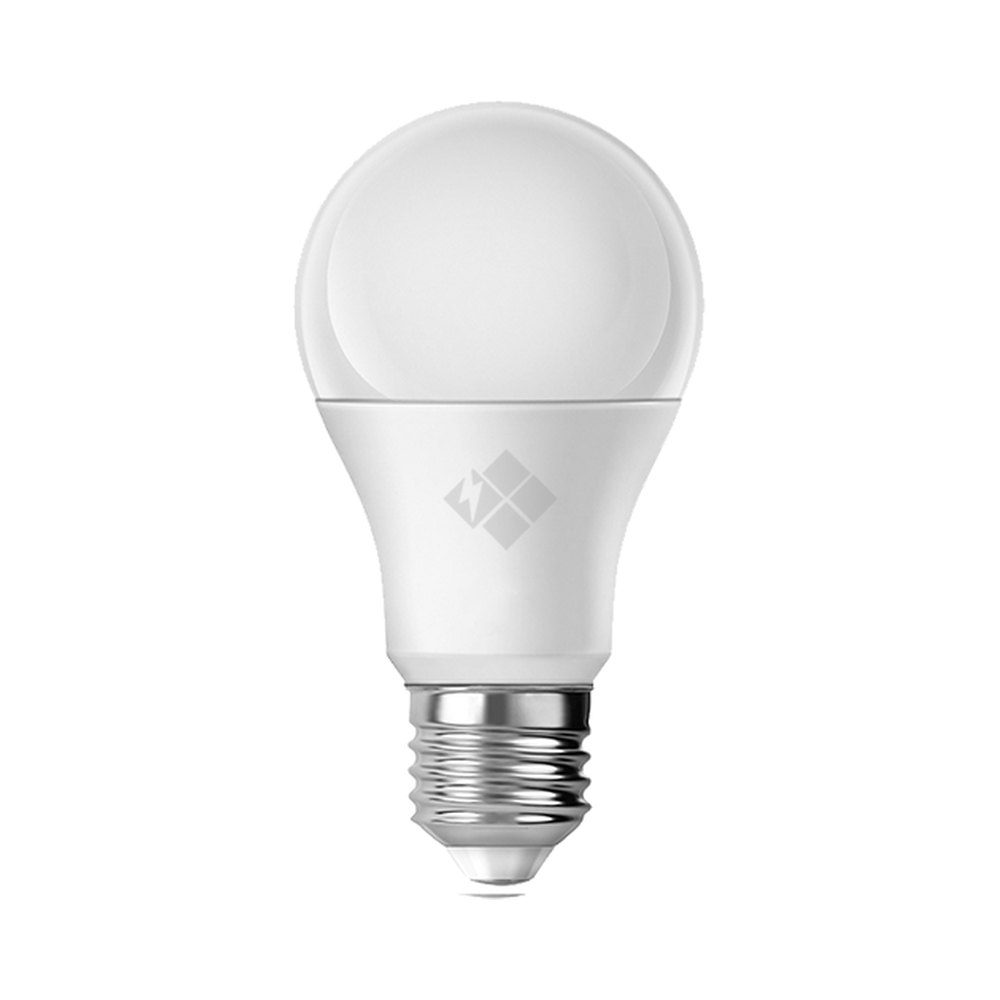
When you turn a smart bulb off from your phone, the room goes dark but the bulb is not disconnected from the mains. The wall switch stays on, and a small radio module inside the bulb keeps waiting for the next command. So some energy is being used. The question is how much, and whether it is worth worrying about.
Why it is never fully off
In an ordinary LED bulb, turning off the switch breaks the circuit and the current stops. A smart bulb is different. Besides the light-emitting diodes and the driver, it contains a wireless module for Wi-Fi, Bluetooth or Zigbee. When the app or a voice assistant sends “off”, only the diodes go dark. The module has to stay awake so it can receive “on”, and part of the driver keeps running to power it.
This is known as standby, or networked standby. Its power is tiny compared with the bulb's output when lit, but it runs around the clock, all year.
The type of connection plays a part too. Wi-Fi bulbs that connect straight to the home router each maintain their own link. With protocols such as Zigbee, the bulbs work through a hub, and the hub itself is permanently powered as well. Simple Bluetooth-controlled models usually need less power for the module, but their control range is limited. So quite different systems, in standby terms, hide behind the same “smart bulb” label.
How much it can be
Standby power depends on the model, the wireless protocol and the quality of the driver. Many countries set an upper limit on standby power for networked devices, and modern smart bulbs usually sit well below one watt. For the exact figure you need to check the product's technical documentation.
The calculation is straightforward. Suppose a bulb draws half a watt in standby and spends twenty hours a day off but connected. Over a year that comes to roughly three and a half kilowatt-hours. For one bulb that is very little. But with twenty or thirty smart bulbs in a home, the total reaches a level worth noticing, especially if those bulbs are rarely switched on.
When it matters
Standby consumption deserves attention mainly in two cases:
- The bulb is rarely used. A decorative light in a living room that is switched on a few times a month spends the rest of the year in standby, and there the standby energy can rival the energy used for actual light.
- The system has many devices. Besides smart bulbs, smart plugs, sensors and a hub are permanently connected too.
For main lights that run several hours a day, standby is a small share of total use, and the convenience of smart control, such as schedules, remote switch-off and dimming, often more than makes up for it.
How to reduce standby use
- Use ordinary LED bulbs where smart features are not needed: pantries, bathrooms, utility rooms.
- Switch bulbs off fully at the wall when they will not be used for a long time, for example while you are away. Remember that you will then not be able to turn them on from the app.
- Instead of many smart bulbs in one room, consider a smart switch or relay: one module controls several ordinary bulbs.
- When choosing a product, check whether the technical sheet states the standby power. Manufacturers that publish the figure make comparison possible.
- Keep firmware updated; some updates improve power management.
Can you check it on the meter?
A household meter will not show such a small load on its own. If you want an accurate measurement, you can try a plug-in energy monitor with a table lamp, but at very low power cheap monitors have limited accuracy. In practice, relying on the figure in the manufacturer's documentation is more dependable.
Smart control is not needed everywhere. An ordinary LED bulb controlled by a wall switch has no standby mode, so it uses no energy when switched off. Zəfər İşığı lamps from Ganja belong to this simple group: ordinary LED bulbs controlled by a wall switch, with nothing drawing power while they are off.
All news