What determines the price of an LED bulb
Two LED bulbs that look identical can differ several times in price. Here is what drives the price and where cheapness hides its costs.
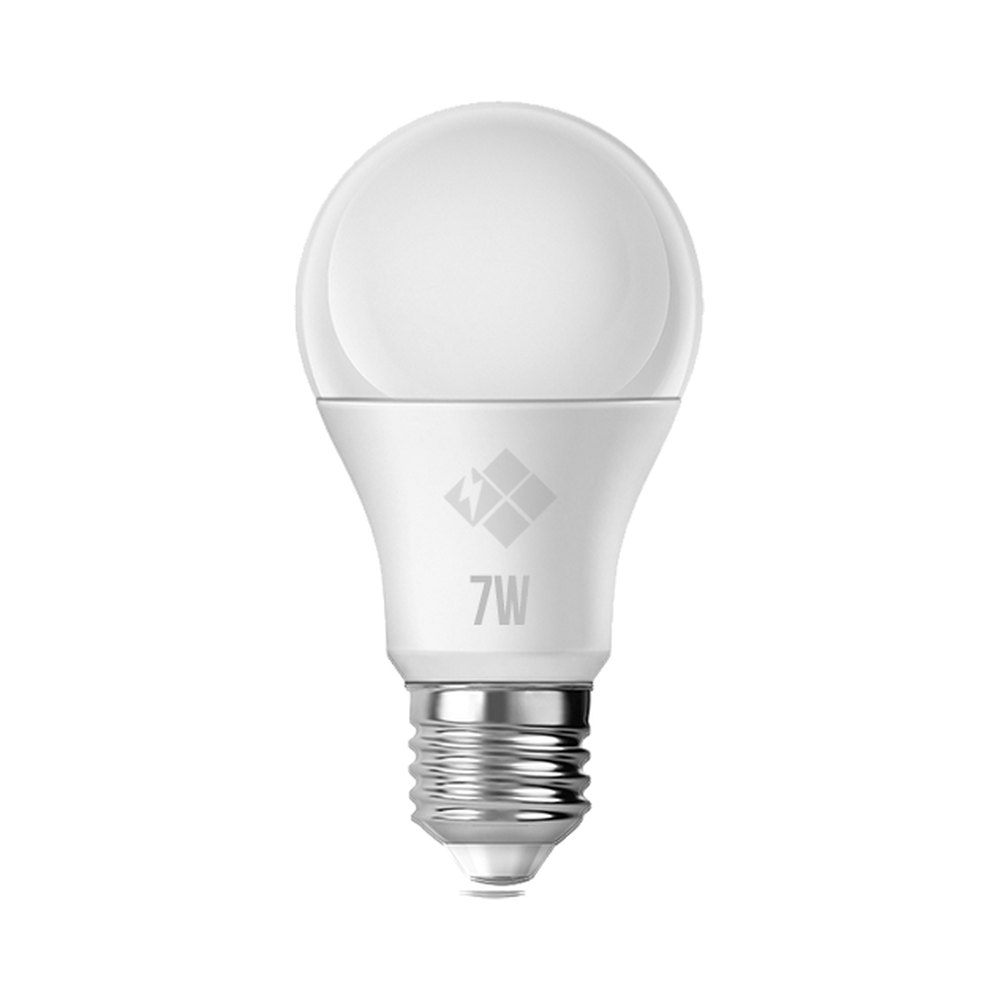
Two white A-shape bulbs sit on the shelf: same cap, same wattage, same colour temperature on the box. One costs far more than the other. The gap is not explained by the brand name alone. An LED bulb is a small electronic device, and the quality of its components affects both the price and how the bulb will behave in your home.
The diodes: the source of the light
Inside the bulb are one or more LED chips. Their quality determines how much light you get per watt, how faithfully colours are rendered and how quickly output fades over time.
Better chips are sorted to tighter tolerances. That means bulbs from the same batch match in colour, so one lamp in a chandelier does not look yellowish while its neighbour looks pinkish. Cheap bulbs may use fewer chips driven hard: they look bright at first, but run hotter and fade sooner.
The driver: invisible but decisive
The driver's job is to feed the LEDs a smooth, constant current from the AC supply. A large share of LED problems, such as flicker, buzzing, early failure and radio interference, come down to the driver.
A good driver keeps the current steadier, suffers less from invisible flicker, copes better with voltage fluctuations and includes filtering against electromagnetic interference. Each of these needs extra components and therefore adds cost.
It is hard to judge a driver's quality from the box. A practical check is simple, though: light the bulb and view it on your phone's camera screen. If bands appear on the screen, the light is flickering. It is not a precise measurement, but it reveals the obvious differences. In the cheapest bulbs the driver can be pared right back, and you notice the difference months later, not on day one.
Housing and heat dissipation
LEDs produce little heat, but that heat concentrates near the diodes and has to be carried away. For that the bulb has an aluminium board or heatsink inside and a housing of thermally conductive plastic or metal outside. The amount and quality of material affect the price.
In a bulb that sheds heat poorly, the diodes run hotter and their output drops faster. The difference shows most clearly in enclosed fittings.
Glass, cap and assembly
How evenly a frosted dome spreads the light, its transparency, the metal of the cap and how firmly it is attached all add to the cost. A poor cap can wobble in the holder or make weak contact. Quality control during assembly and testing of each batch are manufacturer costs too, and they are reflected in the price.
Extra capabilities also raise the price:
- dimmer compatibility, which requires a special driver;
- adjustable colour temperature or coloured light;
- smart control with a wireless module;
- a high degree of protection against moisture and dust;
- operation over a wide voltage range.
Paying for features you do not need makes no sense. But fitting a non-dimmable bulb on a dimmer circuit causes problems of its own.
What to look at besides the price
To judge whether the cheapest bulb is really good value, do not compare purchase price alone. Consider:
- the luminous flux and wattage on the pack, giving light per watt;
- how well known the manufacturer and seller are, and whether documentation exists;
- whether the pack states colour rendering and operating conditions;
- which fitting the bulb will go into, since quality gaps appear faster in enclosed shades;
- how hard replacement is, because a bulb that fails early on a high ceiling is expensive.
The local manufacturing factor
Where a bulb comes from also affects its price: transport, customs, warehousing and the number of intermediaries all add to the final figure. Local production shortens part of that chain and makes it possible to put questions about the product and its documents directly to the manufacturer.
Zaferoğlu Elektrik has been making LED lamps in Ganja since December 2021. The Zəfər İşığı catalogue includes E27 bulbs of various wattages, E14 candle and filament lamps, spotlights and high-output models; for details on a particular product or a quotation, you can use the contact form on the website.
All news