
Lighting a production floor: precision work and safety
On the shop floor, light affects both product quality and worker safety. Here are the principles for setting up general, task and emergency lighting.
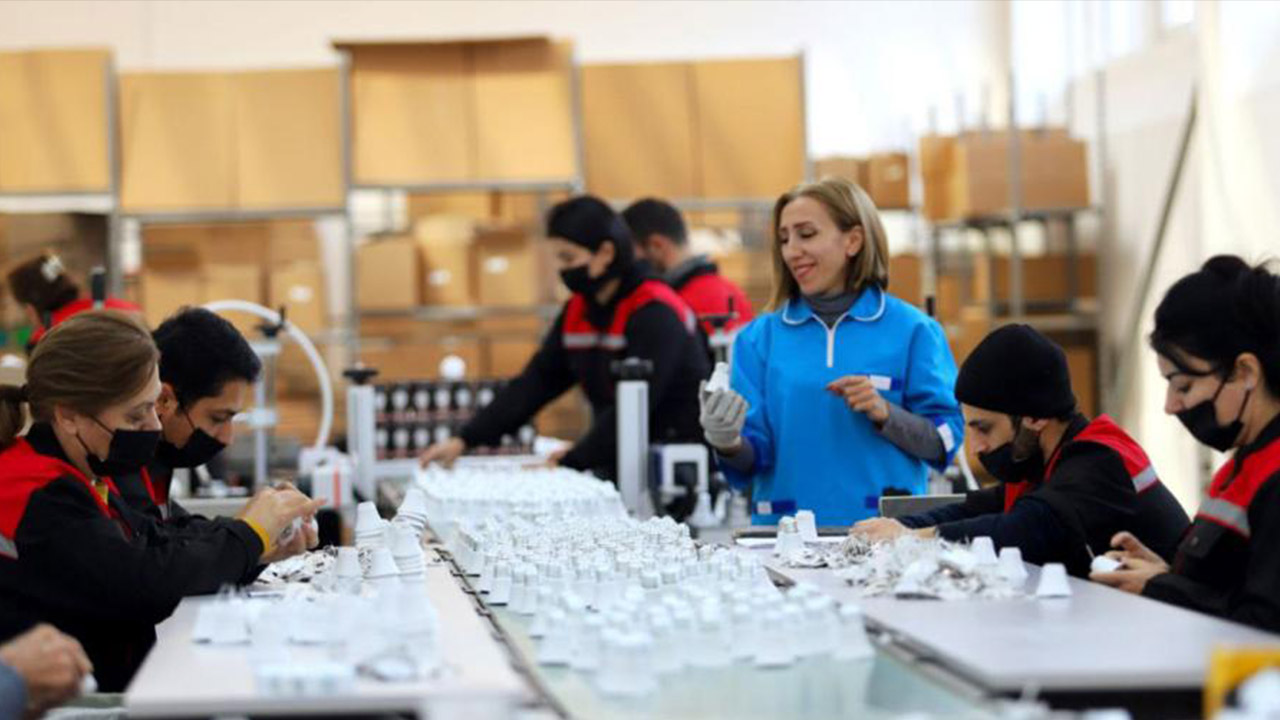
Lighting problems on a production floor rarely arrive as direct complaints. They show up in other ways: more rejects, more mistakes on the evening shift, a box in a forklift's path that nobody sees in time. After a lighting upgrade, some of those problems quietly disappear. That is why industrial lighting should be planned as part of the process, not as an overhead.
Zones by precision of work
Not every part of a plant needs the same light. Requirements differ between transport aisles, an assembly bench and a quality inspection station. EN 12464-1 groups workplaces by how fine the visual task is: lower levels for coarse work, and considerably higher levels for fine assembly, precise measurement and visual inspection.
In practice this looks like:
- storage and aisles — even general light for safe movement of people and vehicles;
- around benches and machines — general light plus a local source aimed at the tool area;
- fine assembly and quality control — high-level, shadow-free task light with good colour rendering.
Lighting the whole floor to the level the finest task demands wastes energy and adds glare. General light stays moderate, and precision workstations are boosted locally.
High ceilings and high-power sources
Production buildings often have tall ceilings, with fittings squeezed between crane rails and process pipework. At those heights, high-power sources and fittings that spread light evenly over a wide area are needed. When planning, consider where cranes, racking and large machines will cast shadows: light from the ceiling often fails to reach aisles between tall rack rows.
Think ahead about maintenance access too. Replacing a lamp at ten metres may require a lift, a stopped production line or a special permit. Planned group replacement causes less downtime than changing lamps one by one.
Rotating parts and the stroboscopic effect
This is one of the least known yet most dangerous aspects of industrial lighting. A ripple in the light output that the eye does not register can make a rotating shaft, disc or chuck appear stationary or turning slowly. A worker may reach towards a part they believe has stopped.
To reduce the risk:
- choose low-ripple sources with good-quality drivers around machines with rotating parts;
- connecting neighbouring fittings to different phases of a three-phase supply reduces overall ripple;
- keep the machine's own local work lamp as a source separate from the general lighting.
A simple check in an existing plant: look at a rotating part through a phone camera in slow-motion mode. If you see bands or a "frozen" image, bring in a specialist.
Vertical surfaces need light as well as horizontal worktops. Control panels, gauges, warning signs and rack labels sit on walls or on the sides of machines. Overhead light illuminates them poorly and creates glare on panel glass. At stations with operator screens, keep fittings out of the screen's reflection angle.
Colour, dust and conditions
Paint, textile, food and packaging production all involve colour checks. Such stations need light with a high colour rendering index; under a low-Ra source colour differences stay invisible and faulty product is passed.
The environment also affects the fittings. Where there is dust, oil mist, humidity or vibration, open-lamp fittings get dirty quickly and fail. Dusty or wet workshops need closed, properly IP-rated luminaires, and any area with an explosion hazard needs purpose-certified equipment chosen by a specialist.
Walkways, emergency light and checks
Where forklift and pedestrian routes are separated, aisle edges and crossings must be clearly lit. At a loading door, stepping from bright daylight into a dim hall blinds the eye for a moment; raising light levels a little near the entrance softens the transition.
Emergency lighting and escape route signs form a separate system that must work when mains power fails and must be designed to the regulations in force. Its periodic testing should not be forgotten.
A short checklist:
- do precision stations have local light without shadows;
- has the stroboscopic effect been checked at rotating parts;
- are aisles and crossings evenly lit;
- do fittings suit the environmental conditions;
- when was the emergency lighting last tested?
Zaferoğlu Elektrik converted a disused sewing factory in central Ganja into its LED lamp plant. The company's catalogue includes T-shape high-power lamps and standard lamps suited to workshops and warehouses.
All news