
Lighting for beauty salons and barbershops
Hair colour, make-up and a clean shave line only show accurately under the right light. Here is how to light workstations and the floor in salons and barbershops.
Clients see the result when they step outside into daylight. If a shade that looked perfect in the mirror turns out different on the street, or one side of a fade ends up shorter than the other, the cause is often not the stylist's hand but the light at the station. In the beauty trade, lighting is a tool, as important as scissors or a hairdryer.
At the mirror: where light should come from
The most common mistake is placing the chair only beneath ceiling spots. Light from above casts shadows under the brows, beside the nose and along the jaw. The stylist cannot see roots and facial contours properly, and the client looks tired in the mirror.
A better solution is diffused sources on both sides of the mirror, roughly at face height. That light reaches the face evenly from the front and sides and softens shadows. General ceiling light stays as an extra layer to show the top of the head and the back during a cut.
In salons where mirrors face each other, reflections repeat endlessly. Bare, bright lamps are multiplied in the glass and tire the eyes. Diffused, low-luminance fittings reduce that effect.
Barbershops have slightly different needs. In a fade, hair length changes millimetre by millimetre, and seeing that gradient requires light reaching the head from the side as well; flat light from the front alone "flattens" the blend. Dark hair absorbs a lot of light, so shops with dark walls and furniture often need higher light levels at the chair. The hand mirror used to check the neckline is only useful if the back of the head is well lit too.
Colour rendering: the key criterion for colour and make-up
Hair colouring, toning and make-up are the most colour-sensitive tasks in a salon. When the lamps have poor colour rendering (a low CRI or Ra), a stylist struggles to distinguish golden and copper tones from cool ash ones. The stylist ends up mixing colour by guesswork, and the client sees something different at home.
Choose high colour rendering sources for stations where colour work happens, and check the Ra value on the packaging. In terms of colour temperature, neutral white feels closer to daylight and makes colour easier to judge. Warm light makes the room feel cosy but pulls tones towards yellow at the colour bar. That is why many salons use neutral white in the work zone and warm white in the waiting area.
A useful habit: before presenting a colour result, check it once more by the window or somewhere close to daylight.
Manicure, pedicure and cosmetology
Nail work is measured in millimetres, and general light is not enough. A local, adjustable lamp close to the table is needed, placed on the side opposite the technician's dominant hand so the hand does not shade the work. During cosmetic treatments the client often lies face up, and an open ceiling spot shines straight into their eyes. Diffused light above the couch, or a separate spot group that can be switched off during treatment, solves this.
Also mind the distance between the lamp and the client's skin. Old halogen lamps gave off noticeable heat at close range; LED lamps run cooler, but putting the source very close to the face still causes glare and discomfort.
Waiting area, reception and window
The waiting area is where a client's first impression forms. Warm, soft light, accent spots on retail shelves and clean-looking surfaces are enough. On product shelves, light should show packaging colours truly and keep labels readable.
In the evening, a street-facing window works as advertising. Seeing stylists at work in well-lit stations tells passers-by the salon is open and busy. Just make sure bright lamps placed close to the glass are not reflecting in it and hiding the interior.
Upkeep and a daily check
Salon air carries hair dust and particles of lacquer and spray. They settle on diffusers, gradually dimming the light and shifting its colour, so fittings belong on the cleaning schedule too.
- Do all stations use the same lamp type and colour temperature?
- Is the client's face free of harsh shadows in the mirror?
- Is the colour bar lit with neutral, high colour rendering light?
- Is no spot shining into the eyes of a client lying down?
- Is any lamp flickering or showing a different tone?
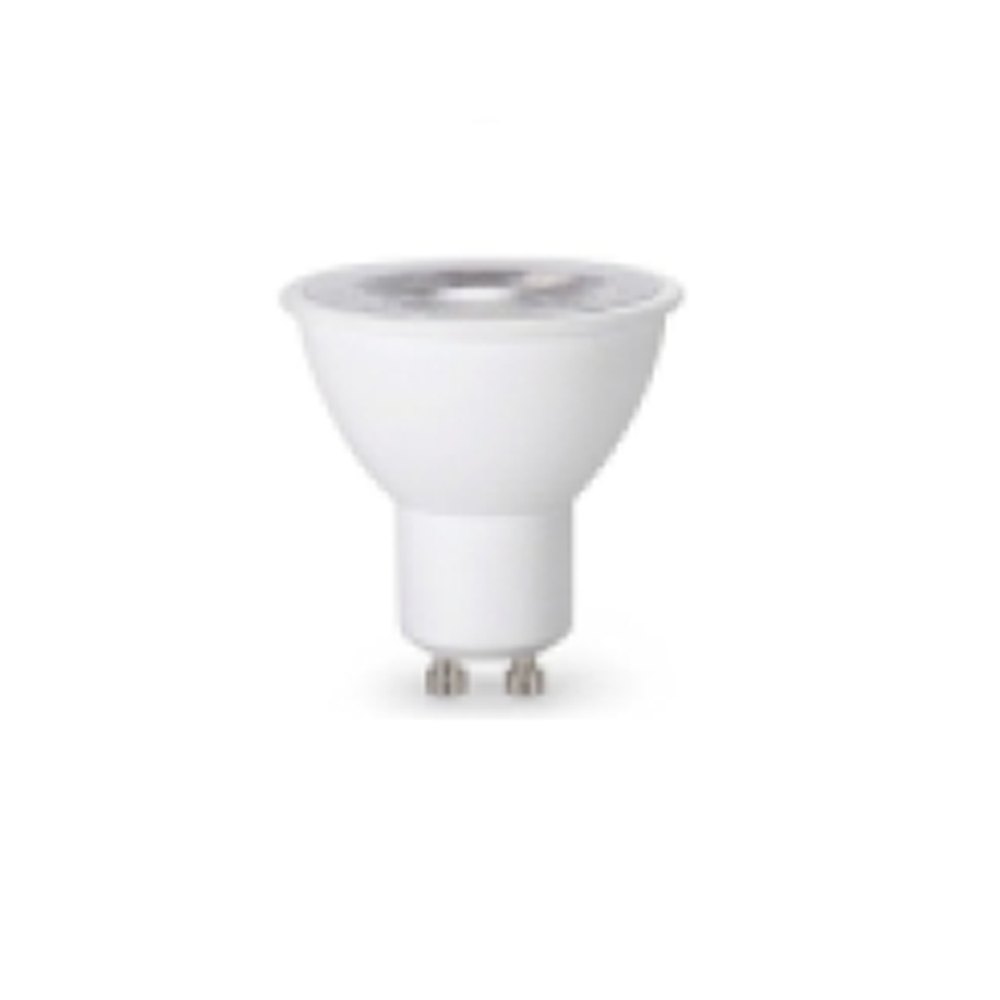
Zəfər İşığı makes the lamp types these spaces usually need — GU10 and G5.3 spots, an adjustable 3D spot and regular E27 bulbs — and they can be filtered by cap on the website.
All news