
Do LED bulbs give off ultraviolet light?
The spectrum of an ordinary white LED bulb contains practically no ultraviolet. Why that is, how it compares with other lamps and where UV really matters.
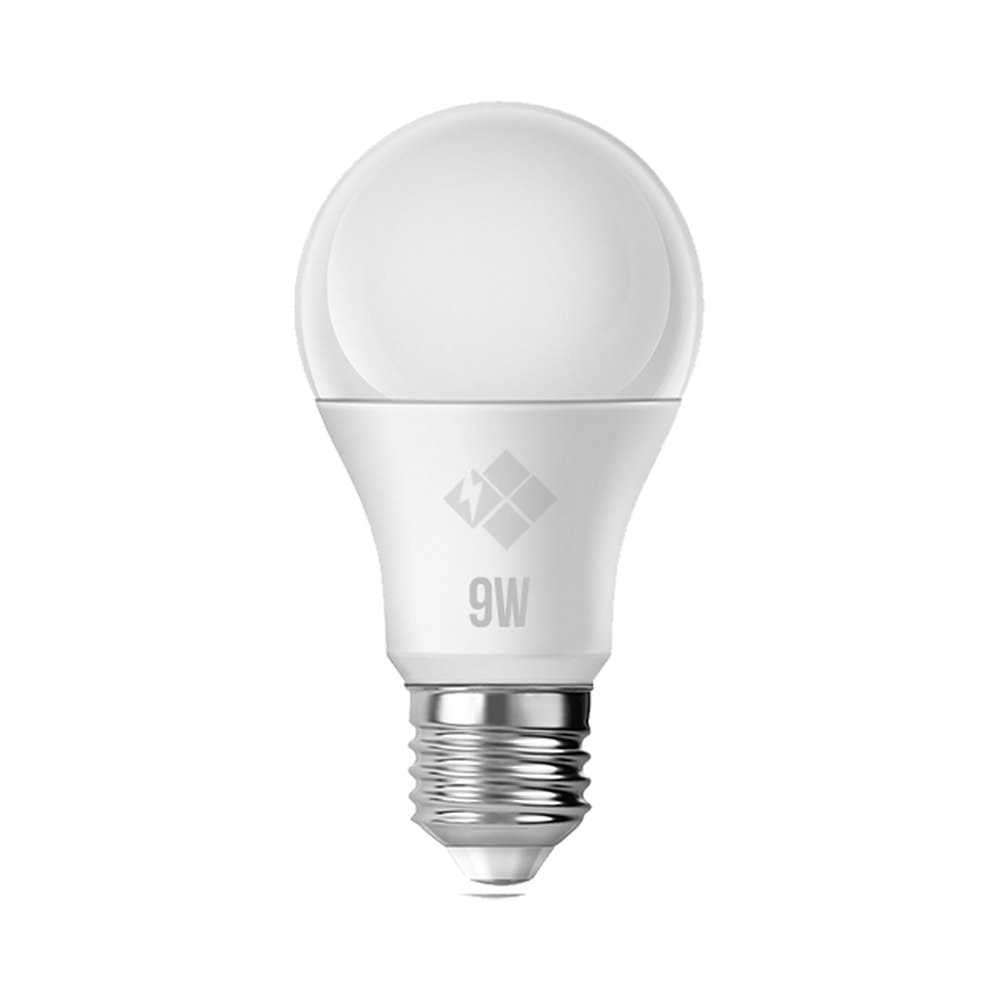
A museum curator worried about fading exhibits, a person with a skin condition who has been warned by their doctor, and a collector whose old books are yellowing in a display case all ask the same question: does the LED bulb at home or in the showcase give off ultraviolet? The short answer is that an ordinary white LED bulb emits no meaningful UV in practical terms. Still, it is worth knowing why, and where the exceptions lie.
What ultraviolet is
Ultraviolet radiation is electromagnetic radiation with shorter wavelengths than visible light. Our eyes see wavelengths longer than roughly 380–400 nanometres; anything shorter counts as UV and is divided into UV-A, UV-B and UV-C. Sunlight contains a significant share of UV, and it is mainly this part that tans and burns skin and fades fabric and paper.
Whether an artificial light source contains UV depends on how its light is produced.
Why a white LED has no UV
In an ordinary white LED bulb, light is produced by a blue diode. Blue light lies within the visible range and has a longer wavelength than UV. The phosphor layer over the diode absorbs part of the blue light and converts it into yellow, green and red light of longer wavelengths. That process only lengthens wavelengths, never shortens them. As a result, the bulb's spectrum starts in the visible range and barely reaches into the ultraviolet.
Some high colour rendering LED bulbs use a violet diode instead of a blue one. Its wavelength is close to the short end of the visible range. Such bulbs may emit a very small amount of radiation near the UV-A boundary, but under normal household conditions this too is considered negligible.
Compared with other lamps
It helps to compare other light sources:
- An incandescent bulb produces light from a heated filament. Its UV share is very small, and the ordinary glass envelope blocks some of it.
- In a halogen lamp the filament runs hotter and the capsule is made of quartz, which lets UV through more readily than ordinary glass. That is why modern halogen lamps use special UV-reducing glass and some fittings must be used with a protective front glass.
- In a fluorescent lamp, light is first produced as ultraviolet in mercury vapour, and the phosphor inside the tube converts it into visible light. The phosphor and glass block most of the UV, but a small amount can escape. This is not dangerous in ordinary use, but it is taken into account for museums and sensitive exhibits.
- Metal halide and mercury lamps generate substantial UV, and the integrity of their outer glass envelope is essential for safety.
On this list, LED is among the general lighting sources that emit the least UV.
Where UV matters
Ultraviolet is a serious factor in several areas.
In museums and archives, paper, textiles, pigments and leather fade quickly under UV. LED has a big advantage here, but it is not only UV that affects exhibits: the total amount of visible light and its blue content matter as well. That is why museums also limit light levels and exposure time.
For people with photosensitive skin conditions, doctors may advise avoiding UV sources. In such cases choosing LED rather than fluorescent or halogen lamps makes sense, but the specific decision should be made with the doctor.
In shop windows, goods usually fade not because of the lamps but because of sunlight through the glass. The sun's UV content is many times greater than that of any indoor lamp. A UV-filtering film on the glass or rotating the goods on display is a far more effective solution.
LEDs designed to emit UV
Some LED products are made specifically for ultraviolet: banknote and document checkers, nail polish curing lamps, insect traps and disinfection units. They are not general lighting lamps and require different safety rules. In particular, never look directly at UV-C disinfection devices or expose skin to them. Markings such as UV, UV-A, UV-C or 395 nm on the box help identify such products.
In conclusion
An ordinary white LED bulb used in a living room, kitchen, child's bedroom or shop window gives no cause for concern about UV. For sensitive exhibits and medical situations, ask the manufacturer for the lamp's spectral data and consider the overall amount of light as well.
Zaferoğlu Elektrik has been producing white-light LED lamps under the Zəfər İşığı name in Ganja since December 2021. For the specifications of an individual model, write to the company via its website.
All news