
How to spot a poor-quality or unsafe bulb
A poor bulb does not just fail early: it can flicker, overheat, melt or pose an electrical hazard. What to look for on the box, on the bulb and in the first few days.
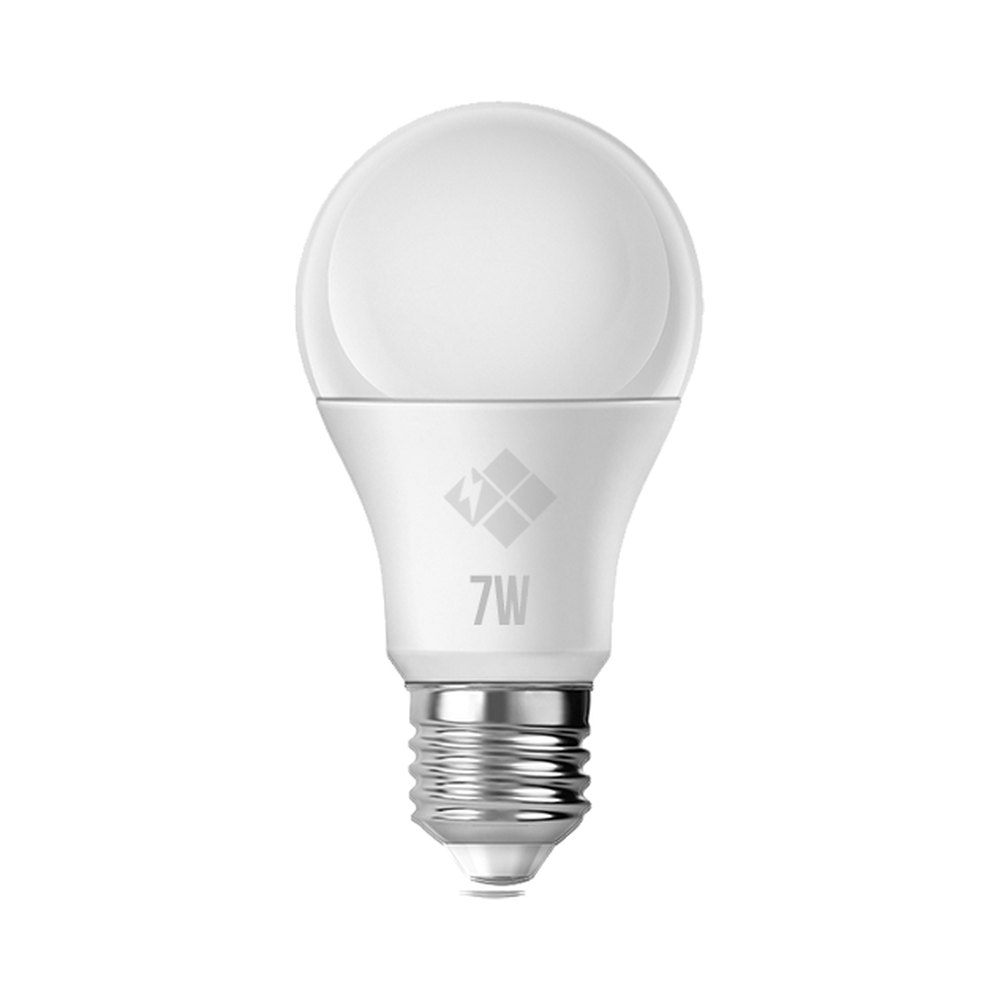
On a market stall, two LED bulbs that look alike are hard to tell apart: same shape, same cap, same figures on the box. Yet one will run for years without trouble, while the other starts flickering after a few months, smells of plastic or overheats in the lampholder. There are some simple signs that help you recognise a poor bulb before you buy it or right after you fit it.
What the box tells you
The packaging is often the first and most important source of information.
- If there is no manufacturer or importer name and address, treat it as a serious warning. When something goes wrong, there is nobody to contact.
- If lumens are not stated and only an equivalent wattage appears in large print, the bulb's real light output is unknown.
- If the ratio between the wattage and the equivalent looks suspiciously large, for example a very low-wattage bulb claiming to replace a very powerful incandescent lamp, the figures are hard to trust.
- If basic information such as voltage range, colour temperature and dimmer compatibility is missing, the manufacturer has either not tested the product or is hiding something.
- Crude spelling mistakes, jumbled languages and a picture that does not match the bulb inside also deserve attention.
Certification marks are not a guarantee in themselves, since they can be printed fraudulently. But the complete absence of marks, or vague, unrecognisable logos in their place, is still a bad sign.
Look at the bulb itself
Once the box is open, the bulb tells you a lot:
- The metal cap should sit firmly on the body. If it wobbles when you twist it gently, the contact will deteriorate or the part will come loose over time.
- The joint between cover and body should be even; gaps, crooked fitting and blobs of glue point to careless assembly.
- The bulb should carry markings for wattage, voltage and manufacturer.
- A strong plastic smell, especially the first time it is switched on, can indicate cheap materials.
- Weight is a clue too: among bulbs of the same wattage, an unusually light one often has a tiny heat sink or none at all.
What to watch when you first switch on
The first days after fitting the bulb matter.
Check for flicker. Point your phone camera at the bulb: if horizontal bands appear on the screen, the driver has been cut to the bone. Such a bulb can cause eye strain in reading and work areas.
Compare the light colour. If two bulbs from the same pack differ noticeably in colour, little care has gone into selecting the chips.
After half an hour, carefully touch the body of the bulb. An LED bulb can get warm, but it should not be hot enough to burn. If you notice a burning smell, buzzing, crackling or darkening near the lampholder, switch it off immediately.
A faint glow after switching off is not always the bulb's fault; it is often down to the switch breaking the neutral rather than the live, or to an illuminated switch. But if another bulb in the same circuit behaves normally, the driver's quality is worth suspecting.
Keep an eye on the bulb over the following days too. A weak driver can seem fine for weeks; then the output slowly drops, the tint slides towards green or pink, or the bulb starts cutting out when hot and relighting when cool. That last pattern is often a sign of overheating and of internal thermal protection cutting in. Keeping such a bulb in an enclosed shade is particularly risky.
Why this is a safety issue
A poor bulb is not just wasted money. Weak insulation and tight clearances in the driver create a risk of short circuits, melting and, in rare cases, fire. A badly fixed cap causes sparking and heating in the lampholder. In cheap bulbs with metal bodies, faulty insulation can make touching the body an electric shock risk.
These risks increase in enclosed shades, children's rooms and fittings with wood or fabric parts. That is exactly where choosing a reliable bulb matters most.
Buying habits
- Buy bulbs from a seller whose source is known, and keep the receipt.
- For one room, buy bulbs of one brand from one batch.
- Do not let a very low price be the only criterion; spread over its service life and the safety risk, it can prove expensive.
- Do not keep using a problem bulb; return it to the seller or hand it in as electronic waste.
Zəfər İşığı boxes name their maker openly: Zaferoğlu Elektrik, producing in Ganja since 2021. Product pages can be sorted by base and shape, and any question about a particular lamp can go straight to the manufacturer.
All news