Hot bulbs, curtains and lampshades: reducing the fire risk
Incandescent and halogen lamps get very hot, and fabric, paper and plastic nearby cannot withstand that heat for long. Risky situations and simple precautions.
When people think of electrical fire risk, they usually picture a short circuit or old wiring. But some household fires start very quietly: a floor lamp leaning against a curtain, an over-powered bulb inside a paper shade, a table lamp left on and dropped onto a bed. The wiring can be perfectly sound; the problem is the heat the lamp gives off.
Which lamps get hottest
Lamps differ enormously in how much heat they produce.
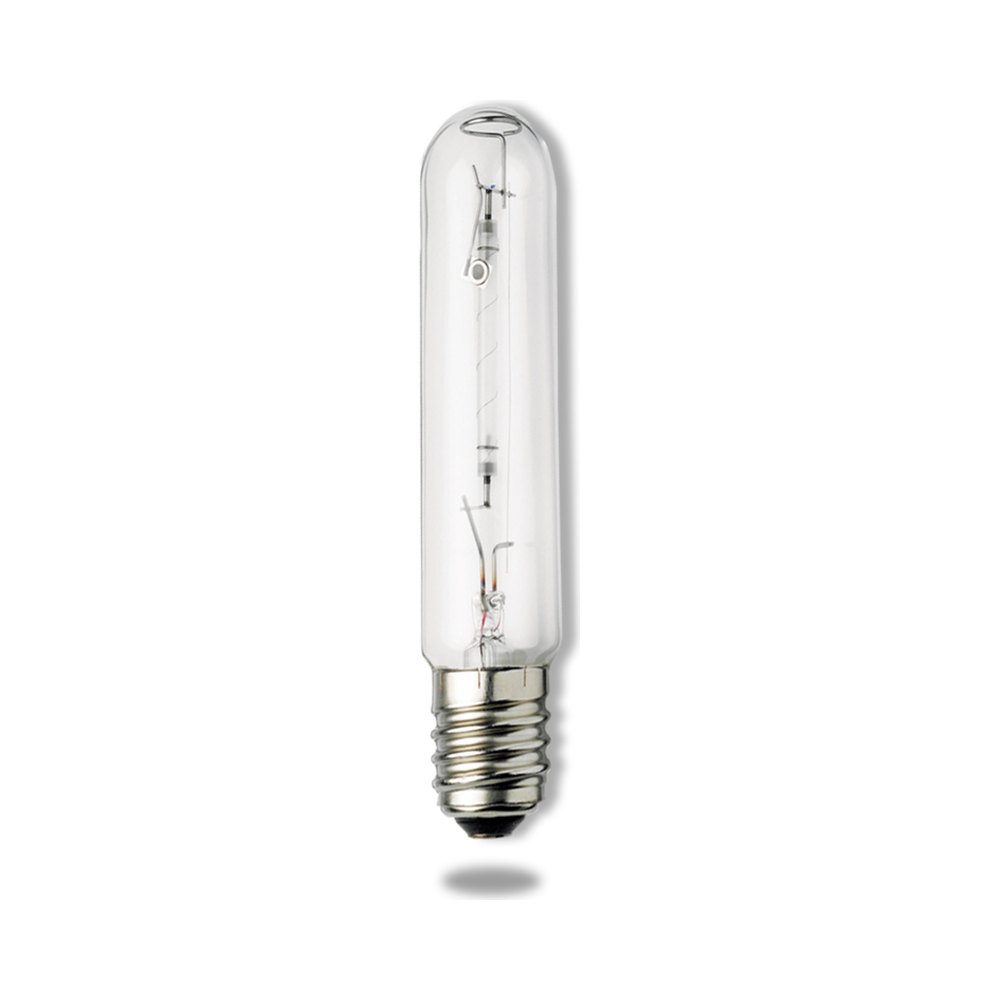
An incandescent bulb turns most of its electricity into heat rather than light. Its glass gets far too hot to touch while it is working. With higher-wattage bulbs, that heat gradually dries out, yellows and chars fabric, paper and plastic nearby.
Halogen lamps are even more hazardous because the heat is concentrated in a small capsule. The surface of a halogen capsule or linear halogen lamp can reach temperatures measured in hundreds of degrees. Powerful halogen floodlights and old uplighter floor lamps are particularly risky.
LED lamps get much less hot, but they are not cold. Their heat sink and driver warm up, especially in higher-output models. An LED lamp can also cause problems when it runs for a long time in an enclosed, unventilated space, but the level of risk is far lower than with incandescent and halogen lamps.
Risky situations
In practice, fires or melting most often happen in these cases:
- A floor or table lamp leans against a curtain, wall hanging or the edge of upholstered furniture. A curtain moved by a draught touches the lamp and moves away again, and as this repeats the fabric heats up.
- A shade is fitted with a more powerful bulb than the fitting allows. Paper, fabric and thin plastic shades are not designed for it.
- A lamp runs in a narrow, enclosed, downward-facing shade, and heat rises and collects in the lampholder and wiring.
- A table lamp that is switched on falls onto a bed or sofa, or among clothes left on a bed.
- In a child's room, a night light stands too close to soft toys or a duvet.
- In a storeroom or pantry, a lamp hangs close to cardboard boxes or paper bags.
Read the markings on the fitting
Many fittings and shaded lamps carry important heat-related information. A marking such as max. 40 W next to the lampholder or on the label gives the maximum permitted bulb wattage. The figure is based mainly on incandescent bulbs, and exceeding it makes the shade, lampholder and wiring overheat.
Directional spotlights and floodlights sometimes carry a small symbol showing a lamp, arrows and a distance in metres. It indicates the minimum distance between the fitting and the object it lights. A curtain, shelf or ceiling item closer than that is at risk.
Fittings designed to be recessed into a ceiling may also carry a mark showing whether they can be covered by thermal insulation. If the mark is absent, do not cover the fitting with mineral wool or any other insulation.
Simple precautions
Reducing the risk does not require anything complicated:
- Keep floor and table lamps at least a few tens of centimetres away from curtains, upholstery and bedding.
- Do not fit a shaded lamp with a bulb above its stated maximum wattage; use LED where possible.
- Use old halogen floor lamps with particular care, or replace them with LED.
- In a child's room, use a cool-running LED as a night light.
- Switch off floor and table lamps when you leave home and before you go to sleep.
- If a paper or fabric shade shows yellowing, brown marks or a burning smell, switch off the lamp at once and find the cause.
Does switching to LED reduce the risk?
Yes, but it does not remove it entirely. An LED lamp uses far less energy than an incandescent one for the same light, so its surface gets much less hot. For paper shades, narrow enclosed shades and floor lamps near curtains, that is a significant safety advantage.
Switching to LED does not cancel all the rules, though. The driver in a poor-quality LED lamp can overheat and melt, and a damaged lampholder or weak contact generates heat whatever lamp is used. So choose LED lamps from a reliable manufacturer and check the condition of lampholders from time to time.
If you see scorch marks, a deformed lampholder or blackened wiring, stop using the fitting and call an electrician. These marks are not a cosmetic flaw; they show that the heat has already gone beyond safe limits.
For floor lamps and fabric shades, cooler-running E27 and E14 LED models are available under the Zəfər İşığı name. The catalogue also includes traditional incandescent and halogen lamps, and with those the distance rules above matter most.
All news