
Watts vs lumens: which one tells you how bright an LED is
Watts measure the energy a bulb uses; lumens measure the light you get. Here is how to compare brightness properly now that LEDs have broken the old rule.
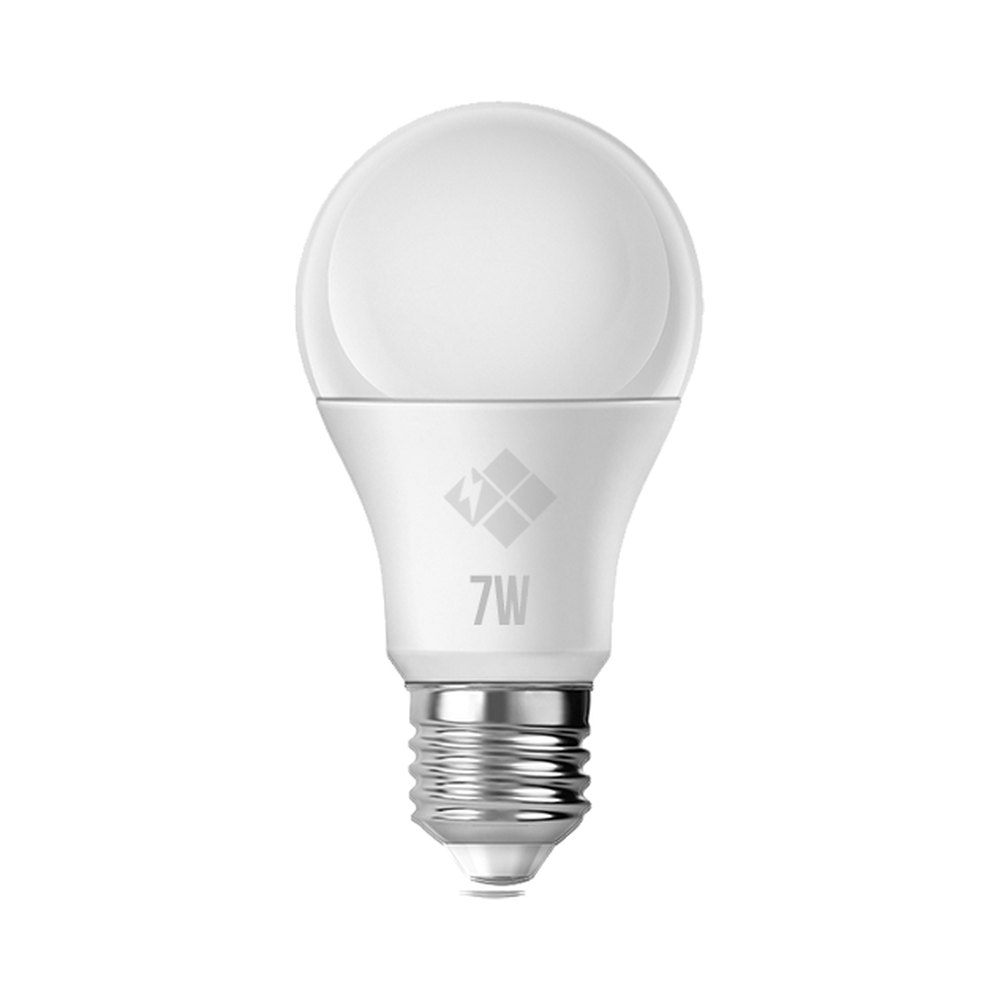
For decades bulbs were bought by wattage: 40 watts for the hallway, 100 for the living room. With incandescent lamps that worked, because within one technology more watts roughly meant more light. LEDs broke that link. A 9-watt bulb can now give light close to an old 60-watt one, so "how many watts do I need?" is only half a question.
What watts measure
The watt (W) is a unit of power: it tells you how much energy the bulb draws from the mains at any moment. This is the figure that shows up on your electricity bill. A 10-watt bulb running for 100 hours uses 1 kilowatt-hour.
Watts say nothing directly about how much light you get. They describe the cost, not the result. The same 10 watts can become a lot of light in one bulb and much less in another, depending on the technology and the quality of the lamp.
What lumens measure
The lumen (lm) measures luminous flux: the total amount of visible light a bulb sends out in all directions. This is the right figure for comparing brightness. If you want to know which of two bulbs gives more light, look at the lumens, not the watts.
Lumens do not tell you how the light will spread around a room. A bulb with the same output will look different in an open shade than inside a frosted enclosed fitting; that depends on the fitting and the room rather than the bulb. But at the moment of choosing a bulb, lumens are the most objective starting point.
Lumens per watt: the efficiency figure
Put the two numbers together and you get efficiency: divide the lumens by the watts. The result shows how much light each watt of energy produces.
An incandescent bulb manages roughly 10–15 lm/W, because most of its energy turns into heat rather than light. Modern household LED bulbs are usually several times higher. The exact figure depends on the model, so compare the numbers printed on the packaging rather than relying on a general impression.
The practical rule is simple: of two LED bulbs with the same lumen output, the one that uses fewer watts is the more efficient.
Translating the old wattage habit into lumens
Our eyes are used to the brightness of incandescent bulbs, so "as bright as a 60-watt" is still a handy way to think. In the European Union there are reference values that packaging must respect when an LED claims to be "equivalent" to an incandescent bulb. They work well as a rough guide:
- 25 W incandescent — about 250 lm;
- 40 W incandescent — about 470 lm;
- 60 W incandescent — about 800 lm;
- 75 W incandescent — about 1,050 lm;
- 100 W incandescent — about 1,500 lm.
So if you are replacing an old 60-watt bulb, look for an LED that gives around 800 lumens; how many watts it uses is secondary. If the box only says "60 W equivalent" and lists no lumens, the claim is hard to check.
What to look for on the box
When buying an LED bulb, look for the following on the packaging:
- light output in lumens, the key figure for brightness;
- power in watts, for energy use;
- colour temperature in kelvin, which tells you whether the light is warm or cool;
- cap type and bulb dimensions, so it fits your light fitting.
If both lumens and watts are given, you can work out the efficiency yourself. If only watts are shown, it is perfectly reasonable to ask the seller for the lumen value.
Common mistakes
The first mistake is choosing LEDs by the old habit of "more watts is better". The room ends up much brighter than it needs to be, eyes tire more quickly and energy is wasted.
The second is assuming warm and cool light of the same output look equally bright. At the same lumen value, cool white light often feels slightly brighter. That is a difference in perception rather than measurement, but it is worth keeping in mind.
The third is confusing the bulb's wattage with the maximum wattage allowed by the fitting. "Max 60 W" on a lampholder is a heat limit; putting a 9-watt LED in it is perfectly fine.
The fourth is comparing the lumens of a spotlight directly with those of an ordinary pear-shaped bulb. A spotlight gathers its light into a narrow beam, so even with fewer lumens it looks bright where it points, while the rest of the room stays dim. A standard bulb spreads the same light all around. When comparing the two types, look at the beam angle as well as the lumens.
In the Zəfər İşığı catalogue, each LED bulb is listed with its wattage and an approximate incandescent equivalent. If you need the lumen value for a specific model, you can ask Zaferoğlu Elektrik through the enquiry form.
All news