
Is a filament LED bright enough to light a whole room?
Filament LEDs look beautiful, but can one be a room's main light? It depends on output, the glass, how many bulbs you use and the size of the room.
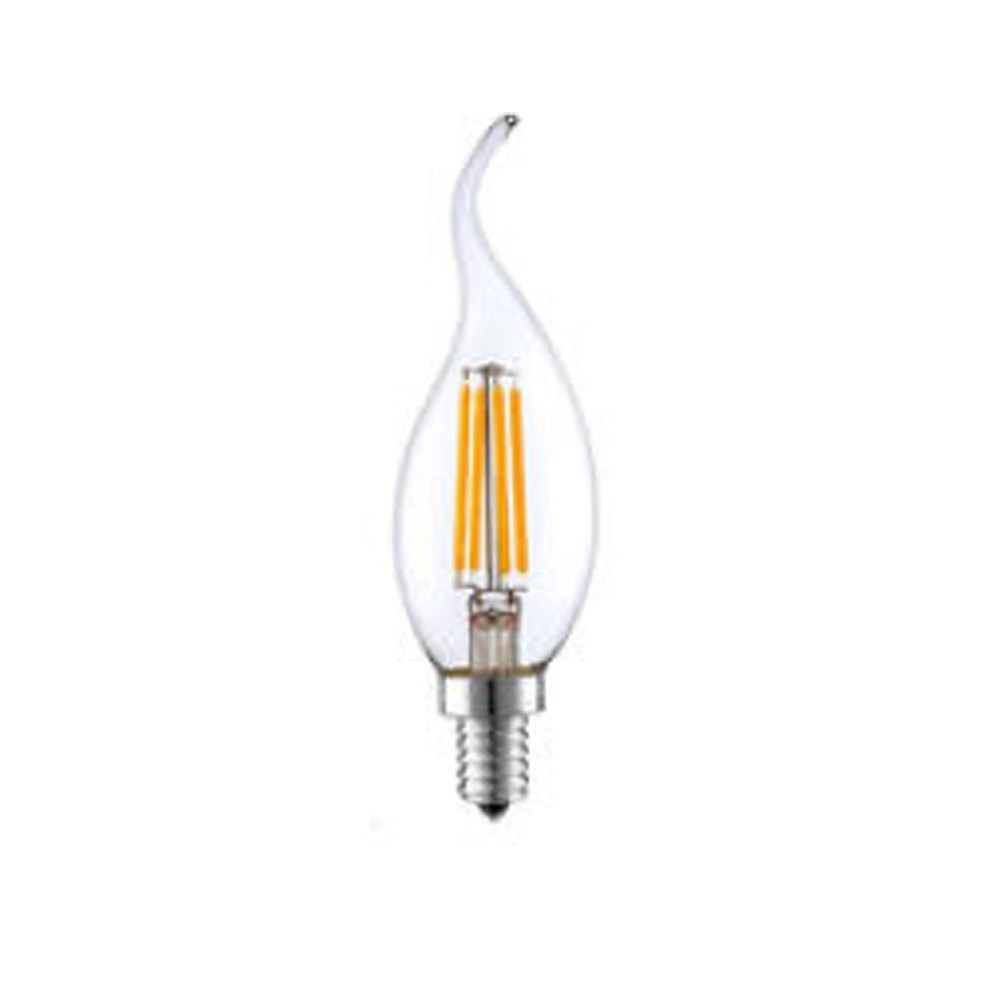
The first time you switch on a filament bulb, the reaction is usually the same: it looks just like an old incandescent. The next question follows quickly. Can this pretty bulb light a whole room on its own, or is it only there for decoration? There is no single answer, because "filament" describes how the light source looks, not how much light it gives.
What a filament LED actually is
In a filament bulb the glowing parts are thin, long strips. Each strip carries a row of tiny LED chips on a transparent carrier, coated with a yellowish phosphor layer. From a distance they resemble the wire in an incandescent lamp, but the principle is the same as in any LED bulb: electricity becomes mostly light rather than heat.
So a filament bulb is not a "weak" technology. Whether it gives little or plenty of light depends on the specific model's power and design. The catch is that many filament bulbs on the market are made for decoration at low power: candles, teardrops, small globes, amber glass. They create atmosphere, but they were never meant to light a large room by themselves.
What decides the amount of light
The figure that tells you how much light a bulb produces is lumens, not watts. If the pack lists lumens, compare them with the bulb you normally use in that room. If it does not, ask the seller, because two filament bulbs with the same wattage can differ noticeably in output.
Two further details change the result a lot:
- Glass colour. Amber or smoked glass holds back part of the light. The clear version of the same bulb puts out more.
- Colour temperature. Filament bulbs are often very warm. That light is easy on the eyes, but at the same lumen level it tends to feel a little dimmer than neutral white.
Room size and ceiling height
In a small bedroom or a hallway, a fitting with several filament bulbs can be perfectly adequate for general light. In a large living room things change: the further a surface is from the source, the less light reaches it, and the corners stay dark.
Ceiling height matters as well. A filament bulb hung low lights the table beautifully but leaves the ceiling and upper walls almost unlit. Pale walls help by bouncing light back into the room; dark walls soak it up.
The weak spot: glare
With a clear filament bulb you look straight at the glowing strips. As output rises, those thin bright lines can become dazzling, especially when the bulb hangs near eye level. That is why a powerful filament bulb left bare is not always a good idea. A frosted version, or a shade that sends the light up or down, is usually more comfortable.
One strong bulb or several weak ones
In a multi-arm chandelier, filament bulbs may be modest individually, but their light adds up. The logic is simple: add together the lumens of all the bulbs in the fitting and compare the total with the lumens of the bulb or bulbs you have been using in that room. If the totals are close, the amount of light will be about the same.
Several small sources have another advantage. Because the light comes from several points rather than one, shadows are softer and the sparkle of each bulb is less tiring. Five modest filament bulbs in a five-arm chandelier often feel more comfortable than one strong bare bulb.
If you want to lower the light in the evening, bear in mind that every bulb must be dimmable. An ordinary filament bulb on a dimmer can flicker or buzz.
A practical approach: plan a scene, not a single bulb
If you are thinking of filament bulbs as the main light, run through these checks:
- which zones need light for reading, cooking or working;
- how many lampholders the fitting has and whether all of them will take the same bulb;
- whether the glass is clear or tinted;
- whether a bare bulb will sit at eye level.
The best result often comes from a mix: neutral general light from the ceiling or walls, with filament bulbs over the dining table or beside a bookshelf. That way the filament bulbs do what they do best, adding a warm and lively feel, and nobody notices a shortage of light.
The Zaferoğlu Elektrik catalogue includes straight and teardrop filament bulbs with an E14 cap. Unsure whether they will light your room well enough? Ask about the specific model through the enquiry form.
All news