
Does a lamp twice as powerful look twice as bright?
Doubling the lumens does not make a room look twice as bright. Knowing how the eye judges light helps you avoid disappointing bulb upgrades.
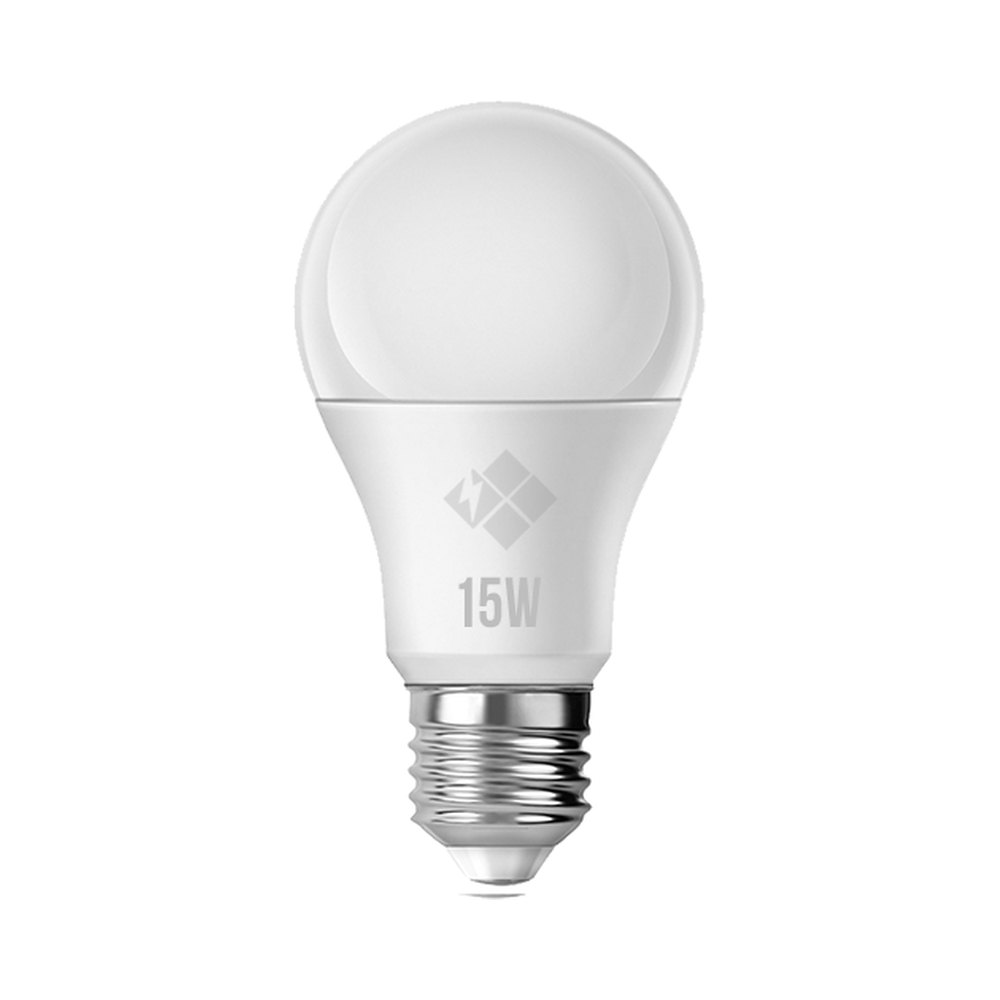
A 9-watt LED bulb lights the living room, and the room looks a bit dim. Logic says an 18-watt bulb will make it twice as bright. You swap the bulb and the effect is less dramatic than expected: the room is brighter, but nobody would call it "twice" as bright. The bulb is not at fault; this is simply how our eyes work.
Measured light versus perceived light
The light a bulb emits (lumens) and the light landing on a table (lux) are measured with instruments, and those figures really can double. What people perceive as brightness, however, does not change in direct proportion to those physical quantities.
Perception research shows that the eye registers increases in light in a "compressed" way. At low levels a small addition is obvious; at high levels the same addition barely registers. Various studies find that perceived brightness grows roughly somewhere between the cube root and the square root of light intensity. Put simply, doubling the light often makes a room look about a quarter to a third brighter, not twice as bright.
Why the eye works like this
There are several reasons:
- The pupil. When light increases, the pupil narrows and limits how much light enters the eye. In the dark it widens to collect more.
- Adaptation. The cells of the retina adjust their sensitivity to the current light level. After a few minutes the new level feels "normal".
- A huge range. We can see from moonlight up to bright midday sun. To handle that range, perception tracks relative change rather than absolute difference.
The last reason matters most in practice: the eye responds not to "how many lumens were added" but to "how many times did it change compared with before".
What this means when you change a bulb
Small steps go unnoticed. Replacing a 9-watt bulb with a 10-watt one of the same technology makes almost no visible difference. For a clear change, the amount of light needs to rise by roughly one and a half to two times.
Changes show more in a dim room. Adding a lamp to a very gloomy room makes a big impression. In a room that is already well lit, the same addition is barely felt.
Dimmers work "softer" than expected. Cut the light to half and the room does not look half as bright, just a little dimmer. That is why many dimmers use a control curve adapted to perception rather than a straight line.
Gradual decline goes unnoticed. Any lamp's output can fall slowly over the years. Because the change is slow and the eye adapts, you often only notice it when an old and a new bulb are lit side by side.
Smarter ways to "add" light
Before buying a stronger bulb, consider these options:
- Bring light closer to where it is needed. A desk lamp or a lower pendant raises light on the work surface more effectively than extra power.
- Light the walls. When vertical surfaces are bright, a room feels brighter even if total lumens stay the same.
- Reduce glare. A bare bulb shining into the eyes makes the pupil contract, and the surroundings look darker. Diffused or concealed light feels brighter and more comfortable at the same lumen level.
- Check colour temperature. At equal lumens, neutral or cool light is often perceived as slightly brighter than warm light.
When comparing bulbs
Compare lumens rather than watts, and think in ratios. Going from 800 to 1,000 lumens is a 25 percent increase and will look like a small change; going from 800 to 1,600 will be clearly visible. If you can, light two bulbs one after the other in the same room and judge by eye.
One more point: a shortage of light is sometimes felt not across the whole room but in just one zone. Replacing the ceiling bulb with a stronger one then brightens the whole room a little, yet the difference in the problem area still looks small. Adding a separate fitting for that zone multiplies the light there several times over, and the eye notices at once.
The Zəfər İşığı range offers E27 LED bulbs in a wide series of power steps, so you can move up as far as you really need rather than by a single notch. For the light output of a particular model, you can ask Zaferoğlu Elektrik directly.
All news