
How wall colour changes how bright a room feels
The same bulb can look bright in a white room and dull in a dark one. Here is how surface colour decides what happens to the light.
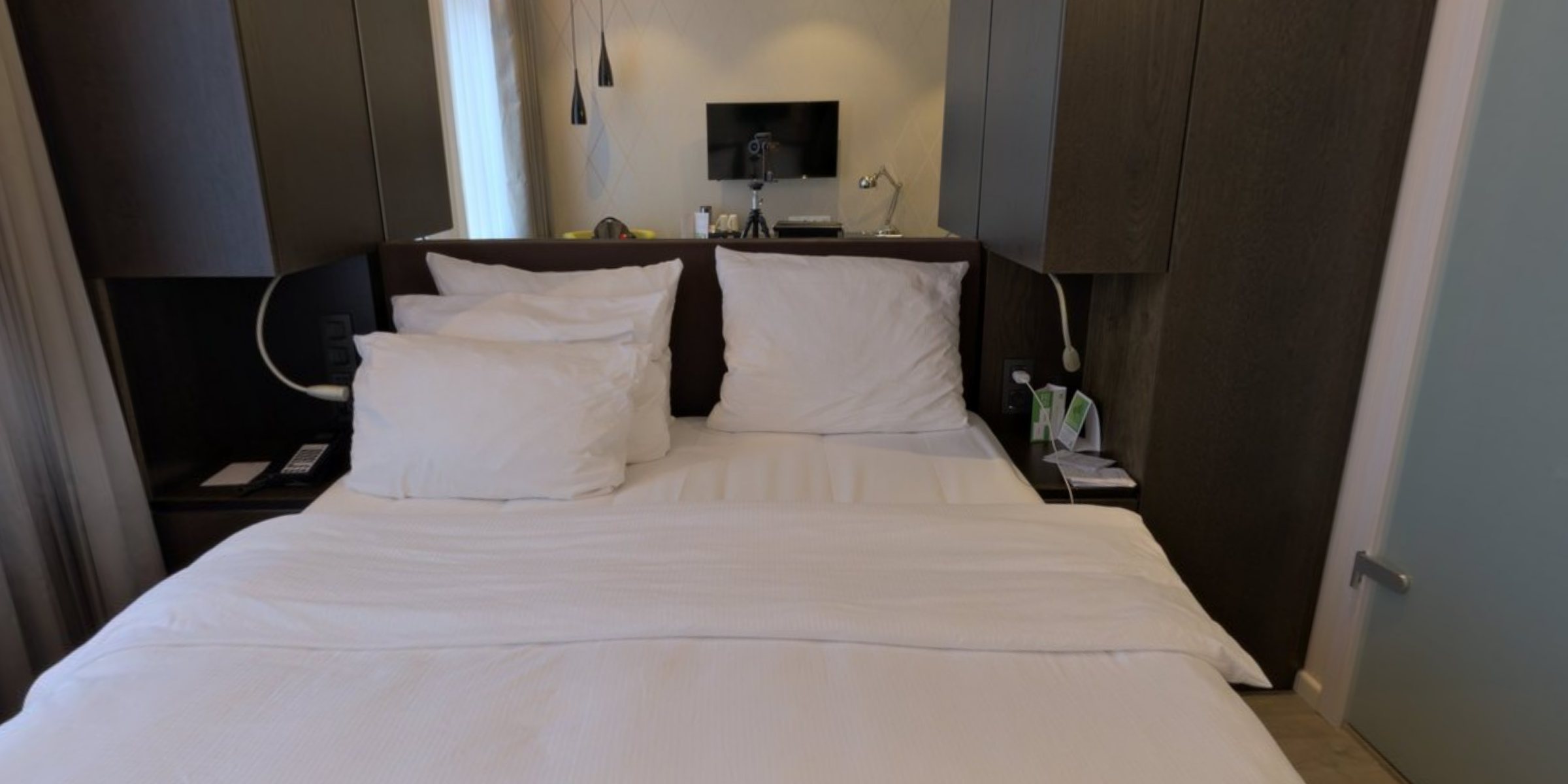
After redecorating, people often say: "The bulbs are the same, but the room has gone darker." More often than not the bulbs are innocent and the new paint is responsible. A large share of the light in a room reaches your eyes not straight from the bulb but after bouncing off walls, ceiling and floor. Change those surfaces and you change how bright the room is.
Reflectance: how much light comes back
Every surface reflects part of the light that hits it and absorbs the rest. The proportion reflected is called reflectance. As a rough guide:
- white and very pale paint returns most of the light, around three quarters or more;
- light beige, pale grey and pastel shades reflect somewhat more than half;
- medium colours such as terracotta, olive or mid blue return less than half;
- dark grey, navy, black and dark wood reflect only a small fraction.
Exact values depend on the paint, and some manufacturers publish them as LRV (light reflectance value). The conclusion stays the same: light returning from a pale surface spreads back into the room, while light hitting a dark one is largely lost.
Why the effect is so strong
Light in a room does not bounce once but many times: ceiling to wall, wall to floor, floor back to ceiling. In a pale room each bounce keeps most of the light, and this inter-reflected light adds a great deal to overall brightness. In a dark room much of the light disappears after the first contact. So with the same bulb a dark room looks much darker and more contrasty, with a bright pool under the fitting and shadows in the corners.
Which surfaces matter most
- Ceiling. With uplighters and fittings that send light upwards, the ceiling acts as a huge reflector. A dark ceiling swallows almost all of that light.
- Walls. They cover the largest area, so they shape the perceived brightness most. People judge whether a room feels bright mainly by looking at vertical surfaces.
- Floor. Under downward spotlights the floor colour becomes important. Dark parquet or a rug holds on to the light that falls on it.
- Furniture and textiles. A large dark wardrobe or heavy dark curtains also cut reflection.
Gloss versus matt
A glossy finish reflects light in one direction, like a mirror. That can create visible reflections of the lamp and glare, especially on dark gloss. A matt finish scatters light softly in all directions. Pale matt walls are the most helpful choice for even, comfortable light.
If you have chosen a dark interior
You do not need to give up dark walls; the lighting simply has to be planned around them:
- raise the general light level with brighter bulbs or an extra fitting;
- spread light across several points rather than relying on one central fitting;
- add task lights for reading, cooking and similar jobs;
- keep the ceiling light if you can, since upward light returns to the room through it;
- warm light sits nicely with dark tones, but it does not make up for too little light.
A small test before painting
When choosing a paint, apply a sample to a large piece of card and look at it in the evening under the room's own lighting. A colour that looks lovely by the window in daylight can turn much darker under artificial light.
It is even more useful to test under two different bulbs. Warm light brings yellows, beiges and reddish tones to life but can make cool blues and greys look a little muddy. Neutral and cool light do the opposite and can wash out a warm-toned wall. Hold the card in several places, near the window, in a corner and under the fitting, because the same colour looks different in each part of the room.
Decide on the ceiling separately. Even with dark walls, a white or very pale ceiling returns a valuable share of reflected light and softens the closed-in feeling a dark interior can have.
The colour temperature simulator on the Zaferoğlu Elektrik website shows how the same room looks under different tones of light. To choose bulb power for a dark interior, you can compare the LED bulbs in the catalogue by wattage.
All news