
Light distribution: does a bulb shine all around or downwards?
Some bulbs spread light in every direction, others push it one way. Knowing the difference is the key to matching a bulb with its fitting.
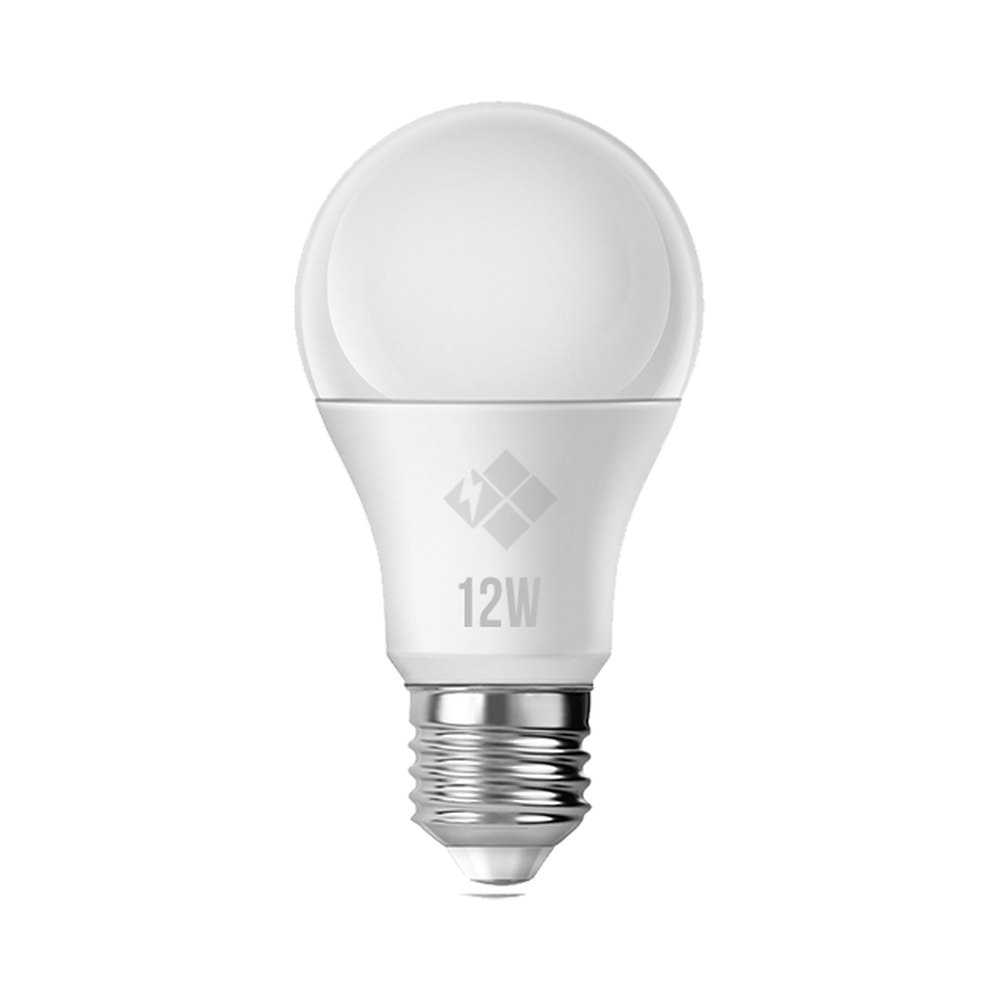
Put two bulbs of the same power into the same room, one after the other, and the result can be completely different. One fills the space with soft light; the other throws a bright patch on the floor and leaves the walls in shadow. Very often the cause is not the output of the bulb but the way it distributes light.
Two basic types: omnidirectional and directional
Omnidirectional bulbs are the classic pear shape (A60), globes and candles. They emit light from almost the entire surface of the glass. That is how incandescent bulbs worked, and these LED shapes are designed to take their place.
Directional bulbs gather light into a cone. This group includes spot lamps such as GU10 and G5.3, reflector bulbs and some flat LED modules. EU lamp rules describe a directional lamp as one that sends at least 80 percent of its light into a cone of 120 degrees.
There are in-between cases too. In some cheap LED bulbs the LEDs sit only on top of a flat board, and the glass does little to spread light sideways. Such a bulb may look like a pear, yet it sends most of its light in one direction, away from the cap.
What shapes distribution in an LED bulb
An incandescent filament naturally glowed in all directions. An LED chip, by contrast, emits mainly to one side, straight out from its surface. To get even all-round light from an LED bulb, manufacturers use extra measures:
- an opal (milky) glass that scatters light;
- LEDs mounted on the sides of the board or on a raised column;
- lenses and reflectors that redirect the light;
- thin light strips facing different ways, as in filament bulbs.
In a spot lamp the aim is the opposite: a lens or reflector gathers the light and steers it into the required angle. So the internal design and the shape together decide distribution, not just how the glass looks from outside.
What beam angle means
Spot lamp packaging often shows figures such as "36°" or "60°". This is the opening of the light cone, usually measured to the point where intensity falls to half of the maximum at the centre.
In practice:
- a narrow beam (roughly 10–25°) concentrates light on a small area, for a painting, a sculpture or goods in a display;
- a medium beam (roughly 30–40°) suits general lighting from ceiling spots or a kitchen worktop;
- a wide beam (60° or more) gives softer, less contrasty light and fewer patches between spots.
At the same lumen output, a narrow-beam lamp looks brighter within its patch, because the same light lands on a smaller area.
Matching the bulb to the fitting
Distribution needs to suit the fitting's design:
- Open chandeliers and lamps with shades need omnidirectional bulbs. A directional one leaves the ceiling and the top of the shade dark.
- Downward-facing pendants (cone or dome shapes) can work either way. An omnidirectional bulb bounces light off the inner surface; a directional one sends it straight to the table.
- Recessed ceiling spots are designed for directional lamps.
- Wall lights often throw light both up and down, and a small omnidirectional bulb usually looks better in them.
How a poor match shows up
A few signs tell you the bulb and fitting do not agree. A hard shadow line on the ceiling or inside a shade means the bulb is not spreading light sideways. A bright circle on the floor or table with dull surroundings means the beam is too narrow. Arch-shaped patches on the wall between spotlights mean the spots are too far apart or the beam is too tight for the room.
Checks before you buy
If the pack shows a beam angle or a distribution diagram, read it. For spots, choose the angle according to ceiling height: the lower the ceiling, the wider the beam needs to be to cover the same area. With a pear-shaped bulb, check that the whole glass glows evenly. A bright top with a dark area near the cap means weak sideways spread.
Both light patterns are available from Zəfər İşığı: all-round E27 bulbs and directional GU10 and G5.3 spots. If you tell Zaferoğlu Elektrik what kind of fitting you have, their team can help you pick the right shape.
All news