
How much energy an LED bulb saves: the logic behind the numbers
To judge savings properly you compare bulbs that give the same amount of light. Here are the steps of the calculation and the mistakes that skew it.
Claims like “LEDs use ten times less power” are everywhere, but the real saving in a home depends on a few conditions: what the old bulb was, whether the new one matches its light output, and how long it burns each day. Below is a way to answer the question with your own household’s numbers.
Compare light first, then watts
Putting two wattages side by side is not enough. First make sure both bulbs give roughly the same light output. Light output is measured in lumens, consumption in watts. If you swap an old bulb for a much dimmer LED, consumption drops, but so does the light in the room. That is not a saving, just less light.
As a general guide, the common 60-watt incandescent bulb gives around 800 lumens. A modern LED producing the same light is typically in the 8–10 watt range. Exact figures vary by model, so check the lumen value on the LED’s packaging and pick one close to what the old bulb delivered.
Working out the percentage
With two bulbs giving the same light, the arithmetic is simple:
- saving in watts = old bulb’s wattage − new bulb’s wattage;
- saving as a percentage = saving ÷ old wattage × 100.
Replace a 60 W bulb with a 9 W LED and the difference is 51 W. Divide 51 by 60 and multiply by 100, and you get about 85 percent. At that light point, the electricity going into lighting falls by roughly 85 percent. When moving from incandescent to LED the figure usually lands somewhere between 80 and 90 percent.
Halogen lamps give a similar picture: they are somewhat more efficient than plain incandescent bulbs but work on the same principle. The gap between a compact fluorescent (the spiral “energy saver”) and an LED is much smaller, because the fluorescent lamp already used far less than an incandescent one.
From percentage to kilowatt-hours
A percentage is a useful idea, but your bill is counted in kilowatt-hours. To get there, multiply the watts saved by the hours of use:
- daily saving (kWh) = watts saved × hours per day ÷ 1000;
- yearly saving = daily saving × 365.
A bulb with a 51 W difference that runs five hours a day saves 0.255 kWh daily and roughly 93 kWh a year. If the same bulb is on for only half an hour a day, the yearly difference is about 9 kWh. The key lesson: the same percentage saving produces a large difference on a long-running light and a small one on a rarely used light.
To express this in money, multiply the yearly kWh by the tariff on your electricity bill. Tariffs change, so use the figure from your latest bill.
Tiered tariffs add a subtlety: once monthly consumption passes a threshold, each extra kilowatt-hour is charged at a higher rate. In that case the kilowatt-hours an LED removes come off the top tier, so the saving in money can be somewhat larger than a calculation at the average rate suggests.
Mistakes that distort the result
These are the errors that come up most often:
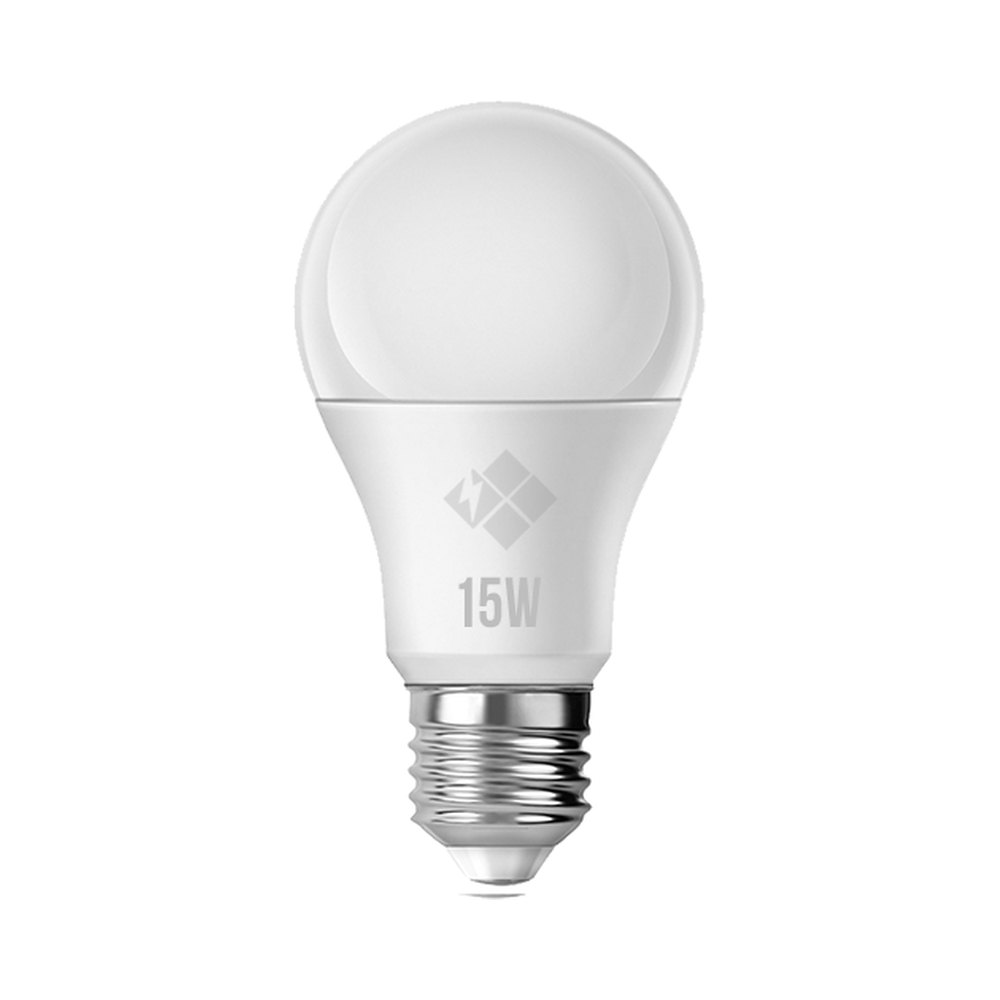
- Choosing a brighter LED. Put a powerful 15 W LED where a 60 W bulb was and the saving shrinks while the room gets brighter than before. Nothing wrong with that, but count it.
- Adding more light points. If a single chandelier becomes twelve downlights after a renovation, each lamp may be efficient yet the total load can approach the old one.
- Guessing the hours. Instead of assuming “it is on in the evenings”, watch it for a week.
- Forgetting standby. Smart bulbs stay connected when switched off in the app and draw a small amount of power.
From one bulb to the whole home
To see the full picture, list every light point in the home with its wattage, quantity and average daily hours. Run the calculation for each and add up the results. It usually turns out that most of the saving comes from a handful of long-running lights: kitchen, living room, hallway and outdoor lights.
If you would rather not do it by hand, the savings calculator on this site takes the number of bulbs, daily hours and tariff and shows the yearly kWh and CO₂ difference. For Zəfər İşığı bulbs, plug the rated wattage shown on each product page straight into the saving formula.
All news