
How to work out a bulb’s monthly kWh use
Two numbers are enough to find how much electricity a bulb uses in a month: its wattage and its hours of use. The formula, worked examples and how to check with a meter.
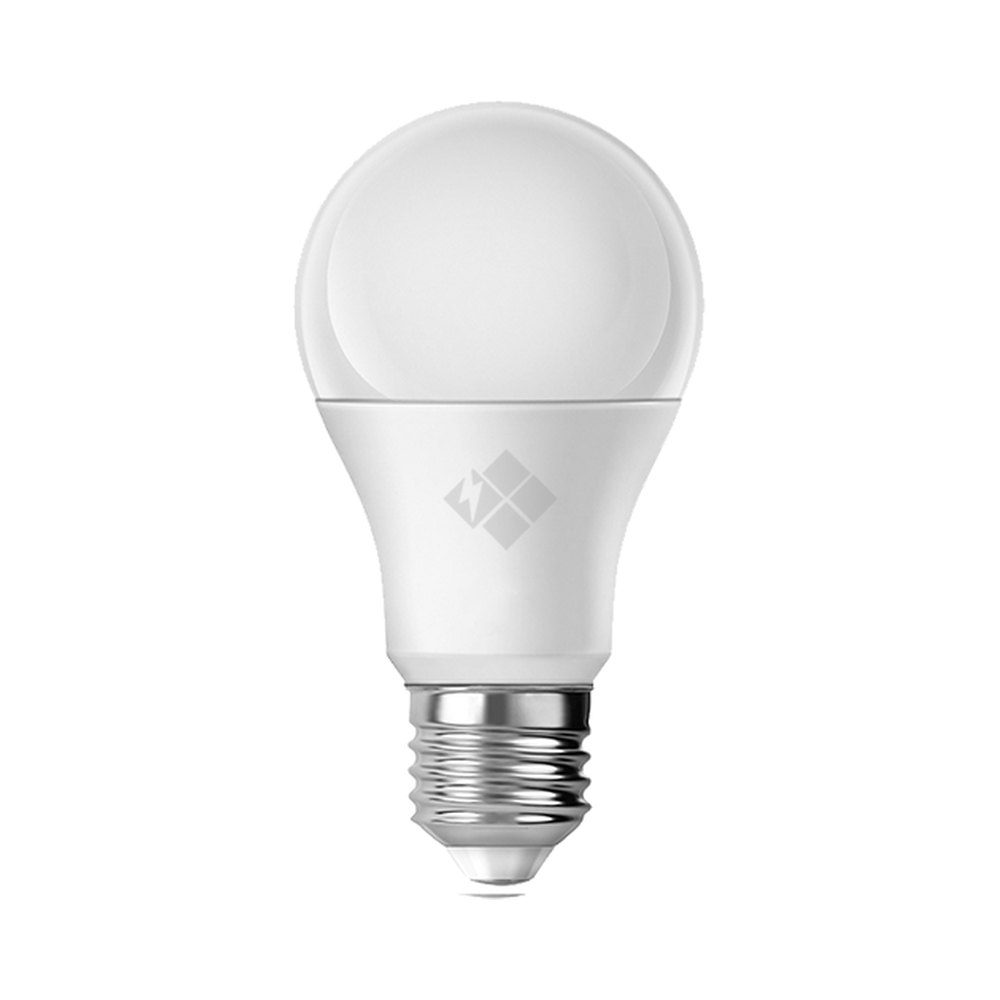
Few households could say what part of their monthly electricity bill is spent on lamps. Yet finding a single bulb’s monthly consumption needs no special equipment, just a pen, paper and a little observation. Set the calculation up correctly once and you will see which lights are genuinely expensive to run.
Watts, kilowatts and kilowatt-hours
A watt tells you how much power the bulb draws at any moment. A kilowatt is a thousand watts. A kilowatt-hour is the energy used by one kilowatt of load running for one hour, and that is the unit you pay for on your bill.
So a 1,000-watt appliance running for one hour uses 1 kWh. A 10-watt bulb uses the same energy over 100 hours. Once this ratio clicks, the rest of the calculation follows.
The basic formula
A bulb’s monthly consumption is:
monthly kWh = wattage × hours per day × days in the month ÷ 1000
Some examples:
- a 9 W LED on for 5 hours a day: 9 × 5 × 30 ÷ 1000 = 1.35 kWh;
- a 60 W incandescent bulb on for 5 hours a day: 60 × 5 × 30 ÷ 1000 = 9 kWh;
- a five-arm chandelier with 7 W bulbs, 4 hours a day: 5 × 7 × 4 × 30 ÷ 1000 = 4.2 kWh;
- a 15 W yard light on through the night, 11 hours: 15 × 11 × 30 ÷ 1000 = 4.95 kWh.
To get the monthly cost, multiply the result by the tariff on your bill.
Where to find the wattage
On an LED bulb the wattage is normally printed on the glass or near the cap. Watch for one trap: some packaging shows a large “60W equivalent” label. That is not what the bulb consumes; it indicates roughly which incandescent bulb it matches for light. Always use the bulb’s actual wattage in the formula.
Fluorescent tubes and older compact lamps are slightly different. Magnetic ballasts draw power of their own, so an old fluorescent fitting uses a bit more than its tube's rating. If you need precision, allow for this or measure it.
Estimating the hours properly
The weak point in the calculation is rarely the wattage; it is the hours. People tend to overestimate or underestimate how long lights are on. For a better figure:
- note roughly when the main lights go on and off over one week;
- treat weekdays and weekends separately;
- allow for the seasons, since evening lights come on much earlier in winter than in summer;
- check the “forgotten” lights separately: storeroom, bathroom, balcony.
For outdoor lights on a timer or photocell it is easier: take the timer schedule or the number of dark hours directly. With a photocell, remember that December nights are much longer than July nights, so for a yearly figure use an average of the winter and summer months.
Checking with a meter
To test the theory in practice there are two simple methods. The first is a plug-in energy monitor: plug a table or floor lamp into it, use it for a few days, and the monitor shows the actual kWh. This does not work for ceiling lights.
The second is the household meter. Briefly switch off everything else, leave only the lights you are testing on, and note how far the meter moves in an hour. Because appliances like the fridge cannot always be switched off, the result is approximate, but it reveals big differences. Only read the meter; do not open it or the distribution board.
Putting the result to use
Once every bulb is calculated, build a table: light, wattage, hours, monthly kWh. Sort it from largest to smallest. The top one or two rows usually account for most of the lighting consumption, and that is where changes pay off first.
The calculator on this website runs exactly this sum for you once you enter bulb count, hours of use and your tariff. For a Zəfər İşığı bulb, the wattage on its product page is exactly the figure the formula needs.
All news