
Where incandescent bulbs are still needed
LED has replaced incandescent bulbs almost everywhere, but in some cases the old technology still holds its place. Those cases, and what to watch for in each.
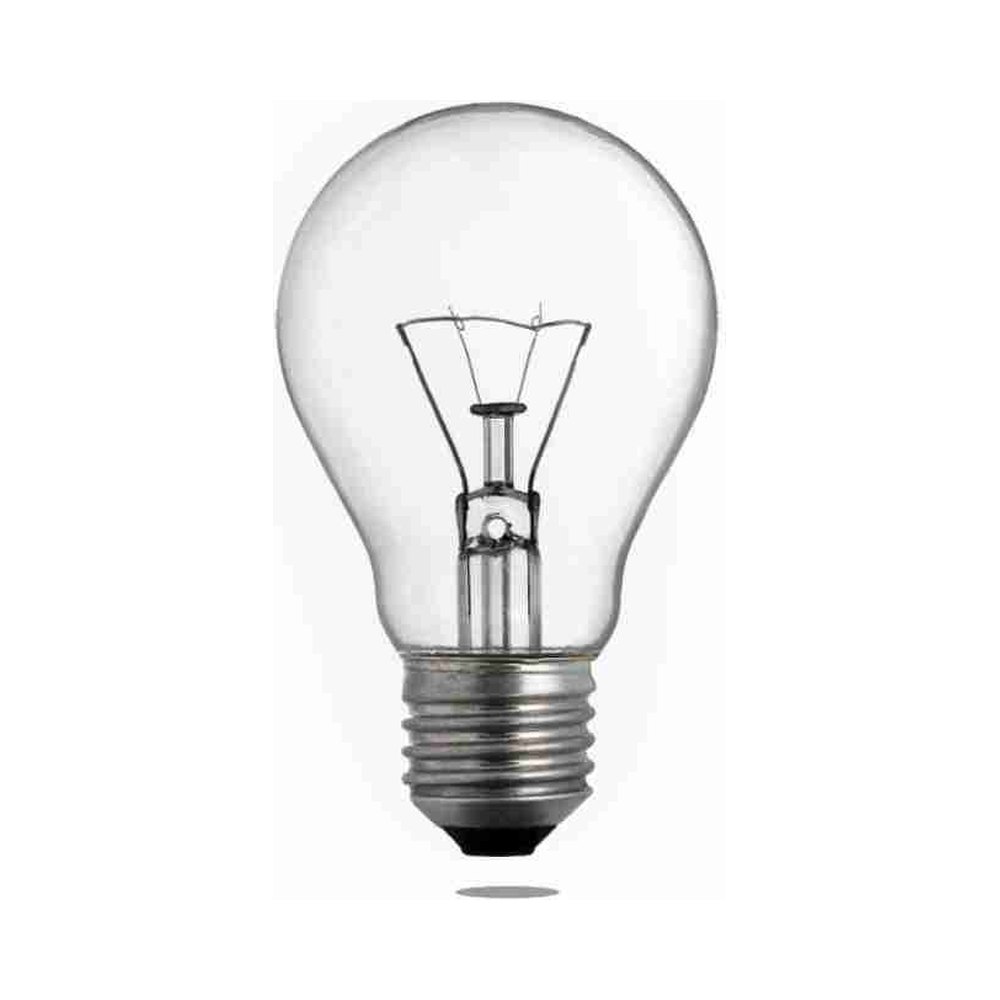
It is easy to assume the age of the incandescent bulb is over: LED uses less energy, lasts longer and is now made in every shape. Yet incandescent lamps are still found in electrical shops and industrial catalogues, and the people who buy them are not only those with old habits. In some cases, the very feature seen as an incandescent bulb's weakness, whether heat, simplicity or the character of its light, is exactly what is needed.
High temperatures: ovens and technical equipment
The lamp inside an electric oven works at temperatures of around 250–300 degrees. The driver and plastic parts of an ordinary LED bulb cannot withstand that. That is why oven lamps are usually special heat-resistant incandescent or halogen lamps. When buying one, the box should state that it is suitable for high temperatures; an ordinary household bulb would soon fail in an oven and could even shatter.
The same applies in some industrial drying chambers, sauna fittings and light points next to hot equipment. There, the temperature range stated by the manufacturer is the deciding criterion.
When heat is wanted
In some applications an incandescent lamp is used for heat rather than light:
- keeping chicks and young animals warm in poultry farming;
- maintaining temperature in incubators;
- creating a basking spot for reptiles in terrariums;
- acting as a small heater to prevent condensation in some technical enclosures.
LED is not suitable in these cases, because its main advantage, low heat, becomes a drawback. However, infrared heat lamps or heaters designed for these purposes are the better choice, and an ordinary incandescent bulb should only be used on a small scale under supervision. In both cases fire safety needs particular attention.
Simple load and old control circuits
Electrically, an incandescent bulb is the simplest possible load: just a wire that heats up. In some older systems that is an advantage.
Older dimmers, motion sensors and timers were designed around incandescent loads and may misbehave with a few watts of LED. If replacing the whole system is not possible, an incandescent bulb solves the problem temporarily. The long-term solution is to replace the control device with an LED-compatible model.
Electricians sometimes use an incandescent bulb as a simple test load, to see quickly whether a circuit is live or whether a device works under load.
Flicker and electrical interference
An incandescent bulb has no electronic driver, so it creates no radio interference. And because the hot filament does not cool quickly, its light barely flickers. This is valued in laboratories with sensitive measuring equipment, in some radio and audio studios, and where high-speed filming takes place.
Good-quality LED fittings can also be flicker-free and low in interference today, but that depends on the driver and needs checking. With an incandescent bulb the question simply does not arise.
Character of light: stage, film and restoration
The spectrum of an incandescent bulb is smooth and continuous, and its colour rendering is at the maximum level. As it dims, its colour becomes warmer. In theatre, filmmaking, photography and museum lighting these qualities were long the standard, and some professionals still prefer them.
In the restoration of historic buildings and old interiors, incandescent bulbs are sometimes chosen to preserve the original appearance. Here too it is worth checking whether a filament LED could be a good alternative.
If you use incandescent bulbs
If you decide to keep an incandescent bulb, remember its weaknesses:
- high heat: keep it away from curtains, shades and flammable materials;
- respect the maximum wattage allowed by the fitting and lampholder;
- keep a spare, given the short service life;
- do not change a bulb that is on or hot; let it cool;
- to limit energy use, only switch it on for as long as needed.
For the rest of everyday lighting, an LED bulb is almost always the more efficient choice.
Zaferoğlu Elektrik's catalogue includes, alongside LED lamps, incandescent lamps with E27 caps in various wattages and a 500 W incandescent lamp with an E40 cap. Which lamp suits a particular application should be decided from the product information.
All news