
LED bulbs in an old chandelier: what to watch for
Fitting LED bulbs to an inherited or long-serving chandelier saves energy and reduces heat. But shape, size, colour and the state of the lampholders need checking.
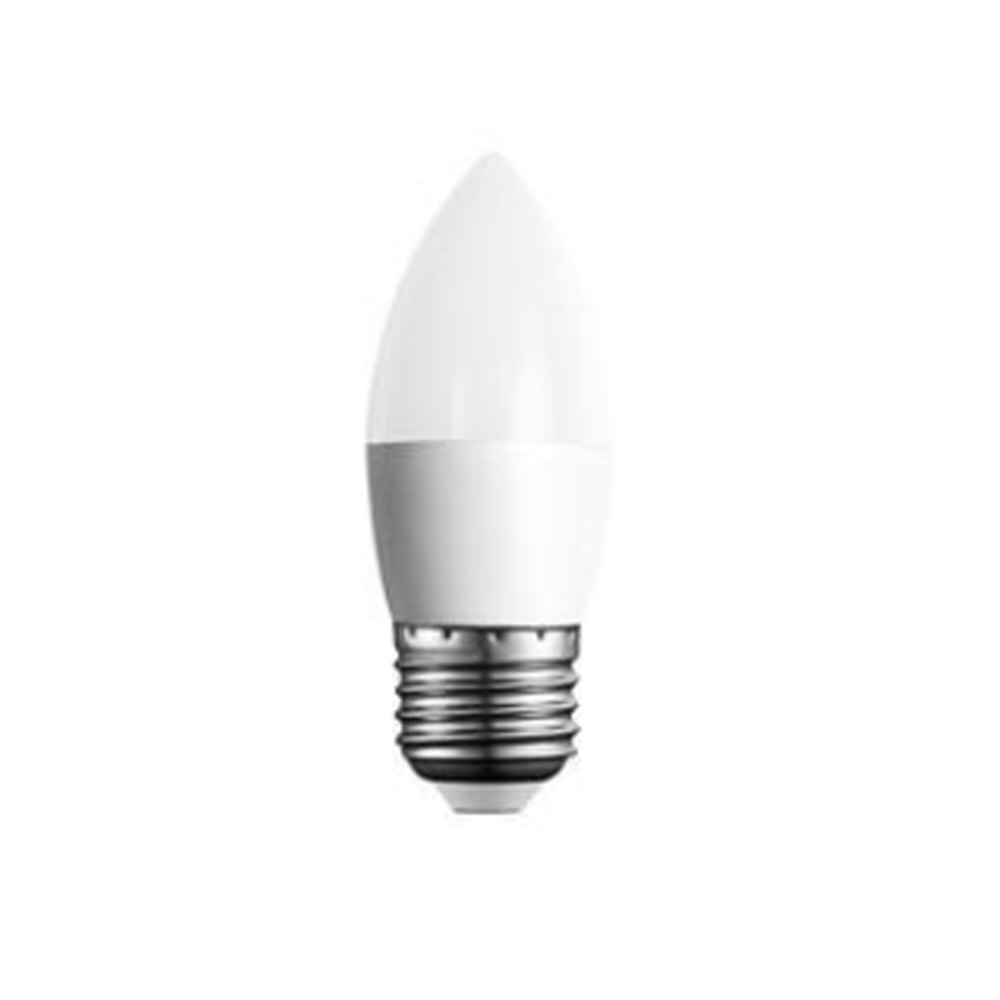
In many homes a chandelier is not just a light but a piece of family history. You would not want to throw out an old chandelier with bronze arms, glass candle cups or crystal drops, yet the incandescent bulbs in it use a lot of power and burn out often. Switching to LED is sensible. But an old chandelier was made with no thought for modern bulbs, and several points need attention.
Check the chandelier first
Before changing the bulbs, look at the chandelier's technical condition, because the old bulbs have been heating it for years.
- Lampholders. Old bakelite or plastic lampholders become brittle, crack and discolour from heat. Metal contact tabs oxidise and turn black. If you see cracks or melting, replace the lampholder.
- Internal wiring. The insulation on the wires running through the arms can harden and crumble from heat. Gently touch the wire next to a lampholder: if the insulation flakes off, the chandelier needs rewiring.
- Joints. The connections in the central body of a chandelier are often twisted and taped. Replacing them with terminal blocks improves safety.
- Fixing. The suspension chain, hook and body screws must be secure.
This check matters more than the LED bulb itself: a new bulb does not fix the problems of an old lampholder or wire.
Shape and size: keeping the chandelier's look
Old chandeliers were usually made for candle, globe or small pear-shaped bulbs with E14 or E27 caps. When choosing LED, compare dimensions as well as shape.
Because the driver and heat sink need room, certain LED candles end up a few millimetres bigger than the incandescent candles they replace. On arms with glass candle cups or narrow shades, the bulb may show from the side or not fit inside the cup. Before buying, measure the length and widest point of the old bulb and compare them with the LED bulb's dimensions.
On chandeliers where the bulbs point upwards, the plastic body of an LED bulb can be visible. In such cases a filament bulb with a small body or a glass envelope is the more attractive choice.
Clear or frosted
The beauty of chandeliers with crystal and glass drops lies in the sparkle of the light, and that sparkle comes from a point-like, clear light source. A frosted bulb diffuses the light and the sparkle in the crystals fades.
That is why clear filament bulbs are usually chosen for crystal chandeliers. But if the chandelier hangs close to eye level, a clear bulb can dazzle. In that case a frosted or semi-clear bulb, or a lower-output clear bulb, can be a compromise.
In chandeliers with lampshades, fabric or frosted glass shades, the bulb is not visible, so an ordinary frosted LED bulb works fine.
Light colour and quantity
An old chandelier is used to the warm light of incandescent bulbs. Cool white LED light can make its bronze and gilded parts look cold and grey. For a classic chandelier, warm light of 2700K–3000K usually looks more appropriate.
Think about the amount of light too. In a chandelier with many arms, the total light can be high even if each bulb is modest. Work out the lumens based on the old bulbs and, if necessary, choose lower-output LED bulbs. The max. 40 W or max. 60 W marking on the chandelier refers to incandescent bulbs; the actual wattage of an LED bulb is far below that limit.
Use bulbs of the same model from the same batch on all arms. Bulbs from different manufacturers differ in colour tone, and in a multi-bulb chandelier that shows immediately.
Dimmers and controls
Old chandeliers often run on a simple wall dimmer. These dimmers were designed for the large load of incandescent bulbs and can cause flicker, buzzing or failure to switch off completely with LED bulbs. If you keep the dimmer:
- choose LED bulbs marked as dimmable on the box;
- check that the dimmer is suitable for LED loads and, if necessary, replace it with a model designed for LED;
- if there is flicker at the lowest setting, adjust the dimmer's minimum level.
Some chandeliers have a two-gang switch that splits the arms into two groups. That arrangement works with LED bulbs without any problem.
Quick checklist
- Check the lampholders, internal wiring and joints.
- Note the old bulb's cap, shape and dimensions.
- Choose clear bulbs for a crystal chandelier and frosted ones for a shaded chandelier.
- Choose warm light and use the same model on every arm.
- If there is a dimmer, check compatibility.
Old chandeliers can take several Zəfər İşığı models: straight or teardrop E14 filament bulbs, the C37 E14 candle and the small C45 globe with an E27 base. Take one old bulb from the chandelier with you when choosing, so cap, shape and length can be matched on the spot.
All news