
Going LED without losing the look of classic bulbs
If you love the warm glow, clear glass and visible filament of incandescent bulbs, going LED does not mean giving up that look. How to choose the right shape, colour and glass.
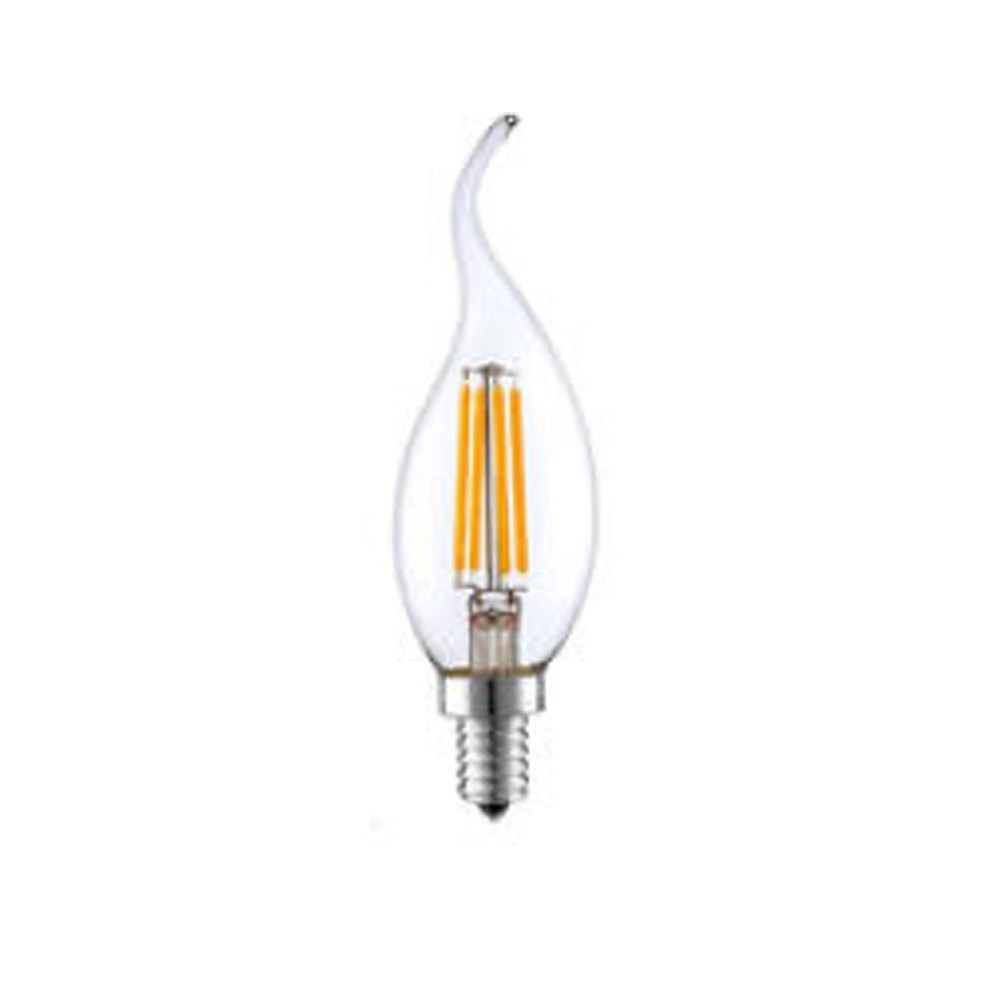
A café, a loft-style flat or the living room of an old house sometimes needs exactly the character of an incandescent bulb: a glowing filament behind clear glass, warm amber light and a soft, even glow. For a long time that look was impossible with LED, because early LED bulbs had plastic bodies, cold light and an obviously modern appearance. Filament LED technology changed that, and today you can save energy while keeping the classic look.
What filament LED offers
In a filament bulb, small LED chips are mounted on thin strips and coated with phosphor. The strips are arranged inside a clear glass envelope like the filament of an incandescent lamp. When switched on, the eye sees glowing lines and the light spreads in all directions.
This restores the classic look through three key elements: the glass envelope, the visible filament and light that spreads all round. A standard LED bulb with a plastic body has none of them.
Shape: finding the silhouette of the old bulb
Filament bulbs are made in almost every classic shape:
- the A60 pear, the most familiar household bulb;
- candle and flame-tip candle, for chandeliers and wall lights;
- small globes (G45) and large globes (G95, G125), for bare pendants;
- elongated Edison shapes (ST64 and similar), for loft and vintage interiors;
- tubular models and decorative bulbs with spiral filaments.
When replacing an old bulb, match the shape and size as closely as possible. In a bare pendant, how the bulb looks as a silhouette matters more than the numbers.
Colour: recreating incandescent warmth
An ordinary incandescent bulb gives light of around 2700K. For a retro look, many filament bulbs are warmer still, at 2200K–2500K. An amber-tinted glass envelope warms the light further and creates the honey tone of old Edison bulbs.
Balance is needed:
- for decoration and an evening atmosphere, 2200K–2500K with amber glass;
- for reading, a dining table or everyday use, 2700K–3000K with clear glass;
- a filament bulb with very cool white light spoils the retro look and usually seems out of place.
Check the colour rendering index too. Incandescent bulbs render colours very naturally. A filament LED with low CRI can make skin, wood and fabrics look dull even at the same warmth. Where possible, choose models with Ra 90 or higher.
The movement of incandescent light: dimming
As an incandescent bulb dims, its light becomes redder and warmer. This creates a candle-like effect that is highly valued in restaurants and living rooms. A standard LED bulb keeps the same colour as it dims and simply gets dimmer.
To reproduce this behaviour there are dim-to-warm bulbs, which lower their colour temperature as they are dimmed. With a dimmer in the circuit, the packaging must confirm the bulb supports dimming.
Glare and light output
A classic bulb with clear glass looks beautiful but dazzles when you look straight at it. With incandescent bulbs this was less noticeable because the filament's brightness was relatively low. The glowing strips of a powerful filament LED can look harsher.
Practical solutions:
- for bulbs at eye level, choose a lower-output model or one with amber glass;
- use several low-output bulbs instead of one powerful one;
- install a dimmer and adjust the light to suit the mood;
- complement the decorative bulb with main lighting, such as concealed or ceiling lights.
Remember that filament bulbs are mainly decorative. As the only light source in a large room they may not be enough.
Signs of quality
Quality varies widely among retro filament bulbs. When choosing, check whether all the filaments glow equally brightly, whether the light flickers (test with a phone camera), whether the joint between glass and cap is neat, and whether the box states lumens, colour temperature, CRI and dimmer compatibility.
In a poor-quality filament bulb one of the strips can fail early and spoil the bulb's appearance. In a bare pendant that is noticeable at once.
To keep that vintage look in chandeliers and wall lights, Zəfər İşığı produces E14 filament lamps with straight and teardrop glass.
All news