
Moving from mercury and sodium street lamps to LED
Old street, yard and industrial fittings still run mercury and sodium lamps. The ways to switch to LED, the ballast question, light colour and proper handling of old lamps.
On an evening street you can see two kinds of light: on one side an orange-yellow glow in which colours are almost impossible to tell apart, on the other white or warm-white light. The first comes from high-pressure sodium lamps, and in somewhat older places bluish-green mercury lamps remain. Both formed the backbone of street and industrial lighting for decades. LED is now taking their place, but the switch is not just a matter of unscrewing one lamp and screwing in another.
How discharge lamps work
Unlike an incandescent bulb, a mercury or sodium lamp cannot simply be wired straight to the supply. Their light is produced by an electrical discharge in gas, and the fitting contains extra components to control that process:
- a ballast, which limits the current through the lamp;
- an ignitor, which delivers a high-voltage pulse to start sodium and metal halide lamps;
- a capacitor, which improves the power factor.
These lamps take several minutes to reach full brightness after switching on, and once switched off they will not restart until they have cooled. Their strengths were a long service life and, for their time, high efficiency.
Why replace them
Mercury lamps are the least efficient discharge lamps and, because they contain mercury, have already been removed from the market in many places, including the European Union. Sodium lamps are efficient, but their light is close to a single colour: colour rendering is very poor, making it hard to identify the colours of cars, clothes and faces. It is also poorly suited to security cameras.
LED fittings, by contrast:
- come on instantly at full brightness and are not sensitive to switching;
- use optics to direct light where it is needed and waste less upwards and sideways;
- show colours far better;
- allow light to be dimmed during the night;
- contain no mercury.
Three routes: lamp, module or fitting
There are three main options for the changeover.
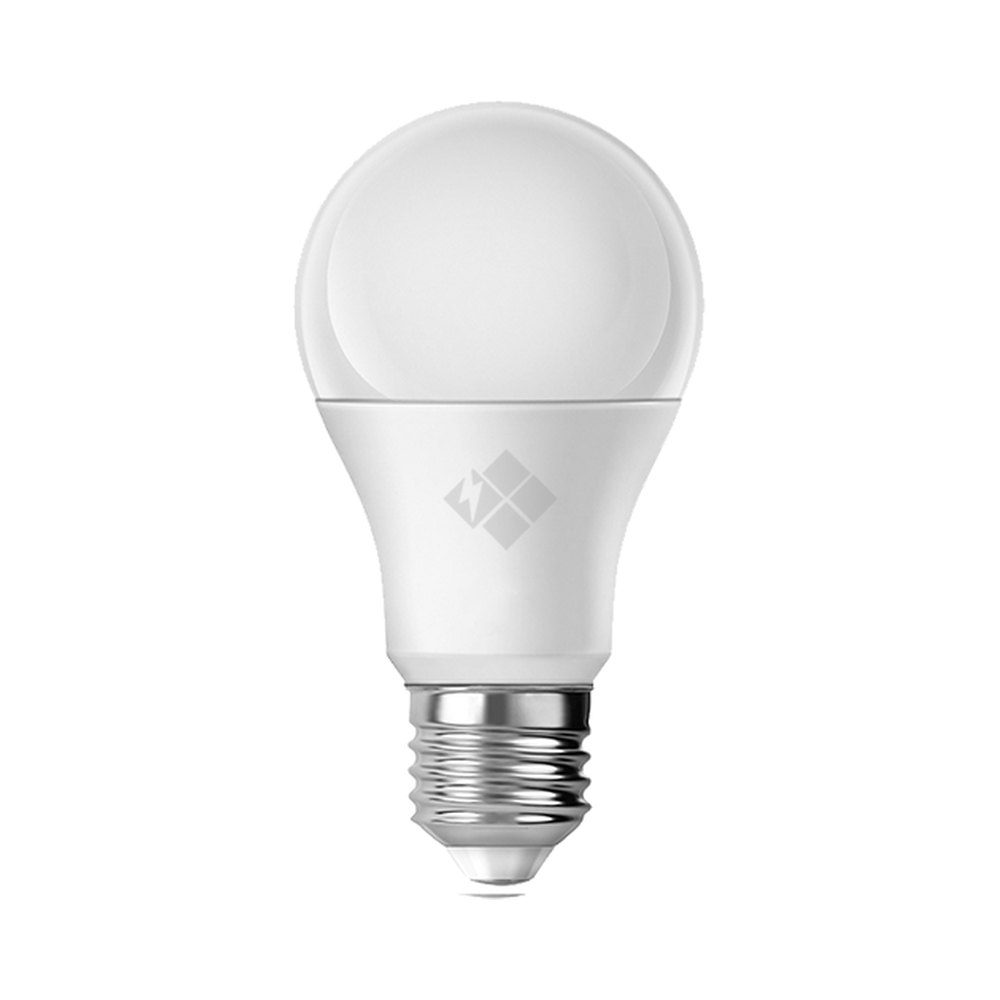
First, an LED lamp that screws into an E27 or E40 cap, such as a corn lamp or a large high-output bulb. The key condition is modifying the fitting's circuit: the ballast, ignitor and capacitor must be taken out of circuit and the lampholder connected directly to the mains. The ignitor's high-voltage pulse can destroy an LED lamp's driver instantly. Some LED lamps are designed to work with a ballast, but that must be clearly stated on the box.
Second, installing an LED module and a separate driver inside the old fitting's body. This suits historic and decorative lanterns whose appearance you want to keep.
Third, replacing the whole fitting with a new LED street light. Its optics, heat dissipation and ingress protection are designed as one product. For a long-term result this is often the most reliable route.
The risks of retrofit lamps
Fitting an LED lamp into an old luminaire looks cheap and quick, but keep these points in mind:
- In an enclosed lantern body, an LED lamp's driver gets very hot; the discharge lamp tolerated heat, the LED driver does not.
- The old reflector was designed around the light centre of the original lamp. Light from an LED lamp comes from a different point and in different directions, so it may fall to the sides rather than on the road.
- A large LED lamp is heavy, and the old lampholder and fixing may not be ready for it.
- Someone may later fit a sodium lamp back into the modified luminaire, so mark the wiring change with a label on the body.
Light colour and neighbours
Moving from orange sodium light to white LED changes the look of a street dramatically. Very cool light of 5000K and above can seem harsh in a residential area and may be perceived by residents as hospital lighting. For residential streets and parks, warm white around 3000K is more comfortable, while neutral light can be chosen for faster roads.
Bear in mind that new fittings are brighter and may shine into windows. Optics that emit no light backwards and the correct tilt angle reduce this problem.
Disposal of old lamps
Mercury lamps contain mercury, and sodium lamps contain small amounts of mercury and sodium. These lamps are not ordinary waste. Collect them unbroken and hand them over to a facility that accepts hazardous waste. Ballasts and capacitors should also be separated as electronic waste.
For open grounds and yards, Zəfər İşığı produces cylindrical T-shaped high-output LEDs and a folding lamp with four wings. Before using them in an old fitting, the circuit modification and the fitting's suitability for the conditions should be checked with a specialist.
All news