
2G11 and G23: the bases of compact fluorescent lamps
How to recognise compact fluorescent bases such as 2G11, G23, G24 and 2G7, how two-pin and four-pin versions differ, and why the circuit matters when choosing an LED replacement.
In office ceiling panels, hospital corridors, older bathroom fittings and desk lamps, you will find lamps with two or four tubes and a plastic "head" instead of a screw cap. These are compact fluorescent lamps, and the names of their bases, 2G11, G23, G24 and 2G7, look like a code at first glance. Understanding those codes helps you find the right replacement and assess the options for moving to LED.
How they differ from screw-in "energy savers"
In the screw-in compact fluorescent lamps used at home, the so-called energy savers, the starting circuitry is built into the lamp body. The cap is an ordinary E27 or E14, and the lamp goes into any holder.
Pin-based compact fluorescent lamps are designed for professional fittings. Part or all of the starting circuit stays inside the fitting. When the lamp wears out, only the tube section is changed, while the choke or ballast remains in the fitting. So the base also indicates what kind of circuit the fitting has.
Two pins and four pins: the key difference
The number of pins is the most important clue:
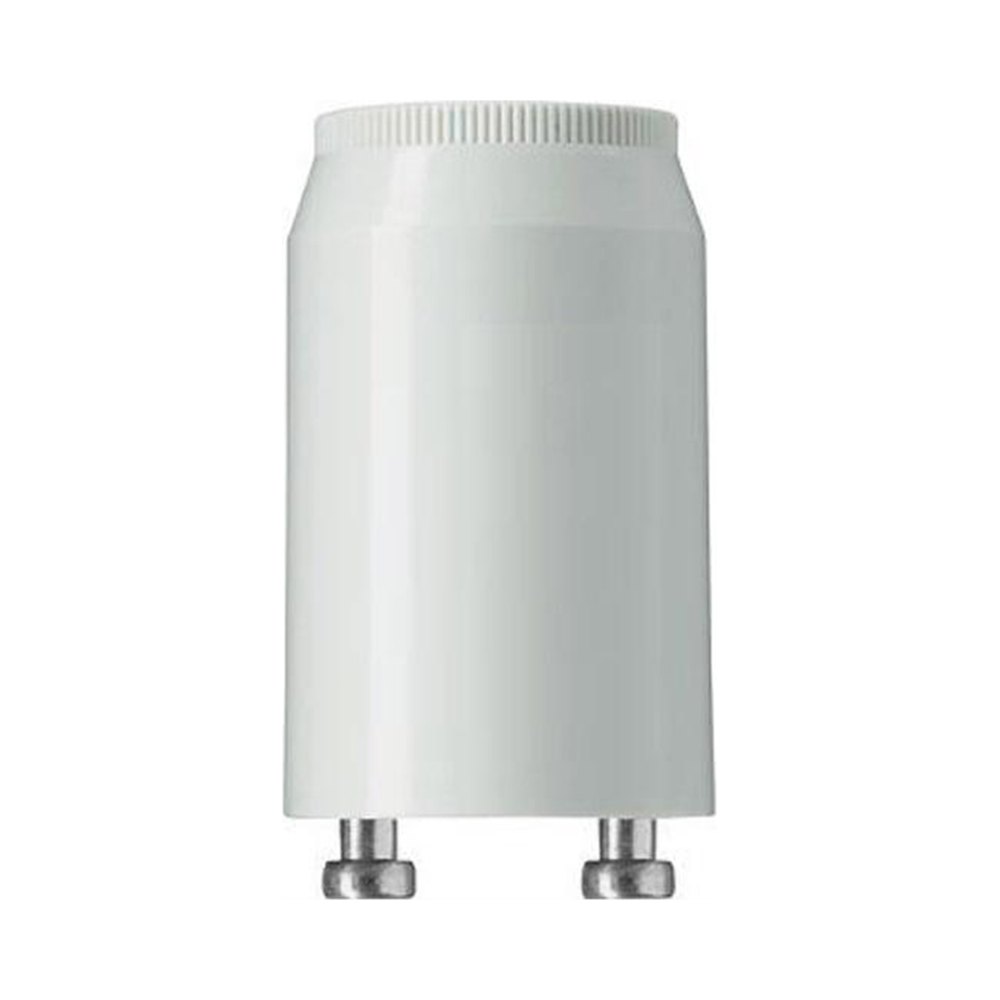
- Two-pin lamps (such as G23 and two-pin G24d) have a built-in starter. They run on an electromagnetic choke in the fitting. The starter and a small capacitor are hidden in the plastic head of the lamp.
- Four-pin lamps (such as 2G11, 2G7 and four-pin G24q) have no built-in starter. They mainly run on an electronic ballast in the fitting, and sometimes on a circuit with a separate starter.
A two-pin lamp cannot go into a four-pin socket or vice versa, because the bases are physically different.
Recognising the main bases
G23. Two-pin lamps made of a single pair of slim tubes. Widespread in desk lamps, older bathroom and mirror lights, and emergency exit signs. The pins sit side by side on one side of the plastic head.
2G7. Similar to G23, but with four pins. Used in compact fittings with electronic ballasts.
G24. Larger lamps, often with four or six tubes. The letter "d" in the name indicates the two-pin version and "q" the four-pin version. The following number (1, 2, 3) refers to the position of a key on the head, which prevents lamps of different wattages from being fitted into the wrong socket.
2G11. Long, flat, four-pin lamps made of two parallel tubes. Common in office ceiling panels, long wall fittings and medical facilities. They come in different lengths, so measure before choosing a replacement.
To identify the base, look closely at the lamp's plastic head: the code is often printed right there, or in small letters on the glass. If the code on the head has worn off, count the pins, note the shape of the head and the number of tubes, and measure the lamp's overall length. Those four details, plus a photo of the fitting's label, are enough for a shop to find the right lamp. Do not fit a lamp of a different wattage in the same fitting, because the choke and ballast are sized for a specific wattage.
Moving to an LED replacement
LED lamps are sold for these bases too, but "plug it in and it works" does not always apply. How an LED replacement behaves depends on the circuit in the fitting:
- LED lamps for choke circuits. Replace two-pin G23 and G24d, sometimes with a special element that stands in for the starter inside the lamp.
- LED lamps compatible with electronic ballasts. Fitted with the ballast left in place, but may only work with certain ballast models.
- Mains-direct LED lamps. The choke or ballast is removed from the circuit and the lamp is wired straight to the mains.
The first two options look simplest, but because the old choke or ballast stays in the system, so do its losses and failure risk. The third gives a cleaner result but requires changes to the fitting.
Keep the fitting or replace it?
These questions make the decision easier:
- Are the fitting's housing, reflector and cover in good condition?
- Does it contain a choke or an electronic ballast, and is this shown on the label?
- Does the LED replacement's packaging state the circuit it is suited to?
- How many such fittings are in the same room? If many, converting them all the same way is tidier.
- Is there an electrician available to modify the wiring?
In very old fittings that have yellowed and whose contacts have weakened, installing a complete LED fitting often takes less effort than replacing the lamp.
Remember too that compact fluorescent lamps contain a small amount of mercury: remove old lamps without breaking them and do not put them in household waste.
Zaferoğlu Elektrik's Zəfər İşığı catalogue also includes fluorescent tubes and a starter. When updating compact fluorescent fittings, identifying the circuit in advance is the basis for choosing the right lamp or fitting.
All news