
GU4 and MR11: small-diameter spotlights
The size, base and 12-volt supply of MR11 and GU4 spotlights, how they differ from MR16, and what to watch when replacing them with LED.
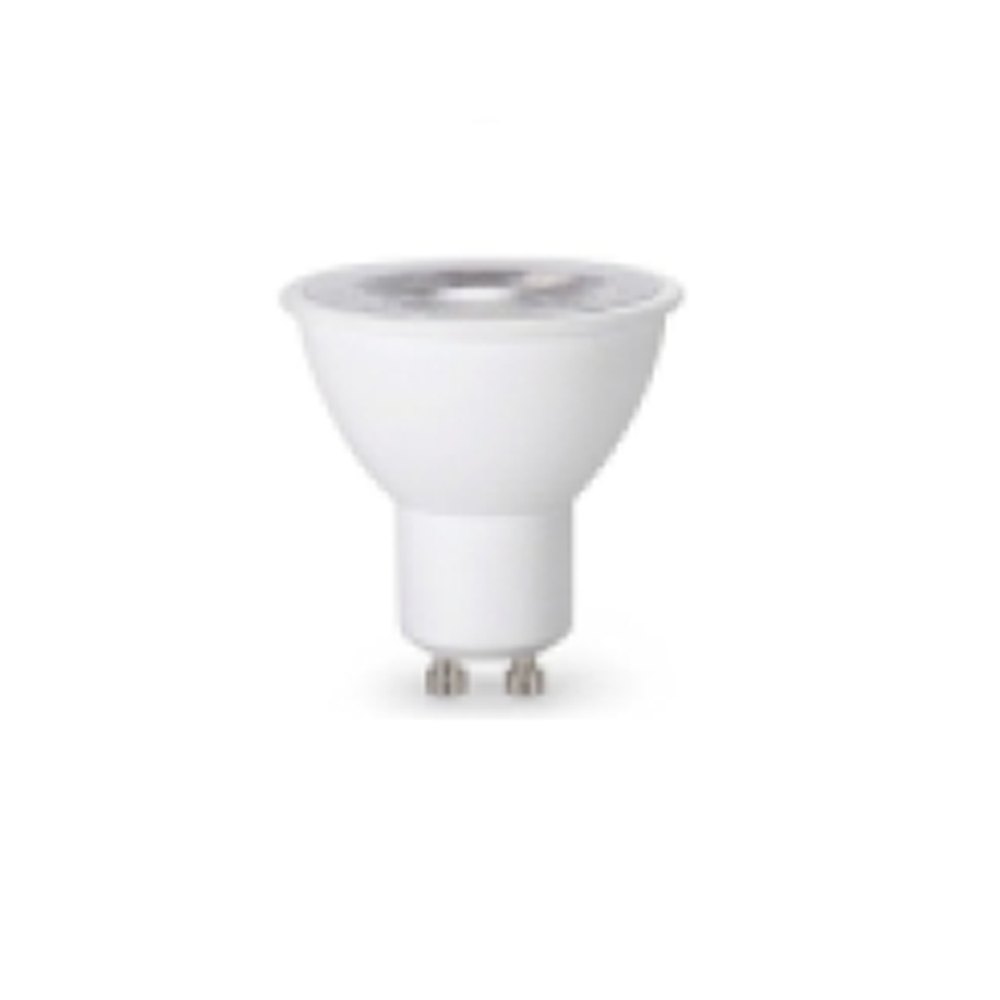
Under kitchen cabinets, in display cases, along stair edges or in small decorative fittings, you sometimes see lamps that are noticeably smaller than a normal spotlight. They resemble an MR16, but a scaled-down copy. This is an MR11, and its base is usually called GU4. Knowing these names when asking for a "small spotlight" in a shop saves a wasted purchase.
What the names tell you
MR11 refers to the shape and size of the lamp. "MR" stands for multifaceted reflector: in old halogen versions the back of the lamp was a mirror made of many small facets. The figure after the letters counts the width in eighths of an inch; 11/8 inch is about 35 mm.
GU4 is the name of the base. The spacing between its two thin pins is about 4 mm. Just as MR16 lamps use the GU5.3 base, MR11 lamps mostly use GU4. Some MR11 models have a base marked G4; the pin spacing is the same, and the difference lies in the pin shape and how the reflector is attached.
Compared with MR16
The two lamps belong to the same family but are not interchangeable:
- Diameter. MR16 is about 50 mm, MR11 about 35 mm. An MR11 would rattle in an MR16 fitting, and an MR16 will not go into an MR11 fitting at all.
- Base. On GU5.3 the pins are about 5.3 mm apart, on GU4 about 4 mm. The pins also differ in thickness.
- Voltage. Both usually run on 12 V and need a transformer.
- Light. A smaller size means less room for diodes and heat sink, so with the same technology an MR11 LED gives less light than an MR16.
In other words, the MR11 is not for lighting large areas but for accent and task light in tight spaces.
The 12-volt supply
MR11 and GU4 lamps do not connect directly to the mains. Near the fitting, often inside a cabinet or above a suspended ceiling, there is a transformer converting 230 V to 12 V. In older halogen systems this was an electronic or electromagnetic transformer.
Most problems when switching to LED MR11 start here. An electronic transformer designed for halogen lamps may need a minimum load to work properly. LED lamps draw so little power that this load is not reached. As a result the lamp may flicker, blink on and off, or not light at all.
Solutions include:
- checking the LED lamp's packaging for compatibility with electronic transformers;
- swapping the halogen transformer for an LED-rated 12 V constant-voltage supply;
- converting all lamps on the same transformer to LED at once, rather than running a mixed system.
Where they are used
- task lighting on worktops under kitchen cabinets;
- glass display cases, collection shelves and jewellery displays;
- orientation lighting on stair treads and along floor edges;
- small table lamps and designer fittings;
- lighting inside furniture.
What these places share is limited space and short distances. At close range a small lamp gives enough light, but heat also builds up close by. A halogen MR11 inside furniture could heat wood and fabric; LED is much more comfortable in this respect.
Short distances also make colour and glare more noticeable. In a display case for jewellery or collectables, a lamp with high colour rendering keeps objects looking natural. Under a kitchen cabinet, where the lamp is close to eye level, it matters that the lamp itself is hidden and the light falls only on the worktop. Small spots installed in a row should all share the same beam angle and colour temperature so that uneven patches do not appear on the surface.
Checklist before buying
- Measure the old lamp's diameter: if it is about 35 mm, it is an MR11.
- Look at the pin spacing, or take the old lamp to the shop.
- Check the voltage marked on the lamp: 12 V, or occasionally mains voltage.
- Identify the type of transformer.
- Choose the beam angle: narrow for display cases, wide for worktops.
- Decide between a lamp with a front glass and an open one; an open fitting may require a protective glass.
When changing the lamp
Before changing the lamp, switch off the circuit that feeds the transformer. MR11 pins are thin, so pull the lamp straight out of the base rather than wiggling it. Hold the new lamp by the rim of the reflector and push the pins fully home. If the lamp is held in the fitting by a retaining clip, remember to put the clip back.
In the Zəfər İşığı catalogue, spotlights come with GU10 and G5.3 bases. For small 12 V spotlights such as the MR11, the choice should be based on the specific requirements of the fitting and transformer.
All news