
Spotlight diameter and the size of the ceiling cut-out
How the spotlight's diameter, the fitting's trim ring and the hole cut in the ceiling relate to each other, what happens when sizes are wrong, and how to measure properly.
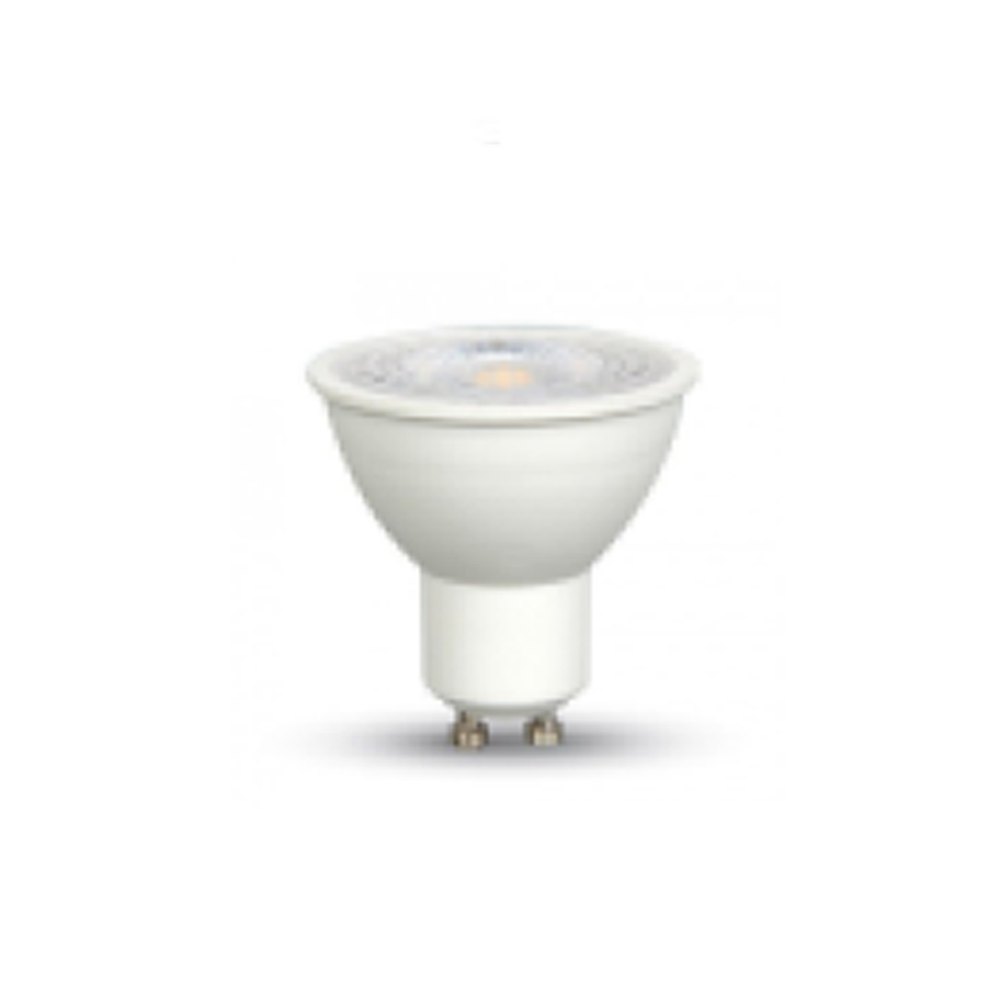
One of the most common mistakes when fitting a suspended ceiling is cutting the holes in a hurry. The installer cuts holes for "standard spots", and then the fittings bought later either drop straight through or will not go in at all. In plasterboard it can be fixed, though it leaves marks; in a stretch ceiling, a wrong hole means replacing the membrane. To avoid this, keep three sizes separate: the diameter of the lamp, the outer size of the fitting and the diameter of the hole in the ceiling.
The lamp itself: key standard sizes
Spotlight diameters are roughly fixed by type:
- MR16 / GU5.3: about 50 mm;
- GU10: about 50 mm;
- MR11 / GU4: about 35 mm;
- GX53 disc lamp: about 75 mm;
- R50 reflector bulb: about 50 mm, but longer.
These sizes set the space the lamp occupies inside the fitting. MR16 and GU10 share a diameter, so they use the same housings but different holders. The MR11 needs its own smaller fitting.
The fitting: bigger than the lamp
It is the fitting that goes into the ceiling, not the lamp. The housing surrounds the lamp, and at the front there is a decorative trim ring that stays on the ceiling surface. The trim is always larger than the hole so that it covers the cut edges.
That is why different fittings for the same 50 mm lamp need different hole sizes. A simple fixed fitting needs one size, while an adjustable (tilting) fitting may need a larger hole because the lamp has to tilt inside the housing. Decorative models with wide trims can also call for a larger opening.
The key rule: size the hole not by the lamp but by the "cut-out" dimension given on the box or in the instructions of the specific fitting.
Before cutting the hole
The right order of work is:
- choose and buy the fittings first;
- check the cut-out diameter and the depth required above the ceiling on the box;
- take one fitting and make sure its trim fully covers the hole;
- mark the positions on the ceiling, and only then cut.
In plasterboard, holes are usually cut with a hole saw of the right diameter. If no hole saw matches the required size, cutting one size smaller and carefully enlarging the edge with a knife is better than cutting too big and trying to fix it afterwards.
Depth: the second key dimension
Even with the right diameter, the fitting has to fit above the ceiling. The gap between the suspended ceiling profile and the structural ceiling is sometimes very small. Take into account:
- the height of the housing and the length of the lamp;
- room behind the lamp for the holder and wires;
- space to place a transformer for 12 V spots;
- an air gap for the LED lamp's heat sink.
This is exactly why flat lamps such as GX53 are chosen for shallow ceilings. A long R50 or a GU10 with a heat sink may not fit in a shallow void.
When the holes are already there
When replacing old fittings, the problem is reversed: the holes exist and the new fitting has to suit them. Remove an old fitting and measure the hole itself, not the trim. If the hole is smaller than the new fitting needs, it can be enlarged. If it is larger, look for a fitting with a wider trim or use adapter rings designed to reduce the opening.
Stretch ceilings are different. There the hole is cut not in the membrane itself but inside a heat-protection ring glued on during installation, and the ring size is chosen in advance to suit the fitting. If you later want a fitting of a different diameter, the size of the old ring will limit you. Decorative cover rings exist for putting a small fitting into a large hole, but enlarging a hole with a small ring can tear the membrane. So when ordering a stretch ceiling, the most reliable approach is to tell the installer the fitting model beforehand, or even hand over a sample.
Checklist
- Lamp type and diameter: 50, 35 or 75 mm?
- Fixed or adjustable fitting?
- Has the cut-out size on the box been noted?
- Is there enough depth above the ceiling?
- Are all fittings the same model, needing the same hole?
The Zəfər İşığı catalogue offers spotlights with GU10 and G5.3 bases. When planning fitting positions in a ceiling, deciding on the lamp type early makes choosing both the fitting and the hole size simpler.
All news