E26 and E27: will an American bulb work in a European socket?
How E26 and E27 screw caps differ, whether bulbs and fittings brought from the US will work on a 220–240 V supply, and the key safety issues.
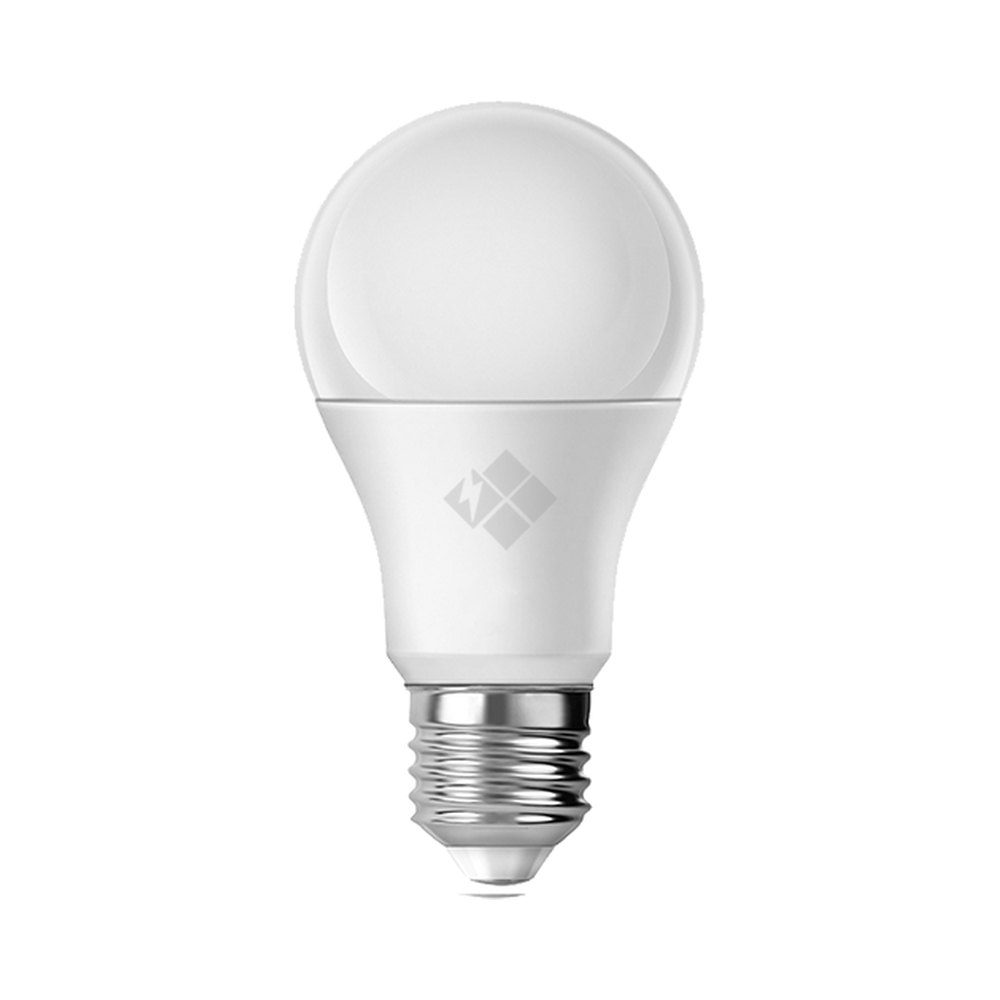
When a smart bulb, a decorative filament bulb or a whole light fitting brought from the US or Canada is set up at home, a question comes up: it says E26, while our lampholders are E27. The bulbs look identical and often screw into the holder easily. But "screws in" and "works safely" are not the same thing. The real problem here is not the cap but the voltage.
A one-millimetre difference
Both caps belong to the Edison screw standard. "E26" indicates a thread diameter of about 26 mm, "E27" about 27 mm. E26 is standard in North America and several other countries with 120-volt mains, while E27 is standard in Europe, Turkey, Azerbaijan, Russia and most countries with 220–240-volt mains.
Because the thread pitch and profile are very similar, an E26 bulb will usually screw into an E27 holder, and an E27 bulb into an E26 holder. The fit is not exact, though: there may be some play, or it may be tight. The height of the centre contact also varies between manufacturers, which can lead to poor contact.
The key issue: 120 V and 230 V
North American mains is about 120 V; ours is 230 V. Most E26 bulbs are designed specifically for 120 V.
Here is what happens when a 120-volt bulb is connected to a 230-volt supply:
- An incandescent bulb receives roughly twice its rated voltage, burns extremely brightly and fails quickly, sometimes instantly. The glass may burst.
- An LED bulb whose driver is not designed for this voltage overheats and fails, sometimes with smoke, an unpleasant smell or a small pop.
- A smart bulb also loses its electronics and communications module.
So even if an E26 bulb screws into the holder, do not switch it on without checking the voltage marked on it.
Universal-voltage bulbs
Some LED bulbs are designed for a wide voltage range. They are marked with something like "100–240 V" or "110–240 V". Such a bulb can work on both 120 V and 230 V supplies. In that case the main question is simply whether the cap fits properly.
A few points still need attention:
- check the marking on the bulb itself rather than relying on a website description;
- mains frequency is 60 Hz in North America and 50 Hz here; for ordinary LED bulbs this is usually not a problem, but some dimmable and smart models may behave differently;
- certification marks on a bulb made for the US market do not show compliance with European requirements.
Light fittings brought from the US
If a whole fitting has been brought over, things get more complicated. Besides the bulb, the fitting itself is designed for 120 V:
- the insulation of the holder, wiring and switch may be rated for a lower voltage;
- a transformer, dimmer, sensor or driver in the fitting will fail at 230 V;
- the plug is usually American, and connecting it through an adapter adds risk.
Before connecting such a fitting, check the rated voltage on its label. If it says only "120 V", show it to an electrician and, if necessary, replace the holder and wiring with parts rated for 230 V and change any internal electronics. With a simple decorative fitting this may come down to swapping the holder for an E27. With complex electronics, a separate step-down transformer may be needed, and that does not always make sense.
The other way round: our bulb in the US
A 230 V E27 bulb taken from Azerbaijan or Europe to a 120 V supply is usually not damaged, but it may not work or may glow very dimly. A universal-voltage LED bulb will work normally.
Checklist
- Voltage on the bulb: 120 V, 230 V or a wide range?
- Does the cap sit firmly in the holder without wobbling?
- If a fitting was brought over, what rated voltage is on its label?
- Is there a dimmer, sensor or smart function?
- If in doubt, can you consult an electrician?
Zəfər İşığı LED bulbs are made for Azerbaijan's 220–240 V mains and E27 and E14 holders. Once the holder of a fitting brought from abroad has been converted to E27, bulbs in a range of wattages can be chosen from the catalogue.
All news