Cylindrical T-shape LED bulbs: where they are used
What sits inside a powerful cylindrical T-shape LED lamp, where it works best, and the heat, size and fitting checks to make first.
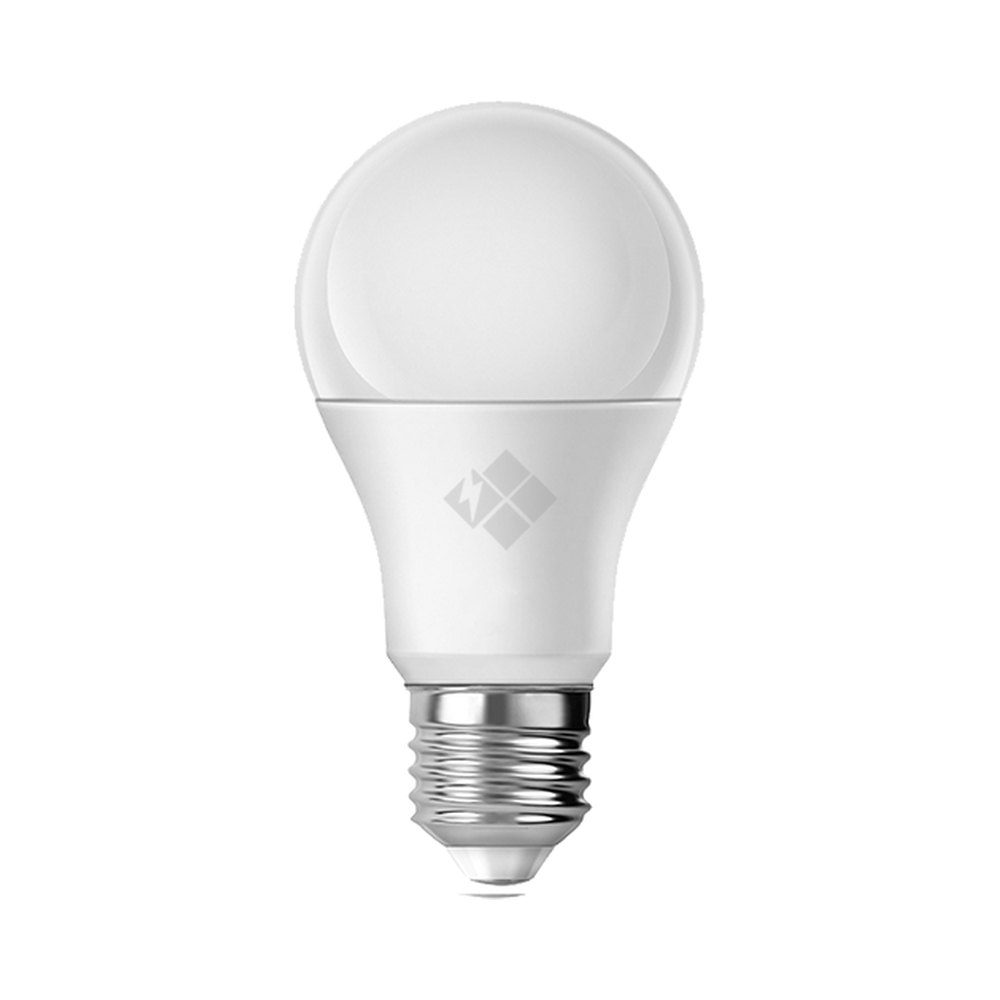
In builders' merchants, warehouses or car repair workshops, the lampholders hanging from the ceiling often carry not ordinary pear-shaped bulbs but large, long, cylindrical lamps with white plastic bodies. Their cap is often the same E27 as at home, but their light and size are completely different. These are high-output T-shape LED bulbs, and they have taken over the role once played by high-wattage incandescent, mercury and spiral energy-saving lamps.
What "T" means and how they are built
In bulb shape codes, "T" stands for tubular, that is, cylindrical. In high-output LED bulbs this shape is chosen for good reasons. Inside the cylinder is a long aluminium or plastic core, with diodes arranged on several of its faces. A thick diffuser covers them, and the driver and cap sit at the bottom.
This construction has two advantages. First, because the diodes are spread over a large surface, heat does not build up in one spot and escapes more easily through the body. Second, the bulb emits light not just from its tip but from its sides. As a result, far more light can be obtained from the same cap than from an ordinary A60 bulb.
How the light is spread
In a classic household bulb, light goes mainly downwards towards the tip. A T-shape bulb emits from both the sides of the cylinder and its end, so the surroundings are lit more evenly. This matters especially for bare bulbs hanging from a holder without a reflector: the sides of shelving, the walls and the area near the ceiling are not left in the dark.
In industrial fittings with reflectors, the sideways light is gathered by the reflector and directed down. In such fittings a T-shape bulb gives a light distribution closer to that of the old mercury lamp.
Where they are used
The main applications of high-output T-shape bulbs are:
- Warehouses and storage areas, where broad, even light is needed between tall racks;
- Garages and car workshops, for strong general light in the work zone;
- Small workshops and production rooms, to raise light levels without installing many fittings;
- Shops, market stalls and sales halls, especially with high ceilings;
- Yards, barns and farm buildings, inside closed lanterns or reflector fittings;
- Temporary lighting during construction and renovation.
In living rooms such bulbs are usually unnecessary: their light is far too strong for a room, and their shape is too large for ordinary shades and lampshades.
What to look for when choosing
Light output. Wattage is only a rough guide; to judge your needs, look at the lumen figure and the size of the area. High ceilings and large halls need more light, but several medium-output bulbs sometimes give a more even result than one very powerful bulb.
Size. T-shape bulbs are long. Check beforehand that the bulb fits inside the fitting, the lantern glass or the depth of the reflector.
Heat and ventilation. The driver and diodes of a high-output LED bulb shed heat through the body. In a small, fully enclosed lantern that heat builds up and shortens the bulb's life. A ventilated fitting or an open holder is better.
Holder and weight. The large body and driver make the bulb heavy, which matters with old plastic holders that have become brittle from heat.
Colour temperature. For warehouses and workshops, neutral or cool white light shows detail more clearly. In a sales hall, the choice depends on the type of goods.
Damp and dust. Outdoors or in a dusty workshop, the protection rating of the fitting matters more than the bulb itself.
Replacing old lamps
T-shape LED bulbs are often chosen to replace old high-wattage incandescent, spiral energy-saving or mercury lamps. There is one subtlety: a luminaire built for a discharge lamp may still hide its ballast and ignitor inside. A mains LED bulb cannot simply be screwed into such a fitting; those components must be removed from the circuit first.
In simple fittings with an ordinary E27 holder, the swap is straightforward: remove the old bulb and fit the new one. It is worth inspecting the holder and wire connections at the same time.
Quick checklist
- The area and ceiling height have been noted.
- The bulb's length fits the fitting.
- The fitting is ventilated, and the bulb is not shut in a small sealed box.
- The holder is sound and can carry the bulb's weight.
- The old circuit has no ballast or ignitor.
Zəfər İşığı makes cylindrical T-shaped LED lamps at 20, 30, 40, 50, 60 and 70 watts. You can compare models in the catalogue according to the size of the site and the type of fittings, and request a quote.
All news