
T8 tubes and the G13 base: how LED tubes fit in
What T8 means, how the G13 bi-pin base works, and why the wiring inside the fitting matters more than the tube when you switch to LED.
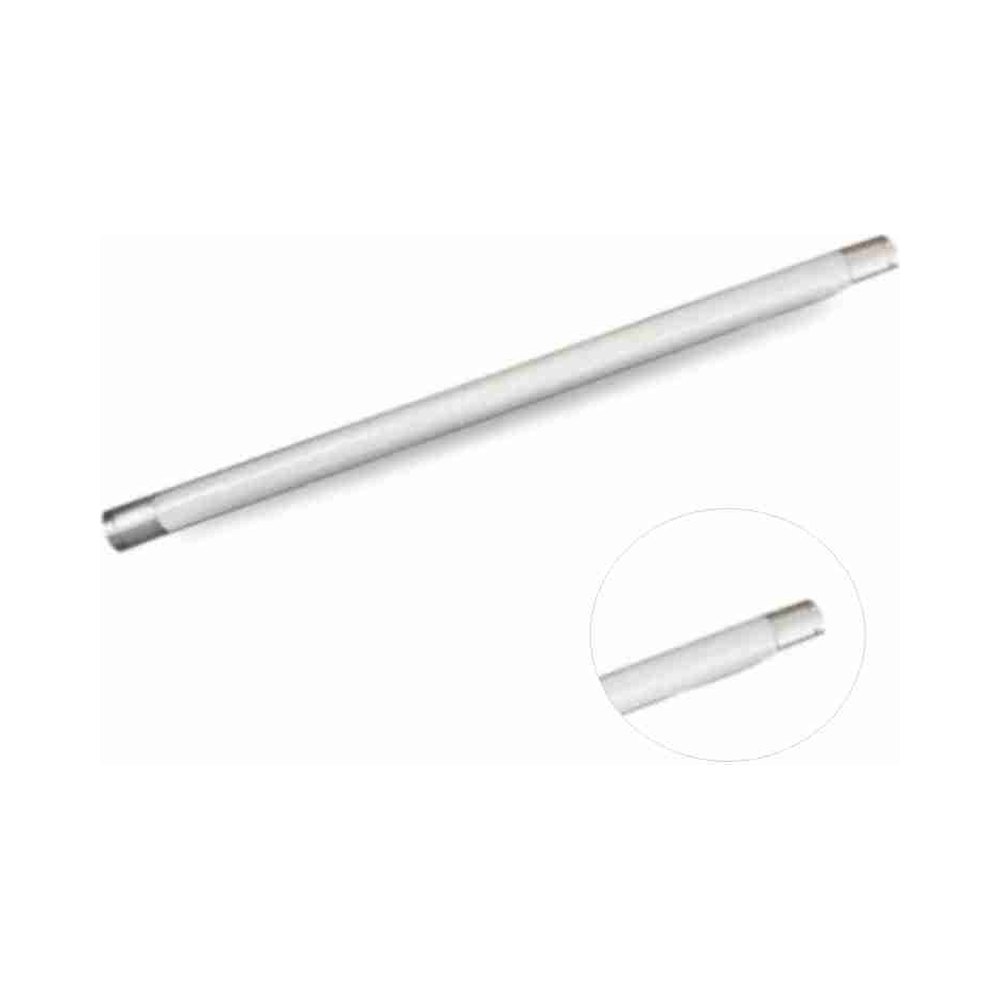
If long white tubes hang from the ceiling of an office corridor, a classroom or a garage, they are very likely T8s. For decades this was the standard shape of fluorescent lighting, and today LED tubes are being fitted into the very same fittings. The resemblance is misleading, though: an LED tube slots into the same base, but it does not always work the same way with the circuitry inside the fitting.
The T8 name and the sizes
The "T" stands for tubular, and the number after it gives the diameter in eighths of an inch. T8 is eight eighths, so about one inch, or roughly 26 mm. By the same logic, a T5 is a slimmer tube and a T12 an older, thicker one.
Length used to be tied to the wattage of the tube. The most common fluorescent T8 lengths are roughly 600 mm, 1200 mm and 1500 mm. A fitting is built for one of these, so before buying a replacement measure the old tube from pin end to pin end. Square fittings set into ceiling grids usually take the short tubes, while long batten fittings take 1200 or 1500 mm tubes.
How the G13 base works
Each end of the tube carries two metal pins. The 13 in G13 is the spacing between them, about 13 mm. The tube is not pushed in from the side: the pins go into the slot of the lampholder while held vertically, then the tube is turned a quarter turn about its own axis until the pins seat on the contacts.
The weak point of this simple system is the lampholders themselves. Plastic holders that have spent years in the heat become brittle, their slots crack and the contact springs lose tension. If a holder crumbles in your hand or the tube will not lock when you rotate it, replace the holder first, otherwise a new tube will flicker or refuse to light.
How an LED tube works with fluorescent circuitry
A fluorescent tube is never connected straight to the mains: it relies on a choke and starter or on an electronic ballast. LED tubes are built around three main approaches:
- Ballast-compatible tubes. They go in without touching the fitting. However, they only work with certain ballast types, and when the old ballast fails the tube stops working too.
- Mains-direct tubes. The ballast and starter are taken out of the circuit and live and neutral are wired straight to the lampholders. Some models are fed from one end, others from both, and this is marked on the box and on the tube.
- Hybrid tubes. They run on the existing ballast at first and can be rewired for direct mains once the ballast dies.
This is where most mistakes happen: a mains-direct tube is fitted into an unmodified fitting, or the other way round. The result may be a tube that does not light, a short circuit or an early failure. The step-by-step conversion is covered in a separate guide; the key point here is that you need to know which circuit the fitting has before you buy.
Checklist before you buy
- Length and diameter of the old tube: is it really a T8, or a slimmer T5?
- Does the fitting have a choke and starter, or an electronic ballast?
- Which connection type is the LED tube designed for, and is it fed from one end?
- Are the lampholders sound, and does the tube lock firmly when turned?
- Light direction: some LED tubes throw light mainly to one side, so rotatable end caps make installation easier.
- The protection rating of the fitting if it is in a damp or dusty space.
When taking old fluorescent tubes down, try not to break them: they contain a small amount of mercury vapour. Old tubes do not belong in the bin: pack them in their box or in paper and hand them in where fluorescent lamps are accepted. Do not leave one LED tube and one fluorescent tube in the same fitting either; the colour and brightness will differ, and the wiring will be mixed up.
Changing the wiring is electrical work. If you are unsure, leave it to an electrician, and stick a small label on the fitting saying which kind of tube it now takes. That saves confusion at every later replacement.
The Zəfər İşığı catalogue also lists LB-18 series fluorescent tubes and an S2 starter. Whether you keep existing fluorescent fittings or move to LED, identifying the circuit in the fitting first pays off either way.
All news